Industry News
People & Publishing Roundup, July 2026
MILESTONES
ELEANNA CASTROIANNI is now represented by Arley Sorg of kt literary.
ERIN LATIMER, CORAL ALEJANDRA MOORE, and J.C. SNOW are now represented by JABberwocky Literary Agency.
ROBERT J. SAWYER will be writer-in-residence at Calgary's Alexandria Writers' Centre Society from September 1 to November 30.
AWARDS
Whatever Kills the Pain by C.W. BLACKWELL won Best Long Story, Blind Pig by MICHAEL BRACKEN won Best Short Story, and The …Read More
The post People & Publishing Roundup, July 2026 appeared first on Locus.
Categories: Industry News, Industry News Home
Buhkman International Booker Prize Judges Announced
The prize formerly known as the International Booker Prize has announced a partnership with Bukhman Philanthropies, which has made a generous commitment to fund the next 10 years of the International Booker Prize. The funding will double the prize awarded to the winning title from £50,000 to £100,000, split between the author and translator.
The Buhkman International Booker Prize celebrates the best works of long-form fiction or collections of short …Read More
The post Buhkman International Booker Prize Judges Announced appeared first on Locus.
Categories: Industry News, Industry News Home
An Abridged History of Mathematical Metaphor in Speculative Fiction
by Sam Macdonald
Read by Maggie AyalaSpeculative fiction has always borrowed from the sciences, but one discipline shows up more often—and in more unexpected ways—than readers might realize. Mathematics, usually seen as the realm of formulas and proofs, has a long history of being used as a versatile narrative tool for authors trying to make sense of political systems, technological anxiety, and the strangeness of modern life. Across more than a century of genre writing, math has worked quietly in the background as one of the most reliable sources of metaphor in speculative fiction.
Comedy and Critique Puffin’s 1946 edition. Cover art by John Tenniel. Via ISFDB.Though mathematics has a reputation for being treated as dry, abstract, and apolitical, one of its oldest uses in fiction is satire. Mathematician and logician Charles Dodgson (more widely known by his pen name, Lewis Carroll) peppered Alice’s Adventures in Wonderland (1865) with commentary on perceived dangers of the new directions mathematics was taking in the mid-19th century. Nonsense riddles and impossible implications serve as critiques of symbolic algebra, imaginary numbers, and the increasingly abstract turn of (then) contemporary mathematics. Interested readers are strongly encouraged to peruse Melanie Bayley’s wonderful article “Alice’s Adventures in Algebra: Wonderland Solved.”
Barnes and Noble 1963 edition. Via ISFDB.Yet perhaps the quintessential early example of mathematics as metaphor appears in Edwin Abbott Abbott’s Flatland: A Romance of Many Dimensions (1884), the tale of a square (A. Square, to be precise) struggling to imagine dimensions beyond his own. The story captures something fundamental about both mathematics and speculative fiction: the pleasure of taking a simple set of assumptions and following them wherever they lead. In Flatland, those assumptions produce a society of line segments and polygons arranged in a rigid caste hierarchy, where imagining a third dimension is both a mathematical puzzle and social heresy. With its pointed satire of Victorian norms, including female characters that are literally one-dimensional, Abbott delivers a satirical gem that’s as weird as it is revealing.
Although Flatland helped launch a long tradition of “dimensional fiction”—stories that try to imagine fourth and higher dimensions—the heart of Abbott’s project goes deeper. As Alex Kasman notes in his comprehensive catalogue of mathematically themed fiction, Abbott’s narrative uses mathematics as a vehicle for examining the boundaries of knowledge itself. In doing so, Abbott connects mathematical metaphor to broader questions about culture, spirituality, and imagining realities outside human (or polygonal) experience.
From Humor to Horror First printing of The Call of Cthulhu in 1928. Cover art by C. C. Senf. Via ISFDB.The idea of impossible geometries as stand-ins for the limits of human understanding took on a far darker tone in the early 20th century, most notably through the eldritch creations of H. P. Lovecraft. Confronted with the challenge of describing that which, by its very definition, exists beyond human comprehension, Lovecraft turned to the language of non-Euclidean geometry. In stories such as “The Call of Cthulhu” (1928) and “The Dreams in the Witch House” (1933), architecture twists into impossible angles, ordinary rooms open onto other dimensions, and straight lines warp in ways that defy intuition. Geometry, usually one of the most concrete and visual branches of mathematics, crumbles before our eyes as we glimpse the true structure of the universe. (This author makes no claim that such metaphors were poignant, successful, or even coherent—only that an attempt was made.)
E. P. Dutton 1959 English translation. Cover art by Seymour Chwast. Via ISFDB.In addition to the unknowable, mathematics shows its versatility through its history as a metaphor for systems of control. One of the seminal examples is in We (1921) by Yevgeny Zamyatin, a foundational dystopian novel that would shape later classic 1984. Set in a glass-walled city where privacy is deemed irrational, We depicts a society in which citizens are named through algebraic identifiers (such as our protagonist, D-503) and state doctrine is framed as a series of axioms and proofs, elevating mathematical “perfection” as the highest civic virtue. Frequent maxims of the populace include such timeless classics as “We are perfect because we are mathematical,” and “The ideal state is a perfectly balanced equation.”
Alianza Editorial’s 1997 edition including “La lotería en Babilonia.” Cover art by Hieronymus Bosch. Via ISFDB.Though Zamyatin uses mathematics to symbolize an excess of order, mathematical metaphor in dystopian fiction isn’t confined to rigid equations. Enter Jorge Luis Borges. In his short story “The Lottery in Babylon” (1941), a society governed by pure probability becomes authoritarian not through order but through randomness—a system so arbitrary and impersonal it feels omnipotent.
Satire and Sincerity Seabury Press 1974 edition. Cover art by Daniel Mróz. Translated by Michael Kandel. Via ISFDB.As mathematical dystopias evolved, authors increasingly questioned not just authoritarian order or arbitrary chance, but the very premise that logic could govern society. Stanisław Lem’s The Cyberiad (1965) blends the threads of satire and autocracy into a series of exuberant mathematical fables: machines that follow flawless rules but cause chaos, proofs that function as weapons, entire societies run on algorithmic decree. It’s satire aimed squarely at technocratic fantasies of control, designed to dismantle pretensions of perfect rationality masquerading as political wisdom.
Not all mathematical metaphors are dystopian or absurd. Many authors employ mathematical ideas—especially higher dimensions, topology, and infinity—as symbols of liberation, spiritual insight, or imaginative possibility. A classic example is Madeleine L’Engle’s A Wrinkle in Time (1962). Mrs. Whatsit’s demonstration of “folding” space offers both a physical explanation for hyperspace travel and an emotional metaphor: love, empathy, and moral courage allow one to bypass oppressive structures as easily as one might bypass distance in spacetime. Here, mathematics is transformed into the language of wonder.
Farrar, Straus, and Cudahy’s first edition (1962). Cover art by Ellen Raskin. Via ISFDB. Mathematics and MetaphorAcross these works, mathematics becomes more than a system of symbols or language of logic. It becomes a flexible metaphorical vocabulary capable of expressing fundamental aspects of the human experience—what speculative fiction is all about. Because mathematics is so deeply associated with truth, objectivity, and the structure of reality, bending or reinterpreting it in fiction allows authors to question what’s real at all. Whether it is Abbott opening doors to higher perception, Zamyatin warning about the dangers of perfect rationality, or L’Engle using geometry as a vehicle for hope, mathematics equips our fiction with a unique set of tools for exploring both the known and the unknowable. Mathematics is, after all, its own form of speculation.
Explore more articles from THE HISTORY FILES
Sam Macdonald is a graduate student pursuing his PhD in mathematics in Lincoln, Nebraska. He has publications in speculative fiction magazines, mathematics journals, and humor websites, and hopes to one day write something strange enough to be publishable in all three. In his free time he enjoys rock climbing, strategic hammock placement, and the axiom of choice.
The post An Abridged History of Mathematical Metaphor in Speculative Fiction appeared first on SFWA - The Science Fiction & Fantasy Writers Association.
Categories: Industry News, Industry News Home
Utah Bans Stephen King Collection from Public Schools
Stephen King's 1982 collection Different Seasons (Warner) is the most recent book banned from all public schools in Utah after being removed in four school districts. Utah state law requires a book to be removed state-wide if a sufficient number of districts identify it as objective sensitive material, which is defined in state code as instructional material that constitutes pornographic or indecent material. The Davis School District website comments …Read More
The post Utah Bans Stephen King Collection from Public Schools appeared first on Locus.
Categories: Industry News, Industry News Home
2026 SF&F Hall of Fame Inductees
The Museum of Pop Culture (MoPOP) announced the 2026 inductees to the Science Fiction and Fantasy Hall of Fame: Lois McMaster Bujold and Tim Burton were honored as creators. Metropolis and the X-Men franchise were also recognized as exceptional creations in genre media. Inductees are added to the SF&F Hall of Fame display in the museum.
The Science Fiction Hall of Fame was founded in 1996 and then relocated from …Read More
The post 2026 SF&F Hall of Fame Inductees appeared first on Locus.
Categories: Industry News, Industry News Home
2026 Prometheus Awards Winners
The Libertarian Futurist Society (LFS) has announcedA Kiss for Damocles by J. Kenton Pierce (Raconteur) [amazon / bookshop] as the winner of the Prometheus Award in the Best Novel category, honoring pro-freedom works published in 2025. Other nominees were:
- Storm-Dragon, Dave Freer (Raconteur) amazon / bookshop
- War By Other Means, Karl K. Gallagher (Kelt Haven) amazon
- No Man's Land Volumes 1-3, Sarah A. Hoyt (Goldport) amazon / bookshop
- Powerless, …Read More
The post 2026 Prometheus Awards Winners appeared first on Locus.
Categories: Industry News, Industry News Home
Elgin Wins Cordwainer Smith Rediscovery Award
SF poet and author Suzette Haden Elgin is the winner of the 2026 Cordwainer Smith Rediscovery Award, intended to bring attention to lesser-known SF and fantasy authors. Her first story publication, For the Sake of Grace , was in F&SF in 1969. She wrote several SF series leaning into her background in linguistics and was the founder of the SFPA, now the Science Fiction & Fantasy Poetry Association.
The award …Read More
The post Elgin Wins Cordwainer Smith Rediscovery Award appeared first on Locus.
Categories: Industry News, Industry News Home
2025 Shirley Jackson Awards Winners
The winners of the 2025 Shirley Jackson Awards for outstanding achievement in horror, psychological suspense, and dark fantasy fiction were announced Saturday, July 11, 2026 at Readercon 35 in Burlington MA, hosted by Readercon guests of honor P. Djèlí Clark and David Gerrold.
Novel
- WINNER: Bat Eater and Other Names for Cora Zeng, Kylie Lee Baker (Hanover Square)
- Old Soul, Susan Barker (G.P. Putnam's Sons)
- How to …Read More
The post 2025 Shirley Jackson Awards Winners appeared first on Locus.
Categories: Industry News, Industry News Home
Now Hiring: SFWA’s Next Executive Director
Now Hiring: SFWA Executive Director
Organization Overview
The Science Fiction and Fantasy Writers Association (SFWA) is a 501(c)(3) non-profit charitable organization for published writers and industry professionals in the field of science fiction, fantasy, and related genres. Founded in 1965, SFWA runs the annual Nebula Conference, the Nebula Awards, and has a number of programs to assist authors worldwide.
Compensation: $77,000 – 85,000/year with benefits.
Status: This is a full time, salaried position. Candidates must be US-based and eligible for legal employment.
Location: Hybrid remote/on-site (annual conference location)
The Executive Director is the key management leader for SFWA. The Executive Director will provide strategic direction and overall leadership for the organization, ensuring its mission to support science fiction and fantasy writers around the world. The Executive Director is responsible for overseeing the administration, programs, and strategic plan of the organization.
Other key duties include fundraising, marketing, and community outreach. The Executive Director will report directly to the Board of Directors and lead a fully remote team of employees, contractors, and volunteers.
Strategic Leadership: Work with the board and volunteers to ensure good governance and strategic direction.
● Develop, implement, and maintain a strategic plan to guide SFWA’s growth, sustainability, and mission.
● Identify, evaluate, and pursue innovative opportunities to improve SFWA’s impact globally.
Financial Stewardship: Ensure the financial health of the organization while maintaining fiscally responsible spending.
● With the help of the Chief Financial Officer and Finance Team, oversee creation of the annual budget and monitor financial performance to ensure organizational stability.
● Develop and lead the execution of fundraising strategies, including grants and individual donations. Manage fundraising and development volunteer teams.
● Cultivate relationships with current donors, foundations, and partners.
● Ensure financial transparency in fundraising efforts.
Program Management: Actively manage SFWA volunteers, staff and programming.
● Oversee the design and implementation of programming designed to help science fiction and fantasy authors around the world, including industry oversight, legacy estates projects, educational publications, and grants.
● Cultivate and manage strategic partnerships with allied writers organizations.
● Oversee the administration of the annual Nebula Conference and the Nebula Awards.
● Directly manage and build volunteer teams supporting programming efforts.
Communications: Oversee internal and external communications and marketing.
● Oversee the Communications and Marketing Manager, who manages communication with 2500+ members and internal online communities through the support of social media and discord teams.
● Support SFWA marketing and public relations efforts.
● Actively engage with board, staff, and stakeholders to ensure open lines of communication.
Oversee Advocacy & Membership Efforts: Lead community outreach and advocacy efforts.
● Ensure that SFWA continues to improve its reach to underserved populations and communities around the world.
● Monitor and evaluate advocacy efforts and report on SFWA’s impact.
● Support membership recruitment and community outreach.
Skills and Qualifications
● Bachelor’s degree required. Advanced degree preferred in nonprofit management, education, or a field related to publishing.
● Minimum 5 years in senior management of a nonprofit organization or in a related field.
● Experience in fundraising and donor cultivation. Expectation of familiarity with Customer Relation Management systems.
● Strong financial management and budgeting background, including in-depth understanding of financial reporting.
● Strong management skills focused on creating and supporting a collaborative and cooperative team environment.
● Dedicated commitment to advocacy for the arts in general and science fiction and fantasy in particular.
● Proficiency leveraging technology for remote work and project management.
● Ability to work remotely with a worldwide team.
● The ability to travel to the annual Nebula Award Conference.
Until filled.
How to ApplySFWA is a 501(c)3 non-profit organization and an equal opportunity employer. We do not discriminate on the basis of race, gender identity, religion, color, sexual orientation, sex, marital/family status, national origin, age, physical ability, or income. We strongly encourage applicants within traditionally underrepresented and marginalized communities.
Email a cover letter and resume in a single file (MS Word or PDF files only) to jobs@sfwa.org.
Please include ‘Executive Director’ in the subject line.
Please note all job applications will be reviewed by members of staff and the board at SFWA. No AI will be used in assessment of applicants. Additionally, the selected candidate will be required not to engage generative AI in the performance of their duties.
Thank you for your interest in working for SFWA!
The post Now Hiring: SFWA’s Next Executive Director appeared first on SFWA - The Science Fiction & Fantasy Writers Association.
Categories: Industry News, Industry News Home
Thrutopia with Manda Scott and Denise Baden
Aware of other sub-genres that might sit alongside, overlap or appear to be similar to Zoefuturism, we welcomed contributions about them, to help shape our understanding of Zoefuturism relationally.
Below, Manda Scott and Denise Baden set out strong cases for Thrutopia.
This is interesting from a zoefuturist perspective because Thrutopia is about change and the journey; imagining positive futures and the practicalities of getting there has to be a good approach.
However, Zoefuturism does not presuppose an end point or a goal, more that there is a distinct need to fundamentally alter our world-view, of how we interact and fit in with the world in the broadest sense. It also does not delve in binarisms like positivity/negativity inasmuch as binaries are composites of a holistic purview of life.
We need healthy relationships between all of ‘life’ and ‘non-life’ in the now, acknowledging the diversities while engaging in the nuanced relationships that encompass nature, technology, and more. We need to understand that change is constant and how we live is what affects the possible futures that it is becoming.
We hope that celebrating other sub-genres while encouraging a Zoefuturist approach to reading and writing them will make them more impactful.
Yen Ooi and Stephen Oram (guest-editors, Zoefuturism) Read more: Thrutopia with Manda Scott and Denise Baden Thrutopian Road Maps An essay by Manda Scott (August 2025)“At times, a single fluctuation … may become so powerful … that it shatters the preexisting organization. At this revolutionary moment … it is inherently impossible to determine in advance which direction change will take: whether the system will disintegrate into ‘chaos’ or leap to a new, more differentiated, higher level of ‘order.’” – Alvin Toffler
If we who write can craft clear routes from a recognisable present, mapping towards a future that engages people at the limbic level, we can help tip the balance to a future where a critical mass of us begins to yearn for the outcomes offered, and change will happen.
This is the explicit foundation of the Thrutopian genre: offering route maps—of which there are, self-evidently, an almost infinite number—towards a future we would be proud to leave to the generations that will follow us.
If we can imagine forward seven generations and look into the eyes of a young person living in the world for which we have laid the foundations, if they feel safe, confident, fully connected to all parts of themselves, each other and the Web of Life, then we’re on the road to the emergent edge of inter-becoming from which an entirely new system can potentially arise.
As writers, we can gather the building blocks that are already emerging and make of them stepping stones across the river. Stretching the metaphor to breaking point, the narratives we thereby shape must at least offer a glimpse of a reason to cross (motivation), the means to make the crossing (agency), the route to take (direction) and the freedom to take it (empowerment).
This is the heart of behavioural change: MADE:
Motivation: with all my heart, I yearn for a future I can glimpse but not yet embrace;
Agency: I have the tools to take the first steps towards this future;
Direction: I know the routes away from my present state that will lead me towards the future I yearn for;
Empowerment: I am free of constraint in the present moment enabling me to take the steps and wield the tools in ways that will be effective.
Each of these belongs squarely in the realms of creative imagination. I am not pretending that crafting these is easy; it’s not. One of the many reasons there are so many dystopias and so few genuine Thrutopias is that it’s mind-bendingly hard to find peaceful routes to an equitable world in which humanity flourishes in concert with – even in service to – Life.
But it isn’t impossible and frankly, if the hardest thing we have to do in the next decade is get our heads around the thinking that already exists at the emergent edge of possibility, then we will be supremely lucky.
And this is the single most important point. If you take nothing else away, please believe me that there are people already working at the emergent edge of wide boundary systems thinking, of food and farming systems (we have to abandon industrial agriculture as a matter of urgency), of biomimicry, doughnut/ecological/degrowth economics, distributed governance systems, regenerative use of AI, urban and rural planning based on fully regenerative principles…
Every one of these is actively being pursued, it’s just that our legacy media runs with the old style mindset of ‘if it bleeds, it leads’ and they’re not up to speed (yet) with the idea that the existing system is disintegrating and a new one is already emerging from the ashes.
This is part of the Thrutopian narrative shift of which we are an integral part: building routes through, from a recognisable present towards a future we’d all be proud to leave to the generations that come after us.
Writing a future we’d like to see, the thrutopian approach. By Denise Baden (April 2026)Science fiction often envisions not just technological innovations but societal ones. For example, Ursula Le Guin’s The Dispossessed imagines an anarchic/communist society that is broadly utopian in its ideals and has distinctly different arrangements and values surrounding ownership. However, there are few novels that show the process by which we might get from where we are now to such a future. Kevin Kelly coined the term ‘protopia,’ which describes the process of improvement over time. Rupert Read similarly talks about ‘thrutopia’: how we get from where we are now to where we’d like to be, i.e. a flourishing, sustainable society. The idea was so powerful that bestselling author Manda Scott set up a Thrutopia masterclass for writers: “writing our way to a future we’d be proud to leave to the coming generations.” She moved from writing historical fiction to a novel set in the near future, Any Human Power, which adopts the thrutopian approach.
In this article I discuss some of the books published by Habitat Press, an indie publisher with a niche interest in stories that showcase thrutopian or protopian pathways. There are numerous ‘cli-fi’ stories that present dystopian visions of what will happen if we don’t act. These can be unexpectedly problematic, as research has highlighted the dangers of trying to ‘scare people green.’ Dystopian stories run the risk of fear-driven counterproductive responses, such as the blaming of marginalised groups or buying up all the toilet rolls. There are also numerous eco-fiction stories that persuade us to love nature and plant trees but get us no nearer to understanding what the really effective solutions are and, even more importantly, how we might get there from where we are today. This is a gap that I haven’t seen any fiction (other than Ministry for the Future) fulfil.
Steve Willis, a climate engineer and author (Fairhaven, Defying Futility) has allowed me to share his diagram of films, books etc., which plots dystopian/utopian visions of the future against plausibility. It’s clear that there’s little that is both positive and plausible.
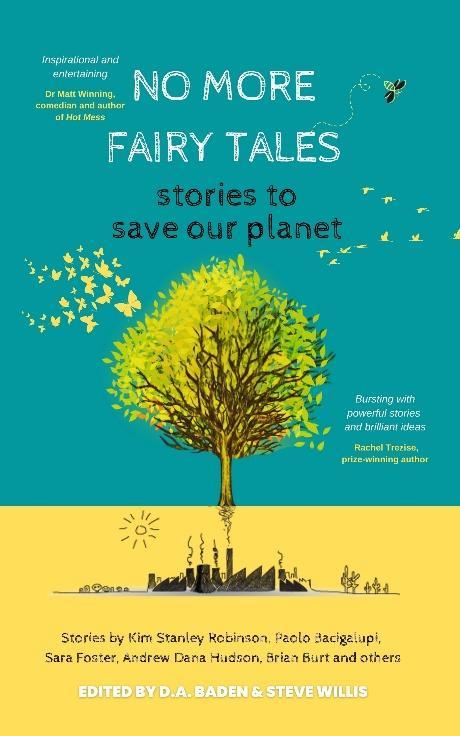
Habitat Press has published several books that write into this space. Many emerged from the Green Stories project which I founded with the goal of embedding climate solutions into mainstream fiction. It has run 21 competitions since 2018, resulting in numerous publications. One of these is the anthology of 24 stories: No More Fairy Tales: Stories to Save Our Planet, where we teamed experienced writers with climate experts to come up with stories that had solutions at their heart.
Stories range from technical solutions relating to carbon dioxide removal projects to more systemic aspects such as switching from GDP to a well-being index, sharing economy, personal carbon allowances, giving citizen assemblies legislative power – all of which would allow for a more sustainable long-term mindset conducive to directing investment towards sustainable technologies, practices, and decisions.
This anthology uses fiction as a testing ground to explore the more radical transformative ideas necessary for a truly sustainable society: ideas that are hard for politicians to talk about for fear of misunderstanding as they can’t easily fit into a soundbite. For example, an essential step is to upgrade our democracy to a form that allows us to think beyond short-term electoral cycles so that we can make more sustainable decisions. Citizens’ Assemblies are a positive step here.
One story from this anthology was adapted as a play called ‘Murder in the Citizens’ Jury.’ It’s a fun whodunit, set in a citizens’ assembly, where eight participants meet to deliberate upon climate solutions—and then there’s a murder!
Caption: flyer for theatre production by amateur theatre group, The Maskers.
The play also has an interactive element. A voting app and pullout voting and comment sheet in the programmes allows the audience to share their views on their favourite policies, so they feel like they are part of the citizen’s jury themselves. You can see a brief video of the first production by a local amateur theatre group here. The play is available to purchase from LazyBee, but if you approach me directly, I’m happy to allow amateur and student theatre groups to stage it royalty free.
The play is also available as a novella and audio book, ‘The Assassin’ of 16,000 words:
Eight people in a citizen’s jury, discussing the most important challenge in the history of humanity – how to save ourselves from the looming climate crisis. Exciting new solutions are proposed, each with their own champions and detractors. What they decide will affect us all. But they all have their own issues to deal with, and one of them has a hidden agenda. Who is the assassin and who are they there to kill?
Such storytelling is a great way to showcase new ideas. Usually in business or government, one would use a stakeholder analysis to see who is benefitted/harmed by any policy and how. These can be dry, and it’s hard to engage with the impacts emotionally as the groups affected seem distant. This story allows stakeholders to become characters and as such we identify with them and their needs more easily. We can then view any climate policy from the perspective of a variety of people, all of whom have a unique relationship to the proposal.
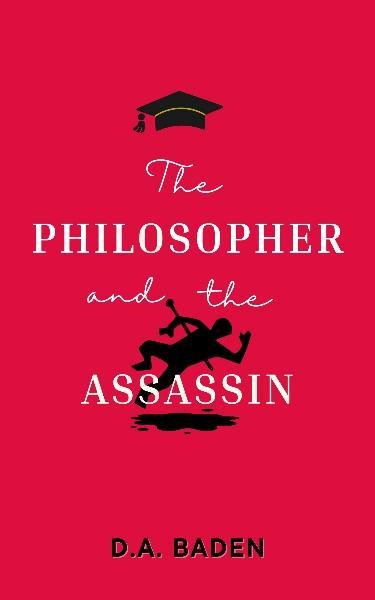
The Assassin also acts as a story within a story in a full-length novel The Philosopher and the Assassin. It’s rather different – think campus novel meets moral philosophy meets whodunnit.
There’s no more important job than educator, and no subject as necessary as moral philosophy. The trick is getting the students to turn up. So, when the Dean proposes the controversial concept of education entertainment, Professor Iris Tate goes all in with a moral philosophy course based on a whodunnit that all assume is hypothetical – a murder in a citizens’ assembly on climate. A variety of characters provide an entertaining source of ethical dilemmas, but what the students don’t know is that the ultimate dilemma is very real, and their conclusions will have far-reaching consequences.
An adaptation for TV won the Writing Climate Pitchfest, 2024. The book lays out in fiction format a roadmap to a sustainable future. It focuses on social science innovations in democratic, economic, financial, and social institutions.
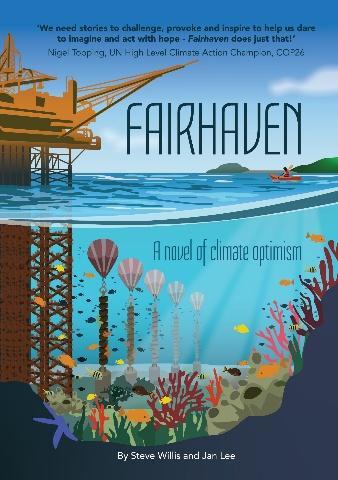
No More Fairy Tales: Stories to Save Our Planet features three short stories that explore the idea of giving the ocean a nation status. One is about the seed of the idea; another is set when the Ocean as Nation has begun and is facing its first challenge, and the final story is set decades in the future outlining what the new Ocean Nation looks like and how it has progressed. It was expanded into a properly thrutopian full-length novel, Fairhaven, written by engineer Steve Willis and writer Jan Lee.
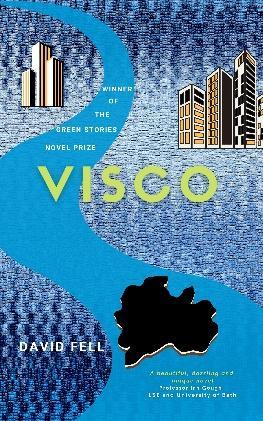
Visco won the 2020 Green Stories novel competition. The story imagines a giant music festival which allows free access to those who need care and their carers too. What emerges is a care-based mini-society. Those who attend love it so much, no one wants to go home when the music stops. So they don’t! This novel adopts the ‘protopian’ approach of imagining a quite plausible scenario whereby a mini community develops in stages. The characters face and overcome various challenges. David Fell brings to this novel all the knowledge he has gained in his years working as a sustainability consultant, using the novel to showcase alternative approaches such as the sharing economy and how a society based on care might work in practice.
Fiction, and science fiction in particular, is a great way to reach audiences beyond the environmental echo chamber, but to finish, I’ll talk about my next book, which is non-fiction but with a twist! It’s tentatively called A Jigsaw to Save the World. The twist – you guessed it – is that I plan to make it available also as a jigsaw.
I like the idea of a jigsaw as on the front cover is a picture which you are trying to get to. I read many books that do an excellent job of pinpointing the many problems society faces, and it’s usually not until the final chapter that any attempt is made at suggesting possible solutions. The news and pundits far and wide are keen to point out the problems we face. But it’s rare we take time to imagine what it might all look like if we did things better.
Rob Hopkins, in his book From What Is to What If, believes that when we take the time to immerse ourselves fully in imagining what kind of future we’d like to see, this creates a longing for it to happen. This in turn can galvanise action to make that dream come true. In his podcast From What Is to What Next, he asked guests to step into a virtual time machine, and to imagine themselves to be several years into the future and that we’ve done everything right and turned our society round. He then asked them to visualise what they see and hear around them. It’s a surprisingly powerful exercise when you do it yourself. Rob is right; it creates a yearning in the heart, a longing that almost makes you cry.
I do a lot of talks and workshops and often use this exercise myself. It’s remarkable that, in my experience, whatever the audience, the society people hunger for is always the same. First is always more nature. A close second is a sense of community, after that it’s more varied, but local food is often part of the picture, being outdoors more, less traffic. Public transport that is cheap, convenient and goes where you want, whenever you want. A more equal society, clean air and water. Access to health care and to feel hope for the future, or our children’s future. This is the picture on the front of the jigsaw. In every chapter, I will remind the reader of the society we are aiming towards.
Another reason I like the jigsaw metaphor is that we can see what pieces we may be part of in our own lives. It’s not just about building castles in the air for fun. The stakes are too high for that. We must work out how we get to our desired society. No one person or element can do it by themselves. We need every part of society to be working together to create this new picture. Whether we be in education, business, politics, members of our community, artists, journalists, or just as employees or voters with a voice, you can see where you fit in. At the end of every chapter, if you like what it’s proposing, I will suggest how you can make a difference.
I have an idea of the many pieces that will make up the jigsaw, and am working on the corners. The criteria for a policy to be a corner piece is that without that, all the other wonderful ideas or policies would not be as effective. Contenders for the corner pieces include citizens assemblies as our current democracy is constitutionally incapable of prioritising existential threats such as climate change over short-term issues. Another might be personal carbon allowances/tradeable energy quotas – also known as personal carbon trading. This would transform the decisions that are made by consumers and by businesses by incentivising us to choose low-carbon alternatives. Business purpose justifies a corner but it’s tricky. The current legal form of corporations makes it impossible for even well-meaning CEOs to prioritise societal welfare when it conflicts with profit maximisation for shareholders. What if all businesses were Benefit Corporations/social enterprises where their aim was sufficient profit to supply necessary goods and services rather than profit maximisation? What would happen to markets and pensions? It’s easy to imagine distant futures but the process of getting there without triggering collapse is harder. Yet the alternative could be human extinction. I’m running events to get people together to puzzle out these sticky problems. Details are available here.
While I’m writing the book I’m releasing abridged chapters as a fortnightly LinkedIn newsletter. Each edition focuses on one piece of the puzzle. Subscribe for free to feedback on the ideas and share your view on what the corner pieces should be. I’d love to know your thoughts!
Categories: Industry News
Thrutopia with Manda Scott and Denise Baden
Aware of other sub-genres that might sit alongside, overlap or appear to be similar to Zoefuturism, we welcomed contributions about them, to help shape our understanding of Zoefuturism relationally.
Below, Manda Scott and Denise Baden set out strong cases for Thrutopia.
This is interesting from a zoefuturist perspective because Thrutopia is about change and the journey; imagining positive futures and the practicalities of getting there has to be a good approach.
However, Zoefuturism does not presuppose an end point or a goal, more that there is a distinct need to fundamentally alter our world-view, of how we interact and fit in with the world in the broadest sense. It also does not delve in binarisms like positivity/negativity inasmuch as binaries are composites of a holistic purview of life.
We need healthy relationships between all of ‘life’ and ‘non-life’ in the now, acknowledging the diversities while engaging in the nuanced relationships that encompass nature, technology, and more. We need to understand that change is constant and how we live is what affects the possible futures that it is becoming.
We hope that celebrating other sub-genres while encouraging a Zoefuturist approach to reading and writing them will make them more impactful.
Yen Ooi and Stephen Oram (guest-editors, Zoefuturism) Read more: Thrutopia with Manda Scott and Denise Baden Thrutopian Road Maps An essay by Manda Scott (August 2025)“At times, a single fluctuation … may become so powerful … that it shatters the preexisting organization. At this revolutionary moment … it is inherently impossible to determine in advance which direction change will take: whether the system will disintegrate into ‘chaos’ or leap to a new, more differentiated, higher level of ‘order.’” – Alvin Toffler
If we who write can craft clear routes from a recognisable present, mapping towards a future that engages people at the limbic level, we can help tip the balance to a future where a critical mass of us begins to yearn for the outcomes offered, and change will happen.
This is the explicit foundation of the Thrutopian genre: offering route maps—of which there are, self-evidently, an almost infinite number—towards a future we would be proud to leave to the generations that will follow us.
If we can imagine forward seven generations and look into the eyes of a young person living in the world for which we have laid the foundations, if they feel safe, confident, fully connected to all parts of themselves, each other and the Web of Life, then we’re on the road to the emergent edge of inter-becoming from which an entirely new system can potentially arise.
As writers, we can gather the building blocks that are already emerging and make of them stepping stones across the river. Stretching the metaphor to breaking point, the narratives we thereby shape must at least offer a glimpse of a reason to cross (motivation), the means to make the crossing (agency), the route to take (direction) and the freedom to take it (empowerment).
This is the heart of behavioural change: MADE:
Motivation: with all my heart, I yearn for a future I can glimpse but not yet embrace;
Agency: I have the tools to take the first steps towards this future;
Direction: I know the routes away from my present state that will lead me towards the future I yearn for;
Empowerment: I am free of constraint in the present moment enabling me to take the steps and wield the tools in ways that will be effective.
Each of these belongs squarely in the realms of creative imagination. I am not pretending that crafting these is easy; it’s not. One of the many reasons there are so many dystopias and so few genuine Thrutopias is that it’s mind-bendingly hard to find peaceful routes to an equitable world in which humanity flourishes in concert with – even in service to – Life.
But it isn’t impossible and frankly, if the hardest thing we have to do in the next decade is get our heads around the thinking that already exists at the emergent edge of possibility, then we will be supremely lucky.
And this is the single most important point. If you take nothing else away, please believe me that there are people already working at the emergent edge of wide boundary systems thinking, of food and farming systems (we have to abandon industrial agriculture as a matter of urgency), of biomimicry, doughnut/ecological/degrowth economics, distributed governance systems, regenerative use of AI, urban and rural planning based on fully regenerative principles…
Every one of these is actively being pursued, it’s just that our legacy media runs with the old style mindset of ‘if it bleeds, it leads’ and they’re not up to speed (yet) with the idea that the existing system is disintegrating and a new one is already emerging from the ashes.
This is part of the Thrutopian narrative shift of which we are an integral part: building routes through, from a recognisable present towards a future we’d all be proud to leave to the generations that come after us.
Writing a future we’d like to see, the thrutopian approach. By Denise Baden (April 2026)Science fiction often envisions not just technological innovations but societal ones. For example, Ursula Le Guin’s The Dispossessed imagines an anarchic/communist society that is broadly utopian in its ideals and has distinctly different arrangements and values surrounding ownership. However, there are few novels that show the process by which we might get from where we are now to such a future. Kevin Kelly coined the term ‘protopia,’ which describes the process of improvement over time. Rupert Read similarly talks about ‘thrutopia’: how we get from where we are now to where we’d like to be, i.e. a flourishing, sustainable society. The idea was so powerful that bestselling author Manda Scott set up a Thrutopia masterclass for writers: “writing our way to a future we’d be proud to leave to the coming generations.” She moved from writing historical fiction to a novel set in the near future, Any Human Power, which adopts the thrutopian approach.
In this article I discuss some of the books published by Habitat Press, an indie publisher with a niche interest in stories that showcase thrutopian or protopian pathways. There are numerous ‘cli-fi’ stories that present dystopian visions of what will happen if we don’t act. These can be unexpectedly problematic, as research has highlighted the dangers of trying to ‘scare people green.’ Dystopian stories run the risk of fear-driven counterproductive responses, such as the blaming of marginalised groups or buying up all the toilet rolls. There are also numerous eco-fiction stories that persuade us to love nature and plant trees but get us no nearer to understanding what the really effective solutions are and, even more importantly, how we might get there from where we are today. This is a gap that I haven’t seen any fiction (other than Ministry for the Future) fulfil.
Steve Willis, a climate engineer and author (Fairhaven, Defying Futility) has allowed me to share his diagram of films, books etc., which plots dystopian/utopian visions of the future against plausibility. It’s clear that there’s little that is both positive and plausible.
Habitat Press has published several books that write into this space. Many emerged from the Green Stories project which I founded with the goal of embedding climate solutions into mainstream fiction. It has run 21 competitions since 2018, resulting in numerous publications. One of these is the anthology of 24 stories: No More Fairy Tales: Stories to Save Our Planet, where we teamed experienced writers with climate experts to come up with stories that had solutions at their heart.
Stories range from technical solutions relating to carbon dioxide removal projects to more systemic aspects such as switching from GDP to a well-being index, sharing economy, personal carbon allowances, giving citizen assemblies legislative power – all of which would allow for a more sustainable long-term mindset conducive to directing investment towards sustainable technologies, practices, and decisions.
This anthology uses fiction as a testing ground to explore the more radical transformative ideas necessary for a truly sustainable society: ideas that are hard for politicians to talk about for fear of misunderstanding as they can’t easily fit into a soundbite. For example, an essential step is to upgrade our democracy to a form that allows us to think beyond short-term electoral cycles so that we can make more sustainable decisions. Citizens’ Assemblies are a positive step here.
One story from this anthology was adapted as a play called ‘Murder in the Citizens’ Jury.’ It’s a fun whodunit, set in a citizens’ assembly, where eight participants meet to deliberate upon climate solutions—and then there’s a murder!
Caption: flyer for theatre production by amateur theatre group, The Maskers.
The play also has an interactive element. A voting app and pullout voting and comment sheet in the programmes allows the audience to share their views on their favourite policies, so they feel like they are part of the citizen’s jury themselves. You can see a brief video of the first production by a local amateur theatre group here. The play is available to purchase from LazyBee, but if you approach me directly, I’m happy to allow amateur and student theatre groups to stage it royalty free.
The play is also available as a novella and audio book, ‘The Assassin’ of 16,000 words:
Eight people in a citizen’s jury, discussing the most important challenge in the history of humanity – how to save ourselves from the looming climate crisis. Exciting new solutions are proposed, each with their own champions and detractors. What they decide will affect us all. But they all have their own issues to deal with, and one of them has a hidden agenda. Who is the assassin and who are they there to kill?
Such storytelling is a great way to showcase new ideas. Usually in business or government, one would use a stakeholder analysis to see who is benefitted/harmed by any policy and how. These can be dry, and it’s hard to engage with the impacts emotionally as the groups affected seem distant. This story allows stakeholders to become characters and as such we identify with them and their needs more easily. We can then view any climate policy from the perspective of a variety of people, all of whom have a unique relationship to the proposal.
The Assassin also acts as a story within a story in a full-length novel The Philosopher and the Assassin. It’s rather different – think campus novel meets moral philosophy meets whodunnit.
There’s no more important job than educator, and no subject as necessary as moral philosophy. The trick is getting the students to turn up. So, when the Dean proposes the controversial concept of education entertainment, Professor Iris Tate goes all in with a moral philosophy course based on a whodunnit that all assume is hypothetical – a murder in a citizens’ assembly on climate. A variety of characters provide an entertaining source of ethical dilemmas, but what the students don’t know is that the ultimate dilemma is very real, and their conclusions will have far-reaching consequences.
An adaptation for TV won the Writing Climate Pitchfest, 2024. The book lays out in fiction format a roadmap to a sustainable future. It focuses on social science innovations in democratic, economic, financial, and social institutions.
No More Fairy Tales: Stories to Save Our Planet features three short stories that explore the idea of giving the ocean a nation status. One is about the seed of the idea; another is set when the Ocean as Nation has begun and is facing its first challenge, and the final story is set decades in the future outlining what the new Ocean Nation looks like and how it has progressed. It was expanded into a properly thrutopian full-length novel, Fairhaven, written by engineer Steve Willis and writer Jan Lee.
Visco won the 2020 Green Stories novel competition. The story imagines a giant music festival which allows free access to those who need care and their carers too. What emerges is a care-based mini-society. Those who attend love it so much, no one wants to go home when the music stops. So they don’t! This novel adopts the ‘protopian’ approach of imagining a quite plausible scenario whereby a mini community develops in stages. The characters face and overcome various challenges. David Fell brings to this novel all the knowledge he has gained in his years working as a sustainability consultant, using the novel to showcase alternative approaches such as the sharing economy and how a society based on care might work in practice.
Fiction, and science fiction in particular, is a great way to reach audiences beyond the environmental echo chamber, but to finish, I’ll talk about my next book, which is non-fiction but with a twist! It’s tentatively called A Jigsaw to Save the World. The twist – you guessed it – is that I plan to make it available also as a jigsaw.
I like the idea of a jigsaw as on the front cover is a picture which you are trying to get to. I read many books that do an excellent job of pinpointing the many problems society faces, and it’s usually not until the final chapter that any attempt is made at suggesting possible solutions. The news and pundits far and wide are keen to point out the problems we face. But it’s rare we take time to imagine what it might all look like if we did things better.
Rob Hopkins, in his book From What Is to What If, believes that when we take the time to immerse ourselves fully in imagining what kind of future we’d like to see, this creates a longing for it to happen. This in turn can galvanise action to make that dream come true. In his podcast From What Is to What Next, he asked guests to step into a virtual time machine, and to imagine themselves to be several years into the future and that we’ve done everything right and turned our society round. He then asked them to visualise what they see and hear around them. It’s a surprisingly powerful exercise when you do it yourself. Rob is right; it creates a yearning in the heart, a longing that almost makes you cry.
I do a lot of talks and workshops and often use this exercise myself. It’s remarkable that, in my experience, whatever the audience, the society people hunger for is always the same. First is always more nature. A close second is a sense of community, after that it’s more varied, but local food is often part of the picture, being outdoors more, less traffic. Public transport that is cheap, convenient and goes where you want, whenever you want. A more equal society, clean air and water. Access to health care and to feel hope for the future, or our children’s future. This is the picture on the front of the jigsaw. In every chapter, I will remind the reader of the society we are aiming towards.
Another reason I like the jigsaw metaphor is that we can see what pieces we may be part of in our own lives. It’s not just about building castles in the air for fun. The stakes are too high for that. We must work out how we get to our desired society. No one person or element can do it by themselves. We need every part of society to be working together to create this new picture. Whether we be in education, business, politics, members of our community, artists, journalists, or just as employees or voters with a voice, you can see where you fit in. At the end of every chapter, if you like what it’s proposing, I will suggest how you can make a difference.
I have an idea of the many pieces that will make up the jigsaw, and am working on the corners. The criteria for a policy to be a corner piece is that without that, all the other wonderful ideas or policies would not be as effective. Contenders for the corner pieces include citizens assemblies as our current democracy is constitutionally incapable of prioritising existential threats such as climate change over short-term issues. Another might be personal carbon allowances/tradeable energy quotas – also known as personal carbon trading. This would transform the decisions that are made by consumers and by businesses by incentivising us to choose low-carbon alternatives. Business purpose justifies a corner but it’s tricky. The current legal form of corporations makes it impossible for even well-meaning CEOs to prioritise societal welfare when it conflicts with profit maximisation for shareholders. What if all businesses were Benefit Corporations/social enterprises where their aim was sufficient profit to supply necessary goods and services rather than profit maximisation? What would happen to markets and pensions? It’s easy to imagine distant futures but the process of getting there without triggering collapse is harder. Yet the alternative could be human extinction. I’m running events to get people together to puzzle out these sticky problems. Details are available here.
While I’m writing the book I’m releasing abridged chapters as a fortnightly LinkedIn newsletter. Each edition focuses on one piece of the puzzle. Subscribe for free to feedback on the ideas and share your view on what the corner pieces should be. I’d love to know your thoughts!
Categories: Industry News
2026 ESFS Awards Winners
The European Science Fiction Society (ESFS) announced the Hall of Fame Awards, Achievement Awards, and winners of the Chrysalis Awards for emerging talent.
The Hall of Fame Awards winners are:
Best Author
- WINNER: Luís Filipe Silva (Portugal)
- Marc Elsberg (Austria)
- Alessandro Forlani (Italy)
- Agnieszka Hałas (Poland)
- Christian Léourier (France)
- Ruth Frances Long (Ireland)
- Julija Lukovnjak (Slovenia)
- Michael Marrak (Germany)
- Emil Minchev (Bulgaria)
- Ondřej Neff (Czech Republic)
- Luís …Read More
The post 2026 ESFS Awards Winners appeared first on Locus.
Categories: Industry News, Industry News Home
2026 Heinlein Scholarship Recipients
Winners of the Heinlein Society's annual undergraduate scholarships for the 2026-2027 academic year were announced on July 7, 2026, Robert A. Heinlein's 119th birthday.
This year's winners are Riya Gupta, Nora Kane, Leslie Manga-Abomo, William Mar, and Evan Sturdivant. The scholarship awards $4,000 to each recipient. Winners were selected from 310 applications, including 40 international submissions from 22 different countries.
Gupta receives the Society's new, unnamed scholarship and will attend …Read More
The post 2026 Heinlein Scholarship Recipients appeared first on Locus.
Categories: Industry News, Industry News Home
2026 Deutscher Science Fiction Preis Finalists
Finalists for the 2026 Deutsche Science Fiction Preis, presented by Science Fiction Club Deutschland (SFCD), have been announced.
Best German-Language SF Novel
- We Burn the Sun, Anika Beer (Piper Verlag)
- Asimov's Kindergarten, Reda El Arbi (Lectorbooks)
- Der Himmel wird zur Seet, Sven Haupt (Eridanus Verlag)
- Ein Übermaß von Welt, Sven Haupt (Eridanus Verlag)
- Thanatopia, Tom Hillenbrand (Kiepenheuer & Witsch)
- Pandoras Flotte, Christian Märtesheimer (Atlantis Verlag)
- Denial of Service, Aiki …Read More
The post 2026 Deutscher Science Fiction Preis Finalists appeared first on Locus.
Categories: Industry News, Industry News Home
Searching the Medical Literature for Yourself
by Randall Hayes, PhD
Read by Robert GreenbergerIn these early days of artificial intelligence, when hallucinated facts and completely fabricated reference sources are disturbingly common, there is substantial value for fiction writers in being able to navigate structured databases of primary and secondary scientific research, usually in the form of articles in academic journals. For the uninitiated, primary articles are written by the people who performed the experiments and peer-reviewed by other objective scientists. Secondary review articles are written by scholars, who may or may not be experimentalists themselves, who compare, integrate, and evaluate results from multiple primary articles. Tertiary sources are journalistic articles written by non-specialists, such as this one.
Some academic disciplines maintain their own idiosyncratic databases, such as ArXiv, but we’ll focus on the National Library of Medicine’s PubMed, which now requires that any new article based on research funded by the federal government be uploaded to its servers as a free and publicly accessible full-text version, or at least linked to an equally available free version at the publisher’s website. This policy applies only to recent work; older articles may be immediately available only in abstract form. An abstract is a summary meant to give the reader some insight as to whether it’s worth the effort to track down the full paper.
Where to StartFor authors who may be specialists in their own fields but not others, or who may be self-taught generalists, starting higher up in the stack is advisable. Journalists will provide some interpretation and context based on their own previous research, and some will provide links to reference papers for further research. Even when they don’t, they will name their sources, and those names can be plugged into PubMed as an author search. For instance, either “Randall Hayes” or “Hayes Randall” will pull up a single Cerebral Cortex paper from 2006, based on my dissertation research with stroke patients. This is a primary journal article. It includes an introduction section intended to provide some context before presenting the results of my specific experiments, and a discussion that tries to interpret those new results. However, those sections are largely lists of references to other papers. Most career scientists read these things in light of their long experience, and much remains unsaid.
For getting up to speed on what professionals think of a field or even a specific research question within a field—what the controversies are, where there are holes ripe to be speculated on in a story—the secondary reviews are the place for SF authors to focus. Reviews will provide more context, more cognitive scaffolding in the form of commentary and conceptual diagrams. Often, these will take the form of flow charts or causal models, which are wonderful for sparking thought experiments. Such as:
- What if this arrow were missing/broken, and what could plausibly break it in my story?
- What if we could bypass this other element? How might we do that?
Sometimes these static diagrams can be animated for further insight, using simple tools like Nicky Case’s LOOPY.
How to Find a ReviewThe easiest way is simply to ask for one by typing in a search query. For instance, a query inspired by my paper above could be “visual deficits in temporal lobe stroke review.” The current version of PubMed will break down the search terms and map them to its standard controlled vocabulary of MeSH. This step is typically hidden unless you click the plus icon to the right of the “View Search Details” banner beneath the search bar. This query yields 13 results, which is manageable, but limiting it to reviews is as simple as clicking the “Reviews” box in the filter sidebar on the left-hand side of the page.
Evaluating the Search ResultsThe first article, “Disorders of facial expression and comprehension,” from 2021, could drive a narrative. It turns out that this particular paper is actually a chapter in a book called Handbook of Clinical Neurology. There is an abstract but no full-text on PubMed. The publisher adds some snippets and the references, but not the full paper. This might seem like a dead end, but depending on your purpose, it may not be. For example, if all you want is the general idea that people with right-hemisphere lesions have difficulty reading faces but not experiencing emotions themselves, that might be enough to generate a story on its own.
But let’s say you were struck by the phrase, “The participants with right- or left-hemispheric strokes attempted to determine if two different actors were displaying the same or different emotions,” from the abstract. That specific test could be the basis for a scene in your story. How was the experiment done? This is somewhat more difficult, as most of the references at the publisher’s website are older. Plugging them back into another PubMed search does not reveal full-text versions, whose “Methods” sections would describe in some detail the data-collection protocol. The author, Kenneth Heilman, would have had a personal lab webpage at the University of Florida, where he might have maintained web-accessible copies of his own papers, but Dr. Heilman died in 2024. Putting his name into Google Scholar reveals 50 of his papers publicly accessible, but not that one. This situation will likely require the assistance of a librarian. Best to move on for now.
The second search result, however, “Cerebral Embolism as a Result of Facial Filler Injections,” from the Aesthetic Surgery Journal in 2022, has a full-text version in PubMed, with a list of individual cases and pictures! Perhaps the testing scene could be replaced with a surgery scene detailing what caused the stroke in the first place. Then the discovery narrative might be less about the detailed neurological consequences of the embolism and more about how to hold the surgeon accountable.
Combining thoughts from multiple papers into a sort of Venn diagram of narrative possibilities is the essence of how I work with scientific literature. I only drill down for details when I need them to enhance the reader’s experience. I also encourage serendipity, as in the workflow above.
Explore more articles from Writing from Science
Randall Hayes, “your friendly neighborhood neuroscientist,” has been publishing science fact articles online for about 10 years, starting at the Intergalactic Medicine Show and, since its closure, branching out to other venues such as Utopia Science Fiction and Trollbreath Magazine. A currently incomplete list of his work is at the Internet Speculative Fiction Database. His personal newsletter, Doctor Eclectic, is at randallhayes.substack.com.
The post Searching the Medical Literature for Yourself appeared first on SFWA - The Science Fiction & Fantasy Writers Association.
Categories: Industry News, Industry News Home
2026 Sunburst Award Shortlist
The five-title shortlist for the 2026 Sunburst Award for Excellence in Canadian Literature of the Fantastic was announced July 6, 2026:
- The Works of Vermin, Hiron Ennes (Tor) amazon / bookshop
- Horsefly, Mireille Gagné, tr. Pablo Strauss (Coach House) amazon / bookshop
- Wild Life, Amanda Leduc (Random House Canada) amazon
- The Lady, The Tiger and the Girl Who Loved Death, Helen Marshall (Titan) amazon / bookshop
- Veal, Mackenzie Nolan …Read More
The post 2026 Sunburst Award Shortlist appeared first on Locus.
Categories: Industry News, Industry News Home
James Ray Comer (1966–2026)
Author and historian JAMES RAY COMER, who wrote as J. Comer, 59, died in late April or early May 2026.
Comer was born August 5, 1966. He wrote several pieces of short fiction, including Soldier's Coat (2015), Scratch (2016), The Wooing of Etroklos (2016), Star Thistle (2018), Beam That Is In (2019), Tilting the Wick (2020), Sky Machine (2021), Sometime Called Parchment (2021), Quicksilver (2023), and The Weather Maker (2024). …Read More
The post James Ray Comer (1966–2026) appeared first on Locus.
Categories: Industry News, Industry News Home
Weekly Bestsellers, 6 July 2026
Three debuts, Danielle J. Jensen's The Inadequate Heir (Del Rey), K.M. Moronova's Once Upon a Demon's Heart (Bloom), and Jaymin Eve's Night Witch (Mira), each debuts on both the USA Today and Publishers Weekly lists.
Title Debut / #wks on any list NYT
07.12 LAT
07.05 USAT
06.28 PW
07.06 Amz
(07.06) UK:
…Read More
The post Weekly Bestsellers, 6 July 2026 appeared first on Locus.
Categories: Industry News, Industry News Home
Ted White (1938–2026)
Author and editor TED WHITE, 88, died May 24, 2026. He was in palliative care.
Theodore Edwin White was born February 4, 1938. He contributed to SF fanzines at a young age and won the Hugo Award for Best Fan Writer in 1968. He was assistant editor at F&SF from 1963-1968 and editor for Amazing Stories and Fantastic from 1968-1978. As an author, he wrote Invasion from 2500 (1964) with …Read More
The post Ted White (1938–2026) appeared first on Locus.
Categories: Industry News, Industry News Home
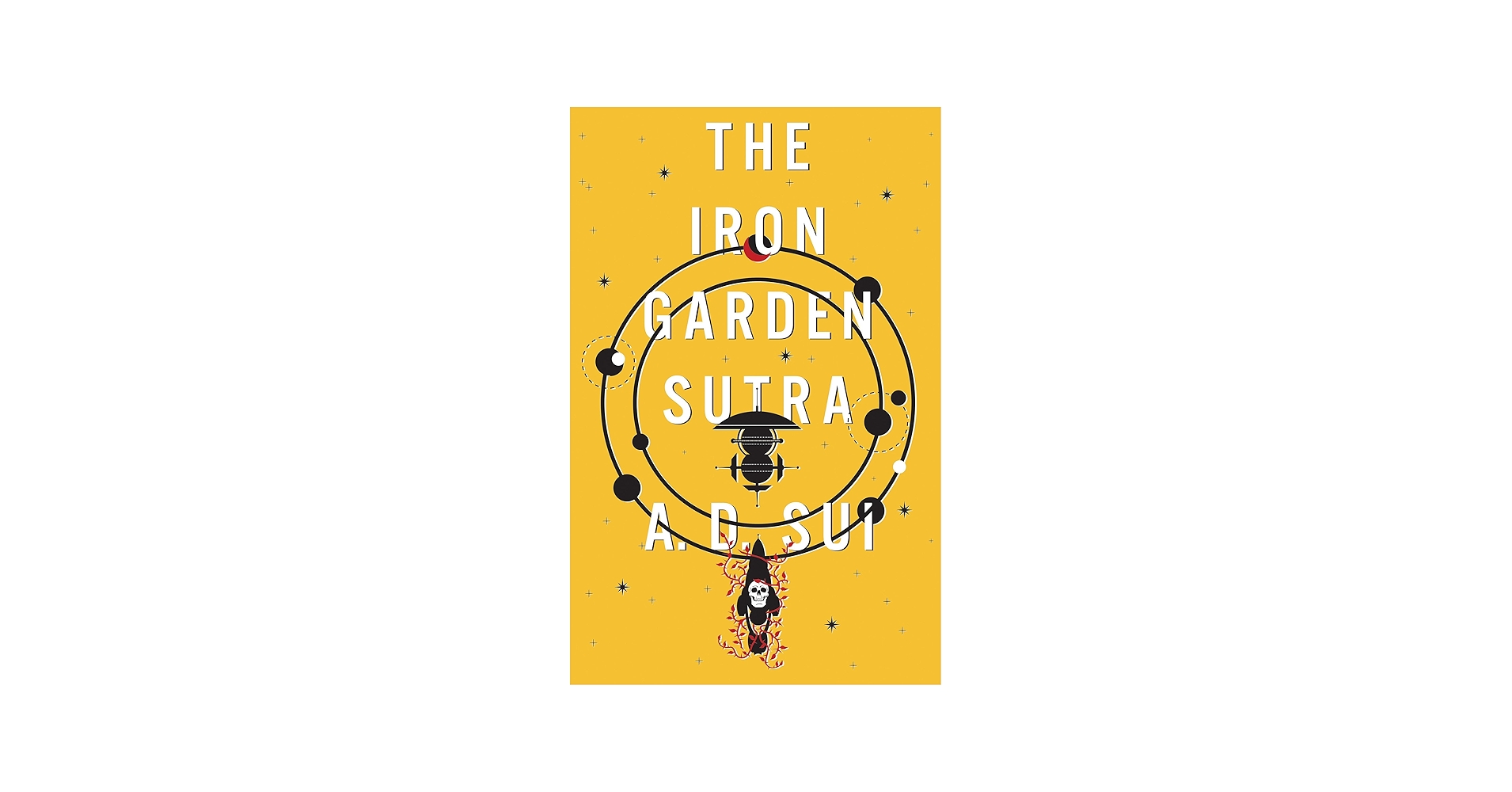
Jean-Paul L. Garnier interviews A.D. Sui
Jean-Paul L. Garnier: One theme of The Iron Garden Sutra concerns failed generation ships and the existential troubles they face during their journeys. I have read several books recently with similar takes on generation ships. Do you feel that this kind of story reflects a growing tension between generations in the real world and youth feeling that they have been dealt a bad hand by previous generations?
A.D. Sui: Generation ships are a long-standing tradition in sci-fi. What’s not alluring about packing up ourselves into a tin can and running off into the universe in search of greener pastures? But in my opinion, it’s also a very naïve take. Space is hostile. Space is hard. But there is a romanticism in cutting and running. Staying is, arguably, far more difficult.
I think every generation feels that pull of running away from their reality. Every generation can say that they have been dealt a bad hand. Millennials are economically disadvantaged because of policies enacted by Gen X and Boomers (and yes, have lived through three recessions now, but who’s counting?). Gen Xers felt they’ve been invisible all their lives. Boomers, I’m sure, felt disadvantaged in some way as well. Hard to imagine now, but one might. The generation before probably felt that they were unfairly thrust into a war that was only possible because of what the previous generation had done. And this is just the North American perspective. There are many more global conflicts, recessions, and other strains on each generation. We all want to run away, thinking that it will be better. To where? No one knows for sure, but somewhere that isn’t here.
Part of The Iron Garden Sutra’s theme is deciding when to stand your ground and fight for the things we believe in. Even if we are one person. Even if the outcome doesn’t look hopeful. Millennials are of the age when our financial decisions and our voting have the most impact. Some of us are even in positions of influence. Some are making decisions on scales that will impact the next generation (hi, Gen Z, and sorry). We can continue to bemoan the hand we’ve been dealt, or we can also work towards leaving things better for those who are coming after us. I, personally, am a huge fan of complaining while doing the thing.
It’s going to suck and it’s going to be a lot of work, sure, but we can leave a better world for those after us.
You’ve also created a religion in this novel, The Starlit. What did the process of creating a theology look like for you, and please tell us about the introduction of cosmology into the religion of peoples who have colonized the stars?
The Starlit is loosely based on Zen Buddhism. I have a very strong preference for non-monotheistic religions and like pondering where they can end up in thousands of years. What is the natural progression of something like Zen if it was supported into the future? What would its practitioners decide to keep and what would they discard? Because religion does change! Doctrine does change! It changes very slowly since religious institutions are massive and can’t afford to throw their entire weight around every other week, but it does change.
I think the introduction of cosmology is the natural transition, given how we commonly incorporate elements from our immediate environments into religious texts. Parting the Red Sea, trudging through deserts, and all that. If people are traversing between stars frequently, then star-like language would begin bleeding into texts.
The Iron Garden Sutra has multiple AI characters. Would you have written these characters differently had you written this book today?
I’ve been doing a lot of laughing/crying since the book has come out. You can guess why.
A very niche fury that I’m experiencing about GenAI is that it has taken a very well-established trope in sci-fi and made it into a real-life abomination. I’ve been hearing some discussions in the genre that we need a new name for this concept now because any time we even drop the term “AI,” readers begin to think that we support the existence of Grok.
In The Iron Garden Sutra, I have tried to move from the term “AI” and sometimes use “synthetic consciousness” because that’s really what I’m describing here. This is a fully-fledged individual that can act (mostly) autonomously, who has agency and drive, but isn’t born from organics. This isn’t Claude writing an email. This is something that is as much of a person as other characters in the novel.
If I were to write this book again, I’d change nothing. I think I would lean into the AI ethics component of the book even harder to hammer the point home that these characters are sentient and deserving of individual rights. The caveat is that if I were to rewrite it, it would take several years for the book to get published and by that point we’d all be fighting Boston Robotics dogs for access to fresh water, and no one would be reading anymore.
Two of the characters in this book share a body. What complications arose during writing characters that do not have complete bodily autonomy and must occupy the same internal space?
Two characters/one body is becoming a very popular trope in spec fiction!
This was, arguably, my favorite dynamic to write and explore. What kind of relationship can you have when one of you cannot act on the physical world without the other’s permission? How does a relationship develop when you have complete access to someone’s deepest, darkest thoughts?
There’s a balance of power between Iris and VIFAI (Iris’s AI companion/helper) and I think this allows them to have a true relationship and friendship, even if Iris doesn’t believe it at first. It’s the closest and most meaningful relationship Iris has had in his entire life, but it cannot stay pure from the fact that he *is* the container for VIFAI and the one supposedly “in charge”. Without spoiling anything, this does budge a bit throughout the book and Iris does come to a deeper understanding that VIFAI is not as helpless as Iris had believed it to be.
The name of the main spaceship in the story is the Counsel of Nicaea, which suggests a Christian theological bent, and is a great contrast to the Starlit and their worldview reminiscent of Buddhism and Hinduism. What were your aims in creating such a stark, yet subtle, contrast?
The contrast does exist, but it was not intentional!
The Buddhist worldview is the one I am most familiar with and preferred writing from that vantage point, and I must admit that the Christian theological bent was inspired by the generation ship in the ‘Expanse’ series, and the Nauvoo, which was commissioned by a group of Mormons who wanted to travel far past the Solar System. It made sense to me that a group of people united by intense faith would do well in long-term space travel. Although, as we see with the Nicaea, that might not always be the case.
Without spoilers, the main character has revelatory experiences leading him to contemplate the meaning of the void and the space between the stars. Can you elaborate on how you used spiritual growth and crisis of faith in your character arcs?
Oh, poor Iris.
I wanted him to be a reluctant monk. I wanted him to look right, wear the right clothing, say the right things, but I wanted him to think all the wrong ones. Well, what he believes to be wrong. I think there is a stereotype of monks being happy and peaceful at all times, but in reality, they are just people, experiencing the same existence we are, who also hold a specific job. Being a monk is a job, above all else, and people come to it for very different and personal reasons.
And I wanted Iris to grapple with how he related to the doctrine and his role as a monk. I wanted to push him towards an understanding of what holding the role of a Vessel meant to him. There is a term in Buddhism called a koan. It’s kind of like a riddle used to impart a teaching of some sort and it’s often posed by a teacher to their pupil. The goal is for the pupil to have a revelation, to “get” the koan. There is no single answer to a koan, but rather a feeling that comes when one understands it. It’s like that feeling you get when you’re learning to ride a bike and after stumbling and falling, and trying over and over again, suddenly, you catch your balance. Hard to describe, but once you have it, you have it.
The entire experience aboard the Nicaea is a koan for Iris, a question of his relationship with faith that only he can answer, and only towards the end.
There’s a sequel coming, The Starlight Samsara.. Can you tell us about when and what we can expect from the continued adventure?
The sequel should be coming sometime near the summer of 2027! You can expect some new faces in the cast, but also some favorites returning. While The Iron Garden Sutra touched on the notion of AI ethics, The Starlight Samsara takes a deeper dive into the topic. And finally, things do get better for Iris, but not before they get significantly worse.
A.D. SUI is a Ukrainian-born, internationally raised speculative writer, Nebula winner, and Aurora, and Theodore Sturgeon Memorial Award finalist. They are the author of The Dragonfly Gambit (2024), The Iron Garden Sutra (2026), and more than two dozen short stories. A failed academic and retired fencer, they spend most days wrangling their two dogs and tending to their myriads of tropical plants.
You can find them on most social media platforms as @thesuiway and https://thesuiway.ca/
Jean-Paul L. Garnier is the owner of Space Cowboy Books bookstore and publishing house, producer of Simultaneous Times Podcast (2023/25 Laureate Award Winner, 2024 BSFA, Ignyte, and British Fantasy Award Finalist), and was the editor of the SFPA’s Star*Line magazine from 2021-2025. He is also Editor-in-Chief of Electronic Brain magazine. In 2024 he won the Laureate Award for Best Editor. He has written many books of poetry and science fiction. https://spacecowboybooks.com/
Categories: Industry News