
Vector [BSFA] Blog

A Deeper Magic: Paul March-Russell in conversation with Lisa Tuttle
The following is an edited transcript, abridged from the original conversation that closed the BSFA/SFF AGM on 14 June 2026. The event was held online on Zoom.
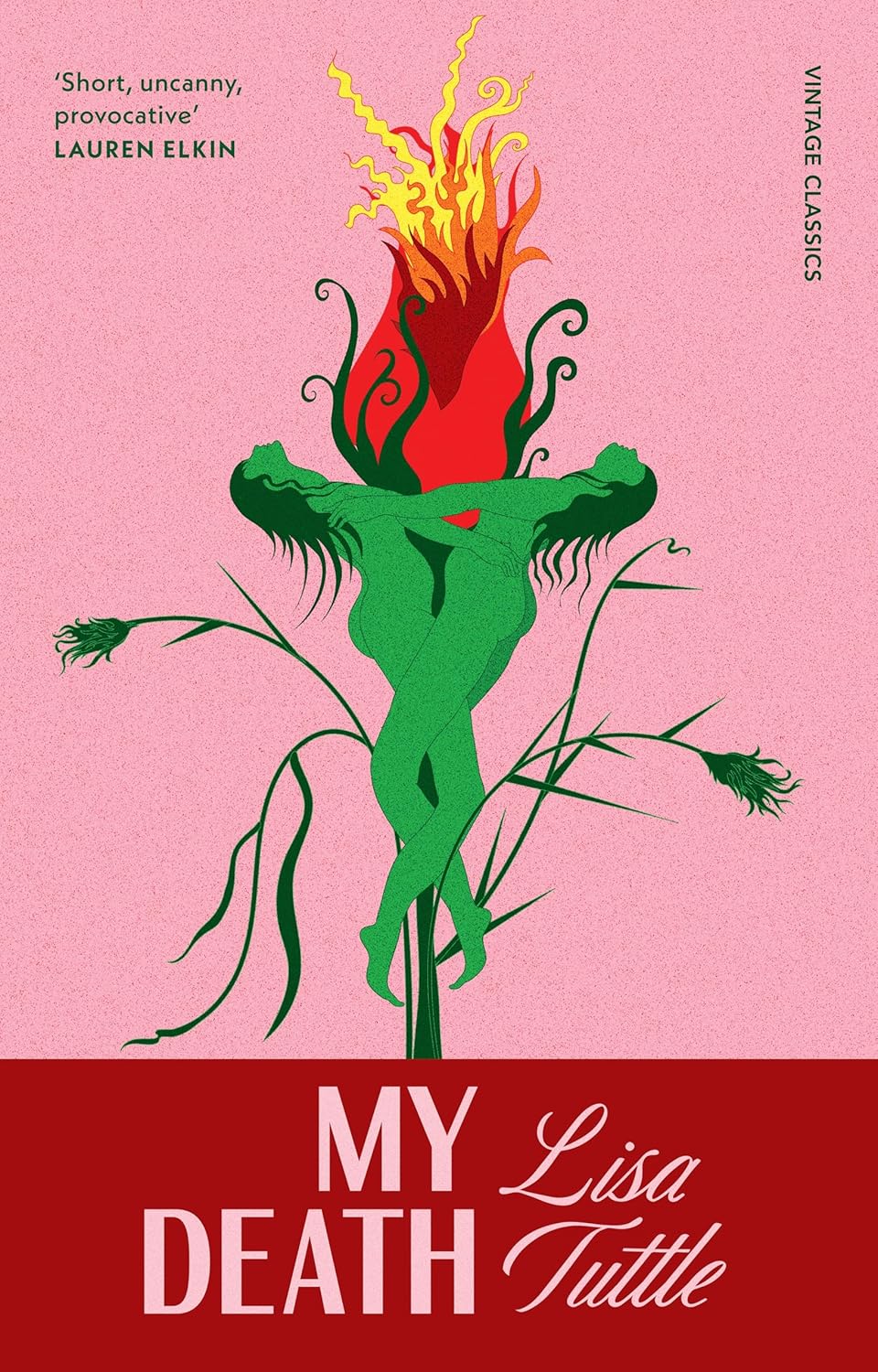
Paul March-Russell: I’m honoured to have Lisa Tuttle here to discuss her novella My Death, which was originally published by P.S. Publishing in 2004, reprinted by NYRB Classics, and is now available in a beautiful edition from Vintage. A number of Lisa’s other works are also being reprinted by Valancourt – A Nest of Nightmares and later this year Lost Futures, which was shortlisted for the Arthur C. Clarke Award in 1993. Lisa, it’s a delight to have you here. My Death is a wonderfully intricate work, so I’m going to be very careful to not give anything away. But what was it that first inspired you to write the novella?
Lisa Tuttle: It was a few things that came together. One is that I’ve always been interested in women writers, women artists, particularly women who’ve been sort of forgotten. I can’t think who it was, someone like Gail Godwin, who was recently talking about when she was at college, she always felt slightly embarrassed being particularly interested in women writers. It didn’t seem right. You were supposed to look at the great writers, and they were all men. Well, I’m from a slightly younger generation, and I think that by the time I got to college, there were women – women’s writing, women’s work, women’s history. The courses were just starting. This was back in 1970. So, I didn’t feel this wasn’t proper. It was like, no, now is the time to find out about all these forgotten women or the women who haven’t been celebrated.
I also read a lot of biographies and autobiographies by women and about women. And at one point, years ago, I thought I might write a biography, but it all seemed a bit too daunting. What suited me better was to write an imaginary biography of an imaginary writer or artist or muse. That was another subject that interested me: women playing the role of muse to a male artist or writer. I’d recently read a memoir of Robert Graves, can’t remember by whom (we’ve just moved house so my books are everywhere!). But one of the things was that the author and his wife went to live in Mallorca, and he had a letter of introduction to Graves, who was at that time living with the American poet and critic, Laura Riding, and the stories that he told about her just fascinated me. I was interested in writing about someone who’d been connected to a more famous male, but had her own talents, more than just being a muse. So, I took elements of Laura Riding’s life for my imaginary writer, and I began in a kind of semi-autobiographical fashion to write about a woman writer, who would have been around my age at the time.
The writer was widowed which I was not, and am still not, I’m very happy to say. But she had some of my own characteristics. That was a kind of a tease, in a way, because some of the things were true. I made her be from Texas, going to college in New York, and then coming over to Britain, winding up in Scotland. And the writer that she is interested in is someone she first encountered as a painted female figure, a kind of mythical person. Because that was another element. I’ve recently been going through my old notebooks, and some of the same names were in there from this story I’ve never written. It was called ‘The Fountain’, and there was a Willie Logan and a Hermione, I think, or Hermine. It was a sort of Circe story with a magical fountain and men being turned into animals. But anyway, I never wrote that, but it was something I was thinking about at the same time. And then Pete Crowther invited me to write a novella, and so suddenly I had a reason to write this, because I couldn’t really see it as a novel and it was way too complicated for a short story. And, in fact, I didn’t even know how it was going to end. When I began writing it, it was really just a character a bit like me researching someone who turns out to still be alive, so she can actually go and interview her, and then finding these rather odd connections or echoes of her life.
PMR: That’s fascinating. When I was a recently graduated PhD student in the early Noughties, around about the time that you’d have been writing My Death, Laura Riding had really come back into focus in terms of modernist studies. And there’s lots of other allusions here. You start with an epigram from the poet H.D., and again, we’ve had more recent reclamations of people like Leonora Carrington and Ithell Colquhoun. I was wondering whether you saw the novella as part of a process of reclamation? Is it contributing, not just as a kind of fictional biography, to that process of reclaiming women writers and artists from the past?
LT: For me, certainly. Leonora Carrington was very much on my radar, because when I was living in Austin, Texas, there was an exhibition of her work at the university. And I thought, whoa, she’s fantastic. And she was a writer as well, and I bought some of her books which were being reprinted by small presses back then in the 70s. So, Carrington was part of that. H.D., very much. I read two biographies of H.D, and I had her collected poems, and I was fascinated by her early life story, being picked up as a modernist writer, and her relationship with Ezra Pound, and her very much not traditional relationships and marriages and semi-marriages with both men and women. So, she was a fascinating character as well. But Ithell Colquhoun, I had not even heard of, but then I got an email from someone a couple of years ago. The strange thing is that there was something in The Guardian about her, I think, and I was reading about her, and thinking she sounds fascinating. Then I got this email from someone saying, was this one of the real women behind your idea? And I had to admit, no, I’d never heard of her until a week ago. It’s also quite exciting, I think, to find these writers and artists who have dropped out of sight, and are being constantly rediscovered. I love it. I love coming across an artist I haven’t heard of before, or a book by a writer, particularly when they’re women.
PMR: Exactly. It does seem to me that the republication of My Death is feeding into this whole process of reclaiming the work of early 20th century women writers and artists, but also more recent ones. So again, we think about people like Ann Quin and Anna Kavan and Maureen Duffy. Which brings me to my next question, because the other thing I really love are all these period details about Virago Press. So, the narrator has a copy of Helen Ralston’s novel In Troy (more echoes of H.D. I suspect) published by Virago, and there’s even a little account of how they went about reprinting their books, and the damage done to the original text. Was there also a reclaiming of the history of women’s presses and a revisiting of your own early life as a writer?
LT: I didn’t think, I’m going to reclaim women’s publishing history, I was just looking into my own recent past. In the 80s, I lived in Harrow and I joined a group called Women in Publishing, because it was a way of meeting other women since I didn’t go out to work. And I didn’t want to just meet people – I already knew people in the science fiction field – I felt like I needed some new friends of my own. And so I joined Women in Publishing and we would do things like type up things in the Virago offices or have conferences where some of the more established women publishers and editors would be. I was mainly with people working in publishing, but one year Jeanette Winterson and I were on the same committee. I even briefly provided maternity cover for Sarah Lefanu at the Women’s Press. It was just for a few months, but I was working with Tanith Lee and Carol Emshwiller, possibly Josephine Saxton. These were books that Sarah had bought and I’d be on the phone to her every couple of days. I wrote the Encyclopedia of Feminism as well, and when that was about to be published by Longmans, I was actually invited to a sales conference. There were all of these eye-opening facts about the reality of publishing, and I subsequently married someone there who had signed the contract for A Nest of Nightmares. We were both divorced and we’d run into each other at parties and things like that, and I think it was on our first or second date where I referred to A Nest of Nightmares, and I said, oh, I don’t know if you know it. He said, of course I know it, I read it. I said, well, I wouldn’t assume that you would go out and read something by me. And he said, Lisa, I published that book, I’m the one who bought it. And I said, no, no, no, no, no, that was Nann du Sautoy. She’s the one who took me out to lunch and commissioned the book, and he said, look who signed the contract. And he had. I hadn’t even realized he had been there. So, meeting other publishers and writers, who always complain about publishers of course, it’s always been a thing. But yeah, it was fun to have this character just going back to how things had been. Of course, things had changed a lot by the early 2000s, but everything I knew about publishing was from the 80s.
PMR: It’s an absolutely fascinating history. Women in Publishing has also been celebrated by the British Library with a whole bunch of links on their website, including an interview with yourself. And Rosy Mack has got a forthcoming book about the Women’s Press.
LT: Yes, I spoke with her.
PMR: So, it’s not just that this book is chiming with that reclamation of women’s writing from the early part of the 20th century, it’s also feeding into this other reclamation of the post-war enterprises of Women in Publishing, Virago, Women’s Press. It’s full of these lovely period details but a sense also of continuity over the decades that adds to the pleasure and grounding of the whole story.
You mentioned earlier that there were some biographical similarities between yourself and the narrator, and I wondered if you could say a little bit more about that, but also about the way in which there’s a doubling between the author, the narrator, and Helen Ralston. I don’t want to offer any plot spoilers, but would you say a little bit more about how that doubling emerged in the writing of the text?
LT: It’s very difficult to talk about because a lot of things that I write are sort of semi-conscious, or even unconscious, and quite often I draw on things from my own life without knowing it. I mean, I hadn’t realized that Ralston was a friend’s grandparent’s name. I don’t know if I knew it or if it was just a strange coincidence, but chances are I’d heard it, and it was connected with Scotland because that was where her grandparents were from. I often find that when critics are looking at things and talking about them, I just think, well, the way I work is I put something in because it just occurs to me when I’m writing. Only later do I think, that’s what it was about, there was a reason for that, it wasn’t just random. But at the time, it felt random – you know, where was her first job, who is this person, what name can I give them? And then it comes to seem more important or it has an echo with something. But I have to admit the doubling was not a conscious decision. It wasn’t like, oh, I’m going to do this, so that the reader will notice it or be happy about it or excited or question it. It’s just more happy accidents and coincidences, and I find that very often when I’m writing. Not just fiction writers but people doing research, I think, will probably recognize the way you stumble across so many serendipitous discoveries. You’re not even looking for it, you were looking for something else, and then you find the absolutely perfect detail. It’s just a kind of going with the flow, in a way.
PMR: And I’m assuming that the intricacy of the story must come through the drafting and redrafting as you incorporate those accidents and explore them further?
LT: Yes, I always think my first drafts are horrible. They’re very rough. Of course, the whole idea of a draft is not the same as when it used to be on a typewriter, and then you had to start retyping it. But I still do have a tendency to start over again rather than just trying to make little changes, because I feel it’s not good enough, you know? I will waste a lot of time just trying to rewrite something that I’ve just written. So, I think it’s often better, for me anyway, to just move on, and then when I go back to it, I can fix it. But I’ve just had this thought about something I’ve been working on for probably two years, which I haven’t been able to write because I’ve been busy with other things. The book opens going down a particular road that I’m describing, an imaginary road based on a real one, and I just started thinking, oh, I began in the wrong place, and I’ve just thought of a different opening for it.
PMR: Really?
LT: Yeah, completely different.
PMR: Wow, that also makes me think of something you said earlier, that you didn’t know what the ending was going to be for My Death…
LT: I know it seems unlikely, doesn’t it?
PMR: Again, no plot spoilers, but it’s not just the intricacy, it’s also about choosing whether this is going to be a short story, a novel or novella? Because the novella has a particular kind of form and structure to it, and critics will say, you need an epiphany or turning-point at the end, some kind of revelation, but if you’re working blind, the form becomes kind of interesting, doesn’t it?
LT: Well, it’s the way I usually work. Actually, though, usually about halfway I will realize what I’m aiming at, you know? But the very final ending is different than I was originally thinking it would be halfway through.
PMR: Yeah, I won’t say anything more about the ending, but it literally goes, whoa! And it throws you out, and then you go, oh, hold on a minute, I’ve got to re-read this, so it’s that classic short story or novella form, the twice-told tale. You’ve got to go back and read it all again which is so, so pleasurable. The other thing I wanted to pick up on, apart from that dramatic twist, is the way the novella seems to resolve itself – because, you know, this is a slippery tale we’re talking about – but it seems to suggest the presence of parallel universes, alternate timelines, which we see also in Lost Futures and some of your earlier short stories like ‘No Regrets’, the opening story in A Spaceship Built of Stone. What significance do you see that notion playing in your work more broadly? What is it about that theme that draws you in over and over again?
LT: It does… it does interest me. It has for a long time, I guess. Reading other people’s takes on these things like R.A. Lafferty. Not just alternate histories, but the whole idea of time travel, the idea that you could actually change the past and then what does that mean? One of the things that has had an impact on my writing of time travel stories is the very notion of alternate time streams and the actual theory behind that, not some kind of fantasy, of going back and changing the past. Although if it was real, you’d never know it, for the rest of the world would just be carrying on in its usual path. There’s some people in Hollywood who have written a script of My Death which they’re hoping to sell. And I got a phone call from them once, asking me, when does this happen and how does that happen? And I said, well, there is no explanation. Because it isn’t something that happens every day. So yeah, there probably are echoes of ideas like alternate realities, but there’s no explanation.
PMR: Exactly. Instead, that’s the mysterious effect the novella has because as an author you pause the reader and say, no, I can’t explain it. But in that moment, the story pulls me back in again, because now I’ve now got to re-read it from the start, and that reiteration is like a time-travelling effect. I’ve been here before but it’s not the same place.
LT: Yeah, it wasn’t like a conscious decision, like I’m going to play with time travel like that. It was because the story just evolved that way. And I didn’t worry too much about not explaining what happened. I didn’t have a clever magic trick or whatever, but that’s the thing about fantasy, right? It doesn’t always come with an explanation, unlike a magic trick, which can be unwound and explained.
PMR: And in that way, it’s such a wonderfully slippery tale. But that alternate timeline also seems to feed back into the reclaiming of women’s histories, an alternate way of looking at, in this case, the 20th century. So, it seems structurally connected to the whole point of the story. It’s not just a rabbit out of the hat, as it were.
LT: Oh yeah, definitely, it’s not meant to be. But you know, sometimes you read a book, and you really feel like this is my story, or it may not be your actual story, but there’s something in it that you then want to know about the writer. Like, how did you get to this, and where did this come from? And I suppose it’s why people then want to read biographies of writers or artists, because if their work speaks to you, then you sort of think the secret must be in them, and you may be horribly disappointed when they can’t explain the magic. Partly, then, My Death is a response to my feeling about certain books and certain authors, that you just feel this connection, even though the writers may have died before you were born. And you just wish you could have known them.
PMR: Which is very much what the narrator feels towards Helen when she encounters the Circe painting. And which also seems to evoke the mesmeric power that Circe has in The Odyssey or Helen of Troy in The Iliad. The painting also reminded me of the ‘fatal book’ in The Picture of Dorian Gray that possesses Dorian’s mind. Maybe that weird fiction, Gothic-y trope of the artwork that takes over its audience, alongside the time-travelling trope, is another way of thinking about the relationship between the reader and the novel?
John William Waterhouse, Circe offering the cup to Ulysses (1891)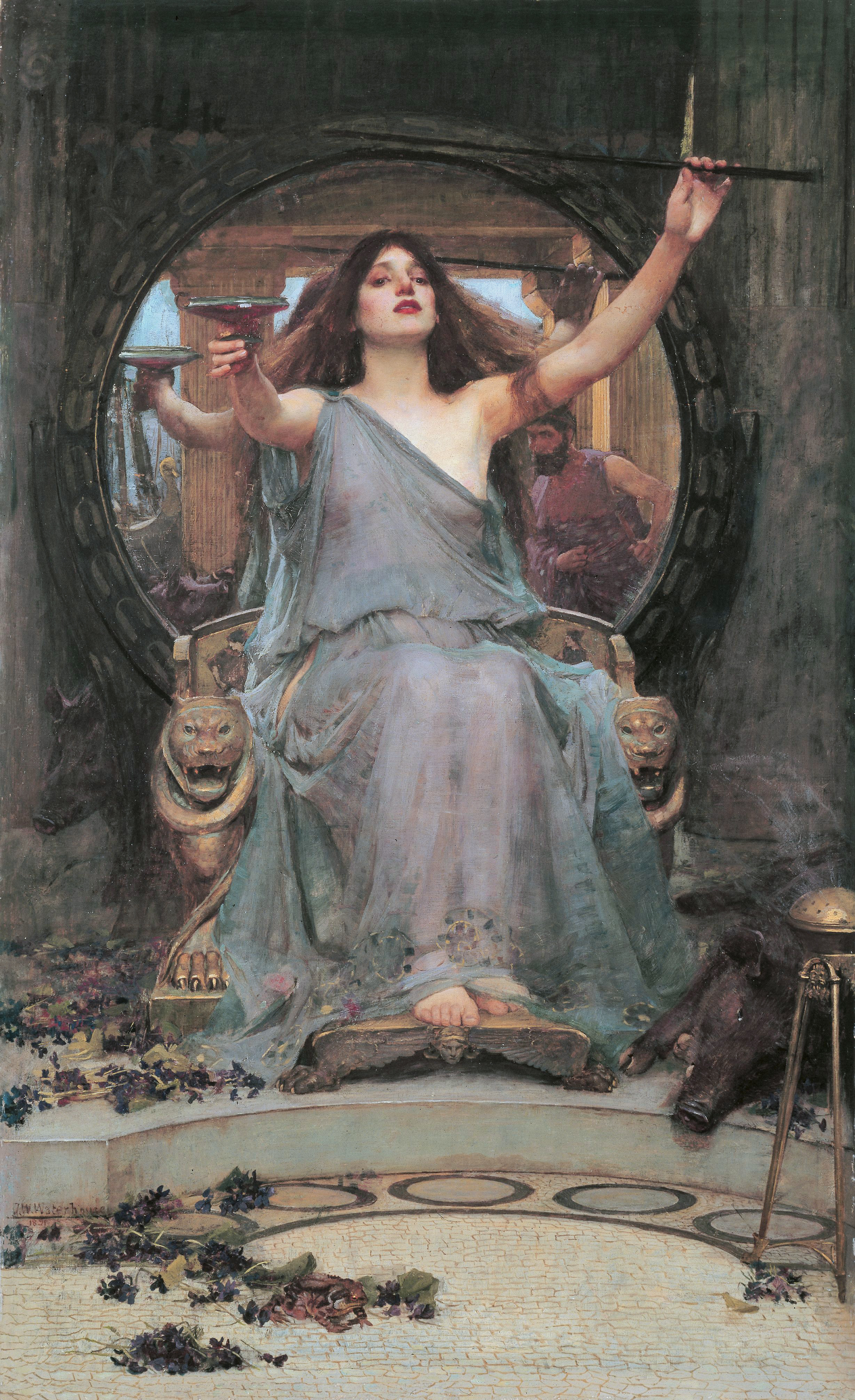
LT: I don’t know what I can say, really, except whether it’s a story, a visual image or a work of art, or even something that isn’t particularly a work of art, if you encounter it at an early age, it just takes over your mind or your imagination, and you think about it all the time. If you’re a lover of books, and if you’re a writer and a reader, it’s just one of those basic feelings that there’s some kind of deep magic involved.
PMR: It’s a visceral feeling, isn’t it? I think of being a 12-year-old and reading A Wizard of Earthsea for the first time, and literally being completely gripped by that story.
LT: Because you wanted to live in it.
PMR: Yeah, exactly. We’ve talked a lot about reclamation, so how does it feel for you to see your work coming back into print like this beautiful edition here?
LT: Wonderful. Particularly with My Death, because I felt how well it came out. You know, some people read it, and they loved it, and then it just kind of vanished. And of course, it was from a small press, and there were lots of other things for people to read. And then for it to be picked up… I mean, I couldn’t even believe it! But the editor at the NYRB got in touch with me via Facebook and just mentioned, well, I have a very small press but I’d be interested. And I’m thinking, well, it was published by a small press. Then I’m going, what? The New York Review of Books? NYRB? And not only that, NYRB Classics! I’m a classic! How amazing! It’s just great. I love it. And I’ve just sold the Catalan rights. It’s already out in Spanish and Italian. So, yeah, it’s wonderful, actually.
PMR: It’s definitely wonderful, and all these works need to be back in print, and we need new works as well once you’ve settled into your new home. I think that’s definitely the case. Lisa, thank you so much, it’s been a huge pleasure talking to you.
LT: Thank you.
Lisa Tuttle has written over a dozen fantasy, science-fiction and horror adult and YA novels, and hundreds of award-winning short stories collected in several volumes, including A Nest of Nightmares and The Dead Hours of the Night. She is the author of The Encyclopaedia of Feminism and currently writes a monthly science-fiction review column for The Guardian.
Paul March-Russell is the outgoing editor of Foundation and the co-commissioning editor for Gold SF (Goldsmiths Press). His Strange Horizons review of E.J. Swift’s When There are Wolves Again was shortlisted for the 2026 BSFA Awards.
Categories: Industry News
Jean-Paul L. Garnier interviews Rachel Cordasco
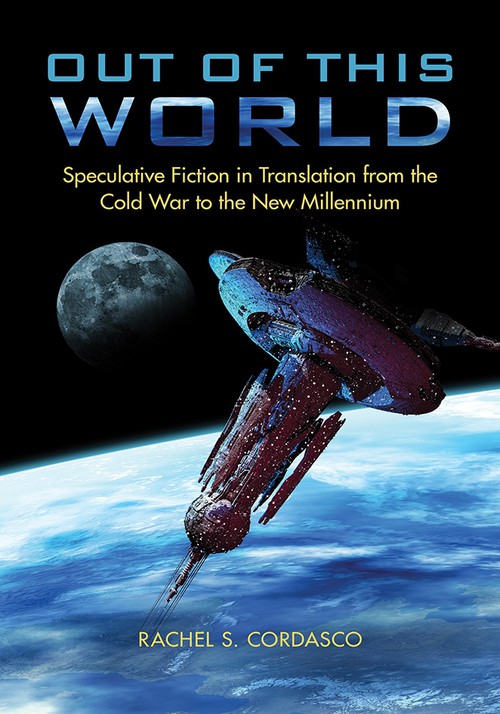
Rachel S. Cordasco, Out of This World: Speculative Fiction in Translation from the Cold War to the New Millennium (University of Illinois Press, 2021)
Jean-Paul L. Garnier: What was your initial attraction to works of science fiction in translation, and what made you decide to start reviewing them?
Rachel Cordasco: I started reviewing Anglophone science fiction for John DeNardo’s SF Signal in the mid-2010s. One day, he asked if I’d like to review a work of Chinese science fiction in translation—The Three-Body Problem. I jumped at the chance and absolutely loved that book. But it was only when he then sent me Jacek Dukaj’s The Old Axolotl and Marek Huberath’s Nest of Worlds that I actually started thinking about what it meant that these texts were all translated. I had never thought about where science fiction was written, and I realized that, of course, it was written around the world. This led me to think about what other works of science fiction there were in English translation. I started a list on a personal blog, and before I knew it, I had found dozens of titles. Ten years later, I’ve catalogued thousands of short-form and long-form works of SF in translation. I’ve always loved learning other languages and I read a lot of classics in English translation when I was a teenager, so bringing together two of my favorite things—speculative fiction and translation—made so much sense. I started asking John to send me as much SFT (science fiction in translation) as he could, and then, when SF Signal shut down, I started my own site dedicated to SFT.
JPG: In the ten years since founding https://www.sfintranslation.com/ what are some of the most interesting things that you’ve learned, and some of the biggest gaps in the field that you’ve identified?
RC: One of the most surprising things I learned is that there is so much SFT out there. Early science fiction texts, especially from Western Europe in the late-19th and early-20th centuries, were being translated into English very quickly (though apparently not very accurately, in some cases, ahem ahem Jules Verne’s stories). When you start looking into the speculative novels, anthologies, and collections that were published in translation throughout the 20th century, you find that so many of these books just flew under the radar or went out of print quickly. This process of finding and cataloging as much SFT as I can is basically my way of excavating items that aren’t buried but just hidden in plain sight.
I’ve learned that Japanese science fiction developed at warp speed following the American occupation of the island following World War Two; I’ve learned that giants of American golden age science fiction like Isaac Asimov and Theodore Sturgeon wrote introductions to anthologies of Russian science fiction at the height of the Cold War; and I’ve learned that, despite the fact that so much speculative fiction has been translated into English, the Anglophone genre world has mostly (except for the 70s and 80s) ignored SFT…until recently. Hopefully, the tide is shifting once again toward SFT and more speculative fiction readers will learn about what people are writing and thinking about around the world.
JPG: You wrote the book on SF in Translation, Out of this World. What did this process look like for you, and why did you decide to go with University of Illinois Press as your publisher rather than an SF publisher?
RC: I realized, after working on the site for several years, that it was time to write an annotated bibliography of SFT, à la Neil Barron’s Anatomy of Wonder books. I had just finished reading Dale Knickerbocker’s excellent edited anthology about global science fiction, Lingua Cosmica, and asked for his advice regarding my own book idea. He suggested the University of Illinois Press, which had published Lingua Cosmica, so I sent them a proposal, which they accepted. Instead of an annotated bibliography, though, Illinois wanted me to develop each source language chapter into a full-blown essay. Ultimately, this worked out well, because it gave me the opportunity to offer readers analysis and context for each chapter that might otherwise have been left out. Illinois was great to work with, and, as I mentioned in my previous answer, the speculative fiction world mostly ignores SFT, so I don’t really know if, back in 2019, any SF publisher would have even looked twice at my proposal.
JPG: What are your motivations behind starting Small Planet magazine, and what are your plans for its future?
RC: The idea for a magazine had been kicking around in my brain for a year, and one day earlier this year, while working on a review, I just couldn’t wait anymore. The magazine had to happen! I want to read and learn about so many aspects of SFT, but as one person, I simply don’t have the time or energy to take on more than one or two projects at a time. A magazine, I figured, would be my selfish way of enlisting all of the brilliant people out there, who I knew were already writing about SFT, to write about it…for me! I had all of these ideas about interviewing translators and finding people who would write essays on Polish fantasy or French horror or Japanese surrealism and enlisting people to review underappreciated SFT. All I had to do was put the word out that I wanted to start an SFT magazine and so many wonderful people jumped on board right away, offering to design, write, edit, interview, and help in any other way they could. I want this magazine to be the Locus of the SFT world, providing readers with a steady stream of interesting essays, interviews, reviews, stats, and more.
Rachel Cordasco, ed., Small Planet Issue 1 (May 2026)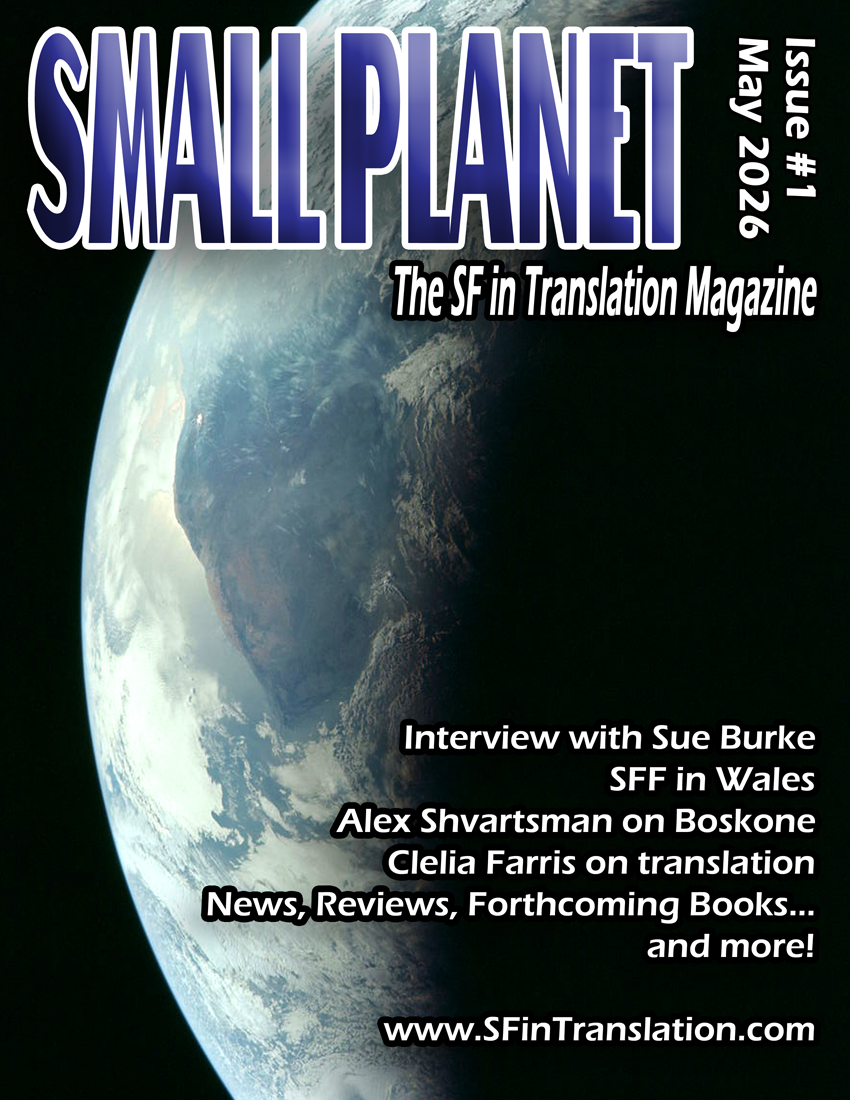
JPG: What do you think are some of the most effective ways that readers and the public can motivate publishers to publish more works of SF in translation?
RC: One major way to encourage publishers to bring us more SFT is for readers to buy more of it. And yet, an interesting thing I learned recently is that a lot of SFT doesn’t even come from speculative fiction publishers. In fact, New Directions, which focuses on international literature, published more SFT in the last few years than any genre publisher. To make matters even more interesting, the 90 works of long-form SFT last year came out from 60 different publishers/imprints. Ultimately, I’m waiting for SF publishers to start dedicating more of their resources to SFT and acknowledge that these stories, told all over the world and in many different languages, are all part of the same effort: humanity trying to understand itself and its place in the cosmos.
JPG: For you, what are some of the most important aspects of cross-cultural exchange through literature?
RC: One of the most exciting things I’ve discovered while reading SFT is that writers from all over the world will take up the same theme or event or technology and explore them in fascinatingly similar and different ways. I started tracking this on my site (under the tab “Subject Index”) and I’m going to delve deeper into this in the magazine with a special column in each issue called “Crossing Borders.” Cloning in Greek and Spanish SFT, vampires in Hungarian and Swahili SFT, monstrous mothers in Hebrew and Japanese SFT—I find this stuff thrilling! You’ll hear this discussed whenever two or more literary translators are together in one space—reading what others around the world have written is how we deepen and enrich human civilization. Anglophone culture and language is rejuvenated when it comes into contact with other cultures and languages. We learn from one another, celebrate our differences, and learn about our surprising similarities. After all, one would hope that, if aliens do swing by Earth for a tour one day, they’ll see that, on this one small planet, we actually have a working knowledge of one another. It would be pretty embarrassing otherwise, right?
JPG: What are the top 5 SF books that you’d like to see translated?
RC: As always, I’m keeping a list! In no particular order…
– the rest of Élisabeth Vonarburg’s Tyranaël series (1997) (Mon frère l’ombre, L’Autre Rivage, and La Mer allée avec le soleil)
– Cheon Seon-ran’s A Broken Bridge (2019)
– Harry Mulisch’s The Future of Yesterday (1972)
– Shimon Adaf’s Rose of Judea series (2010-2012)
– Gilda Musa’s Domesticated Jungle (1975)
JPG: What are some of the greatest challenges you face when working as a translator, and are any of these specific to SF?
RC: A professional translator would be better able to speak to this question, but as someone who has translated several short- and long-form works for various Italian authors, especially the brilliant Clelia Farris, I can say that trying to capture the author’s tone and style while trying to make my translation read well is always challenging. It’s the nature of translation—making choices about how a word or phrase gets brought over into English. Working with Clelia on my translations is always fun because we get to discuss, for instance, exactly how certain sayings would best translate across languages. In fact, in this most recent issue of Small Planet, Clelia has an essay in which she describes some of the choices we had to make when I was translating her story “Gabola,” like turning the literal translation “you don’t get out much” into the more emotionally accurate “you’re behind the times.”
In terms of translating SF specifically, working on Clelia’s novella Veg-humans was more difficult than anything else I’d translated before because this is a story that includes a wide variety of plant species and technologies the characters use to try and survive the punishing heat of a near-future world that is being swallowed up by drought. Finding the words in English to reflect Clelia’s terms for these things was challenging, but we worked patiently together to find what sounded best.
JPG: Can you tell us about the push to get works in translation as a category for the Hugo Awards, and your work with https://translatedhugo.org?
RC: Jake Casella Brookins, the editor of Ancillary Review of Books, kickstarted the latest effort to push the Hugo Awards to include a translation category (Chris Barkley had tried this a few years before). Casella enlisted me and many other SFT critics and enthusiasts in the project, but the process is slow because the rules and requirements for adding a category to the Hugo Awards are apparently very stringent. Hopefully, this effort will, down the road, lead to a category that recognizes the wonderful work that translators do in bringing us SF from around the world.
JPG: What’s coming up next for you, and what are you currently working on?
RC: I’m excited to continue publishing Small Planet and roping in people from all over the world to write for it. I also have ideas for at least three more books, one of which will be about the history of SFT in the Anglophone world. Hopefully I can also translate much more of Clelia’s work because Anglophone readers really do need more of her stories—they are intriguing, unexpected, and beautiful.
Rachel Cordasco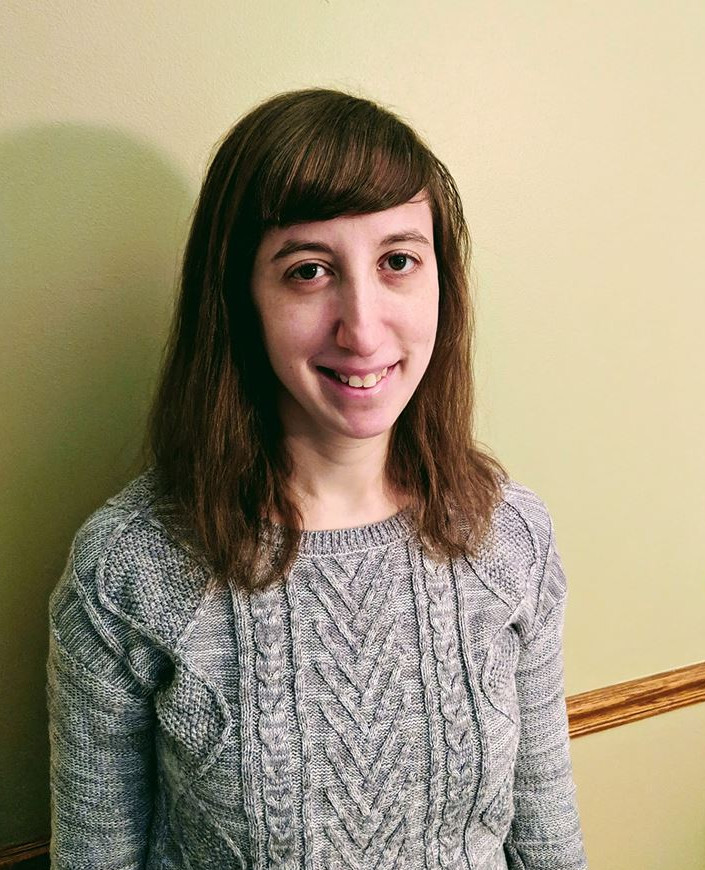
Rachel Cordasco founded the website SFinTranslation.com in 2016 and regularly reviews SFT for Strange Horizons and World Literature Today. She also translates Italian speculative fiction, which has been published in Clarkesworld Magazine and Future Science Fiction Digest. Rachel’s book Out of This World: Speculative Fiction in Translation From the Cold War to the New Millennium is out from the University of Illinois Press. Her second book, Speculative Fiction in Translation From Around the World, is forthcoming from the University of Wales Press.
Jean-Paul L. Garnier is the owner of Space Cowboy Books bookstore and publishing house, producer of Simultaneous Times Podcast (2023/25 Laureate Award Winner, 2024 BSFA, Ignyte, and British Fantasy Award Finalist), and was the editor of the SFPA’s Star*Line magazine from 2021-2025. He is also Editor-in-Chief of Electronic Brain magazine. In 2024 he won the Laureate Award for Best Editor. He has written many books of poetry and science fiction. https://spacecowboybooks.com/
Categories: Industry News
Applied African SF: Volume 1
Applied African SF book is out now!
It is available to share and download at bit.ly/AppliedAfricanSF.
Produced in collaboration with Vector.
Categories: Industry News
Applied African SF: Volume 1
Applied African SF book is out now!
It is available to share and download at bit.ly/AppliedAfricanSF.
Produced in collaboration with Vector.
Categories: Industry News
Zoefuturism in creative practice: responses
Introduction by Yen Ooi and Stephen Oram
When we started thinking about the call for articles last year, we wanted to approach it in a Zoefuturistic manner – by giving space and creating opportunities for the issue(s) and articles to ‘become.’ As a new topic, we were very aware that this is a process of exploration and discovery, more than a call to enforce and curate what we think Zoefuturism is. It needed to be reflective and malleable.
In this article, we will look at three of these creative reflections of Zoefuturism through different lenses:
- Compost Futures by the London Science Fiction Research Community Co-Directorate
- Station to Station by Goblin Futures
- “Narrative Structures and Zoefuturism” by Christopher Morrison
While all three pieces explore very different topics and perspectives, they are all reflections of Zoefuturism through practitioners’ creative action, and they form a Zoefuturistic response, as reactions to the introduction of Zoefuturism, playing with the ideas of our futures through relationality and constant becomings.
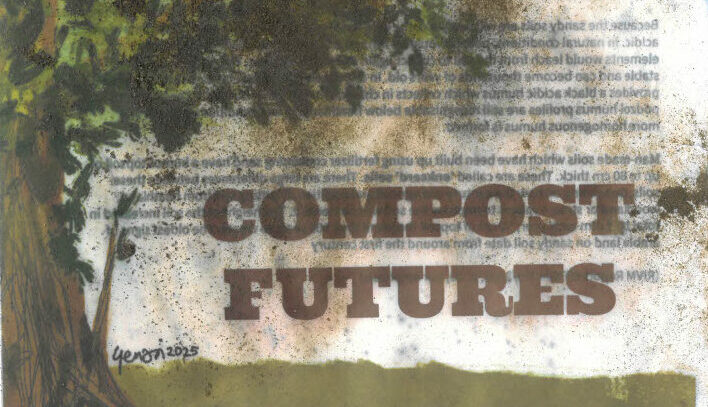
Compost Futures by the London Science Fiction Research Community (LSFRC). This creative-critical submission, in the form of a full zine, was made by the co-directorate of the LSFRC to explore questions around the relationships between humans with the other-than-human through the idea of “compost,” inspired by Zoefuturism. Follow the link to read and explore the articles and artworks, and to learn how co-authoring a zine with nature turned out.
Station to Station by Goblin Futures (https://goblin-futures.itch.io/station-to-station).
A fishpunk game: Station to Station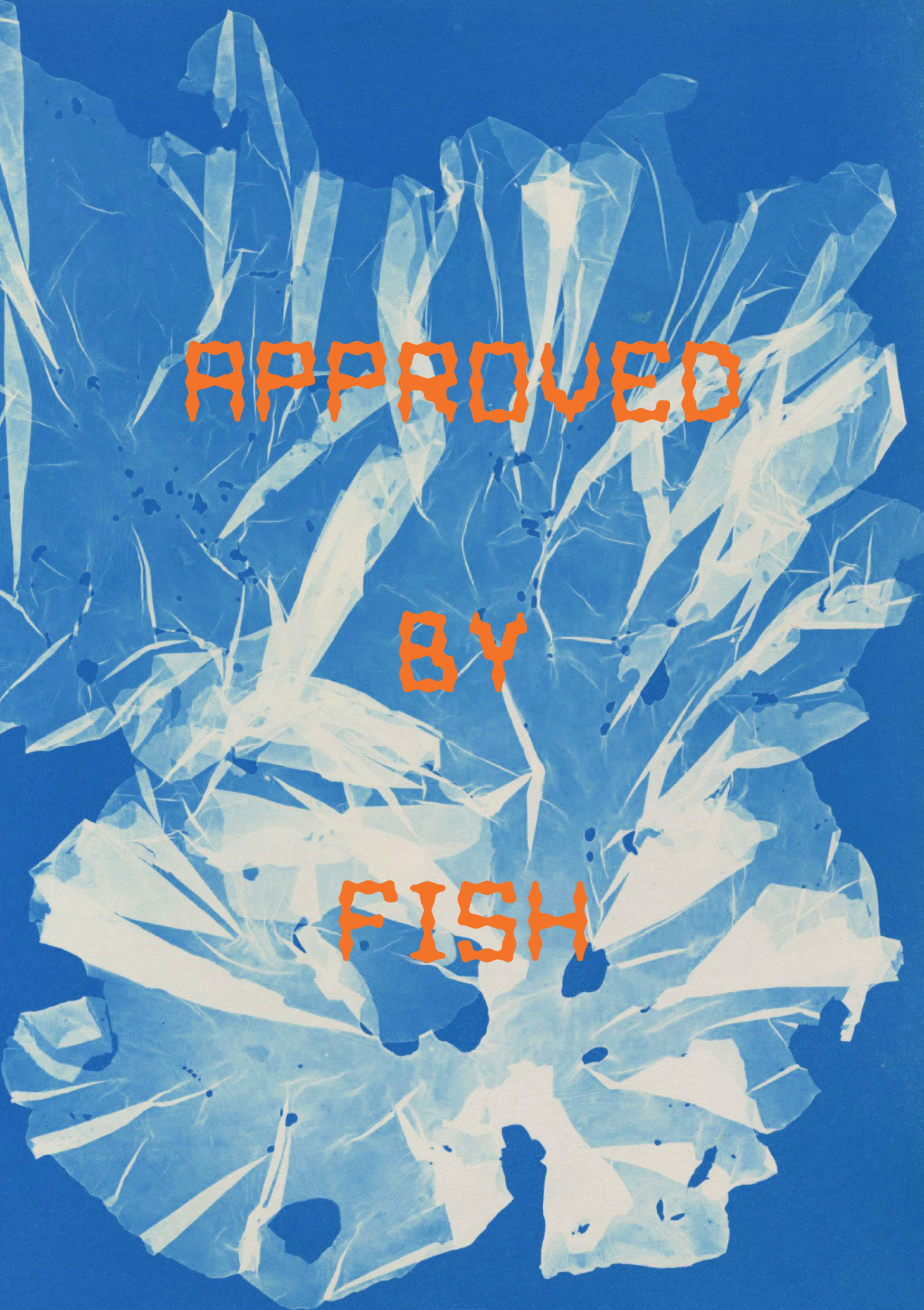
*Fishpunk is something we made up, not a pre-existing genre. In other words, Station to Station is fishpunk, and anything else people want to consider fishpunk they can, just as long as it is Approved By Fish.
**Weirdhope is a term coined by COPY/PASTE CO-OP, which they describe as a form of eco-punk that is stylistically and thematically opposed to grimdark. For more, you can check out their game ECO MOFOS!! or the webpage for the Weird Hope Engines exhibition that ran in the Bonington Gallery in 2025.
Narrative Structures and ZoefuturismBy Christopher Morrison
In the West[1] there is one story structure primarily taught to readers and practitioners alike. The Aristotelean 3-Act Structure/The Hero’s Journey. I’m well aware that’s two structures, but they are so inter-linked now as to be extensions of one another. And, most importantly, they share a core philosophical purpose. That purpose: re-enforce Heroic Individualism. The Protagonist must be the one to solve the problem. They, and only THEY. Some assistance is rendered along the way, but in the climax, it is them and them alone (usually smashing) their way to the end. And that end as a teleological conclusion forgives (or ignores) all things that came before.
Anything else is considered a “subversion of” or “breaking the rules”. But, as Matthew Salsess asks, “Who writes those rules?” (Salesses, Matthew. Craft in the Real World: Rethinking Fiction Writing and Workshopping. New York: Catapult, 2021.) It is the dominant culture in the West. Patriarchal, white supremacist[2], heteronormative. Those values that hold up a human being… all at once illustrating the protagonist as special and the norm. The story’s purpose is to make them a static, fixed Hero.
So, if this structure serves to support the Culture of Being in the West, what structures could support a culture of Becoming from Asian Cultures not shackled to the mast of Individualism?[3] What structures could a writer creating in a Zoefuturist context rely on to illustrate Human Becoming and relieve their woes about what comes next in their story?
Taking a cue from the absolute basic root of Dr. Ames’ work and the language he is immersed in, let’s look at ShengSheng (生生) – Procreativity. This word Dr. Ames presents as a crucial part of the early Cosmology of Confucian thought[4] and gives us a perfect jumping-off point:
Repetition.
We all understand one of the crushing features of humanity is the repetition of life. Buddhism tackles this issue with the simple mantra: “Before enlightenment: chop wood, carry water. After enlightenment: chop wood, carry water.” The road to human becoming must run directly through repetition just as the word and pictogram in Chinese suggests in its very form.
However, the West abhors repetition[5] (except in cases of utter personal sacrifice to the destruction of oneself[6]) and worships at the feet of novelty.
New or perish! You are only as good as your last ____!
Yet repetition itself holds true meaning-making. True becoming. But in Western storytelling it’s relegated to a “callback” or some “comment” on one form or another and not the core engine to drive story and meaning.
Let’s explore a few structures where repetition is the heart and engine of its purpose.
Spirals: first brought to my attention through the work of Jane Alison.[7] Humans are pattern recognition machines, therefore to create a literary or dramatic spiral one repeats meaning by bringing back a panoply of artistic resources. Place, character(s), theme(s), color, etc. Most powerful in the resource kit is repeating events in your story. What one may lose in novelty one gains in grounding your audience – their pattern recognition (and their simple act of becoming themselves – living life) brings the repetition to awareness and, if done well, the question – Why? Why repeat this now? Here? Or the repetition simply becomes the Breath of the narrative. Inhaling on return – exhaling on leaving – or vice versa. It is a structure that is close to life itself.
While not a Zoefuturist film, let’s look at Wong Kar-Wai’s In the Mood for Love (Wong Kar-wai, dir. In the Mood for Love. Block 2 Pictures, 2000). A love story where its lovers are not allowed to consummate their love… or even say the word to each other. They are married to others while falling in love with each other. It is primarily a Spiral of place. Hallway, stairway, alleyway. All intermediate places – not defined. Not of themselves, but conduits to other locations. Perfect locations for a relationship that isn’t formed – isn’t one or the other. The characters are also suspended; neither really married nor free; not in love, but in love. Repetitions of their own conditions. The continuous use of smoke as a repeated image in the film is powerful. Sure, it looks damn cool, but it’s neither solid nor liquid. Neither here nor there… just slowly looping around itself and evaporating. Repeating. Spiraling.
Next, we’ll look at ‘nested’ structure.
Mainly known from the 1001 Arabian Nights and the film Rashomon. Nested stories are stories-within-stories without being anthology or connected episodic in nature. Story layers. Characters may re-appear, settings may re-appear[8] but what certainly repeats is theme and/or a central question or as Henry Lien likes to point out: culture[9].
Again, here’s a structure that reflects life’s journey. We are stories-within-stories. We hold our story, our family’s story, we are minor or major characters in everyone’s stories that surround us. And other’s stories can affect us directly or indirectly if we appear in them or not. As Dr. Ames points out through Zoetological philosophy we are “…interdependent human ‘becomings’ rather than discreet human beings… [through a relational understanding].[10]”
Nested structure allows writers to sift through the depth of our humanity all in one frame. The flow of this structure is the essence of interconnected ‘becoming’. Again, like life, the more we lift the lid and interact with the depths and layers underneath the more meaning and interconnectedness we experience.
In conclusion, ‘spiral’ and ‘nested’ narrative structures are available to writers of every form and genre, but are especially powerful in a Zoetological and/or Zoefuturist context. They allow for a direct reflection into the bones of the work and to elevate stories from a single individualist journey into the wider world-view of human becomings. By leaving behind the strictures of Western storytelling obsessions we can imagine and enact a more interconnected future.
[1] Excluding Indigenous cultures.
[2] Colonial, at best.
[3] This is where I’ll ask you to forgive me. I’m a practitioner and not a scholar, perhaps others have done this work – I look forward to hearing about them if so… Henry Lien’s work comes to mind.
[4] Ames, R. T. (2025). Living Chinese Philosophy: Zoetology as First Philosophy (p. 8). State University of New York Press.
[5] To the point: In an early screenwriting class the “wisdom” of never repeating a location was handed down to me. (This was the working philosophy of a high-powered producer and their thoughts on scriptwriting.)
[6] Puritan work ethic for example. Or (especially for women) the carer role taken to its extreme… it is lauded and pitied and ridiculed all at once.
[7] Alison, J. (2019). Meander, Spiral, Explode: Design and Pattern in Narrative (p. 143). Catapult.
[8] Or remain the same as with Rashomon.
[9] Lien, H. (2025). Spring, summer, asteroid, bird: The art of Eastern storytelling (1st ed.). W. W. Norton & Company.
[10] Ames, R. T. (2025). Living Chinese Philosophy: Zoetology as First Philosophy (p. 8). State University of New York Press.
Categories: Industry News
Zoefuturism in creative practice: responses
Introduction by Yen Ooi and Stephen Oram
When we started thinking about the call for articles last year, we wanted to approach it in a Zoefuturistic manner – by giving space and creating opportunities for the issue(s) and articles to ‘become.’ As a new topic, we were very aware that this is a process of exploration and discovery, more than a call to enforce and curate what we think Zoefuturism is. It needed to be reflective and malleable.
In this article, we will look at three of these creative reflections of Zoefuturism through different lenses:
- Compost Futures by the London Science Fiction Research Community Co-Directorate
- Station to Station by Goblin Futures
- “Narrative Structures and Zoefuturism” by Christopher Morrison
While all three pieces explore very different topics and perspectives, they are all reflections of Zoefuturism through practitioners’ creative action, and they form a Zoefuturistic response, as reactions to the introduction of Zoefuturism, playing with the ideas of our futures through relationality and constant becomings.
Compost Futures by the London Science Fiction Research Community (LSFRC). This creative-critical submission, in the form of a full zine, was made by the co-directorate of the LSFRC to explore questions around the relationships between humans with the other-than-human through the idea of “compost,” inspired by Zoefuturism. Follow the link to read and explore the articles and artworks, and to learn how co-authoring a zine with nature turned out.
Station to Station by Goblin Futures (https://goblin-futures.itch.io/station-to-station).
A fishpunk game: Station to Station*Fishpunk is something we made up, not a pre-existing genre. In other words, Station to Station is fishpunk, and anything else people want to consider fishpunk they can, just as long as it is Approved By Fish.
**Weirdhope is a term coined by COPY/PASTE CO-OP, which they describe as a form of eco-punk that is stylistically and thematically opposed to grimdark. For more, you can check out their game ECO MOFOS!! or the webpage for the Weird Hope Engines exhibition that ran in the Bonington Gallery in 2025.
Narrative Structures and ZoefuturismBy Christopher Morrison
In the West[1] there is one story structure primarily taught to readers and practitioners alike. The Aristotelean 3-Act Structure/The Hero’s Journey. I’m well aware that’s two structures, but they are so inter-linked now as to be extensions of one another. And, most importantly, they share a core philosophical purpose. That purpose: re-enforce Heroic Individualism. The Protagonist must be the one to solve the problem. They, and only THEY. Some assistance is rendered along the way, but in the climax, it is them and them alone (usually smashing) their way to the end. And that end as a teleological conclusion forgives (or ignores) all things that came before.
Anything else is considered a “subversion of” or “breaking the rules”. But, as Matthew Salsess asks, “Who writes those rules?” (Salesses, Matthew. Craft in the Real World: Rethinking Fiction Writing and Workshopping. New York: Catapult, 2021.) It is the dominant culture in the West. Patriarchal, white supremacist[2], heteronormative. Those values that hold up a human being… all at once illustrating the protagonist as special and the norm. The story’s purpose is to make them a static, fixed Hero.
So, if this structure serves to support the Culture of Being in the West, what structures could support a culture of Becoming from Asian Cultures not shackled to the mast of Individualism?[3] What structures could a writer creating in a Zoefuturist context rely on to illustrate Human Becoming and relieve their woes about what comes next in their story?
Taking a cue from the absolute basic root of Dr. Ames’ work and the language he is immersed in, let’s look at ShengSheng (生生) – Procreativity. This word Dr. Ames presents as a crucial part of the early Cosmology of Confucian thought[4] and gives us a perfect jumping-off point:
Repetition.
We all understand one of the crushing features of humanity is the repetition of life. Buddhism tackles this issue with the simple mantra: “Before enlightenment: chop wood, carry water. After enlightenment: chop wood, carry water.” The road to human becoming must run directly through repetition just as the word and pictogram in Chinese suggests in its very form.
However, the West abhors repetition[5] (except in cases of utter personal sacrifice to the destruction of oneself[6]) and worships at the feet of novelty.
New or perish! You are only as good as your last ____!
Yet repetition itself holds true meaning-making. True becoming. But in Western storytelling it’s relegated to a “callback” or some “comment” on one form or another and not the core engine to drive story and meaning.
Let’s explore a few structures where repetition is the heart and engine of its purpose.
Spirals: first brought to my attention through the work of Jane Alison.[7] Humans are pattern recognition machines, therefore to create a literary or dramatic spiral one repeats meaning by bringing back a panoply of artistic resources. Place, character(s), theme(s), color, etc. Most powerful in the resource kit is repeating events in your story. What one may lose in novelty one gains in grounding your audience – their pattern recognition (and their simple act of becoming themselves – living life) brings the repetition to awareness and, if done well, the question – Why? Why repeat this now? Here? Or the repetition simply becomes the Breath of the narrative. Inhaling on return – exhaling on leaving – or vice versa. It is a structure that is close to life itself.
While not a Zoefuturist film, let’s look at Wong Kar-Wai’s In the Mood for Love (Wong Kar-wai, dir. In the Mood for Love. Block 2 Pictures, 2000). A love story where its lovers are not allowed to consummate their love… or even say the word to each other. They are married to others while falling in love with each other. It is primarily a Spiral of place. Hallway, stairway, alleyway. All intermediate places – not defined. Not of themselves, but conduits to other locations. Perfect locations for a relationship that isn’t formed – isn’t one or the other. The characters are also suspended; neither really married nor free; not in love, but in love. Repetitions of their own conditions. The continuous use of smoke as a repeated image in the film is powerful. Sure, it looks damn cool, but it’s neither solid nor liquid. Neither here nor there… just slowly looping around itself and evaporating. Repeating. Spiraling.
Next, we’ll look at ‘nested’ structure.
Mainly known from the 1001 Arabian Nights and the film Rashomon. Nested stories are stories-within-stories without being anthology or connected episodic in nature. Story layers. Characters may re-appear, settings may re-appear[8] but what certainly repeats is theme and/or a central question or as Henry Lien likes to point out: culture[9].
Again, here’s a structure that reflects life’s journey. We are stories-within-stories. We hold our story, our family’s story, we are minor or major characters in everyone’s stories that surround us. And other’s stories can affect us directly or indirectly if we appear in them or not. As Dr. Ames points out through Zoetological philosophy we are “…interdependent human ‘becomings’ rather than discreet human beings… [through a relational understanding].[10]”
Nested structure allows writers to sift through the depth of our humanity all in one frame. The flow of this structure is the essence of interconnected ‘becoming’. Again, like life, the more we lift the lid and interact with the depths and layers underneath the more meaning and interconnectedness we experience.
In conclusion, ‘spiral’ and ‘nested’ narrative structures are available to writers of every form and genre, but are especially powerful in a Zoetological and/or Zoefuturist context. They allow for a direct reflection into the bones of the work and to elevate stories from a single individualist journey into the wider world-view of human becomings. By leaving behind the strictures of Western storytelling obsessions we can imagine and enact a more interconnected future.
[1] Excluding Indigenous cultures.
[2] Colonial, at best.
[3] This is where I’ll ask you to forgive me. I’m a practitioner and not a scholar, perhaps others have done this work – I look forward to hearing about them if so… Henry Lien’s work comes to mind.
[4] Ames, R. T. (2025). Living Chinese Philosophy: Zoetology as First Philosophy (p. 8). State University of New York Press.
[5] To the point: In an early screenwriting class the “wisdom” of never repeating a location was handed down to me. (This was the working philosophy of a high-powered producer and their thoughts on scriptwriting.)
[6] Puritan work ethic for example. Or (especially for women) the carer role taken to its extreme… it is lauded and pitied and ridiculed all at once.
[7] Alison, J. (2019). Meander, Spiral, Explode: Design and Pattern in Narrative (p. 143). Catapult.
[8] Or remain the same as with Rashomon.
[9] Lien, H. (2025). Spring, summer, asteroid, bird: The art of Eastern storytelling (1st ed.). W. W. Norton & Company.
[10] Ames, R. T. (2025). Living Chinese Philosophy: Zoetology as First Philosophy (p. 8). State University of New York Press.
Categories: Industry News
Dreams of Arcadia: Zoefuturism and the Re-Enchantment of the Deep Self
By Kiti McGlashan
As meaning-seeking beings, we live in alternating cycles of embracing or fearing the natural world. Literature offers a good framework for observing this ancient and ongoing ‘battle’ for the human spirit between the manifestation of our reverence and stewardship of nature and our fear of something that could so easily kill us. As industrialisation moved us further away from nature, and humans started living almost completely dis-attached from the natural world, we saw a resurgence of the need to find belonging in the greater order. The last two hundred years have presented a shift in our attitudes towards our surroundings and an influx of philosophies and literature that try to reconnect humans with nature.
Environmentalism has clearly entered the focus of modern worries, but it often presents shortsighted forms that ignore the bigger picture. By focusing on the more immediate and visible concerns, environmental campaigns often prioritise narrow objectives while overlooking the negative structural downside of some of the green politics (e.g. “green colonialism). The climate crisis and the development of the Anthropocene as a theoretical background for our concerns are lacking in a holistic outlook of reality and often showcase similar dangers as our previous attitudes towards the natural world. While there is a rising concern about the land, it is through an anthropocentric point of view. As long as we keep seeing ourselves as separate to the non-human lifeworld, we will live incomplete existences, and our solutions will be forever lacking. What is needed is “a futurism of connectedness, engagement, and relationality, a futurism of ‘life-becomings’” (Ooi, n.d.). And this reflection on the need for interconnectedness has recently been championed by new subgenres of science fiction.

Storytelling has always been a mirror to the soul of humanity. It focuses the collective emotions and concerns in a metaphorical and philosophical format that offers more than simple escapism. Up until now, science fiction in particular has offered the best platform where the concerns of our present and future are laid out in the format of cautionary tales of how our environmental damage leads to post-apocalyptic scenarios. There are countless examples of stories focused on ecological collapse such as The First and Last Men by Olaf Stapledon that explores humanity’s eventual extinction, the dystopian future of Metro 2033 by Dmitry Glukhovsky where humanity is almost extinct and earth ravaged by radiation, The Road by Cormac McCarthy that is set in a post-apocalyptic setting following a cataclysmic event, the grimdark world of the Warhammer 40K universe where after the AI wars mankind is plummeted into a dark universe of chaos and death. These are just some examples out of a very vast body of literature which express the climate anxiety our society feels.
It is distressing to see that today we have a medically recognised definition for our dis-connection from nature. Solastagia “is the distress that is produced by environmental change impacting on people while they are directly connected to their home environment” (Albrecht, et al, 2007). The powerlessness to prevent environmental change and the crisis of being cut out from nature is leading to a whole generation of young people thinking they won’t survive to old age. People are refusing to have children because they think they wouldn’t survive the impending environmental catastrophe (Carrington, 2020). This is reflected in most of the existing science fiction literature which provides a very gloomy outlook for humanity’s future, diminishing hope and increasing ‘dis-ease’. While the devastation inflicted on Earth is almost catastrophic, it isn’t irreparable as long as we take steps in the right direction.
However, there is a shift in the current science fiction scene and the philosophical aspects surrounding it that reflect a discontent with the present pessimism by advocating for hope and optimism. Many genres have emerged that claim to break the connection of science fiction’s prevalent dystopian pessimism by advocating for a sustainable future where man and nature are connected. Solarpunk, Hopepunk, and other subgenres offer an outlook of how humanity can achieve a utopic existence connected to nature. Ursula Le Guin’s Always Coming Home, the Star Trek universe, the worlds of Hayao Miyazaki’s Castle in the Sky and Nausicaä of the Valley of the Wind, all present a better future: one in which environmental crisis isn’t inevitable.
The main criticism of these genres is the fact that they generally still tend to be human-centric, and in a way they are another expression of post-apocalyptic literature. The change that rekindles our interconnectedness to nature cannot be achieved by placing man at the centre of reality, be it fictive or real. Even if European culture is acknowledging its spiritual and environmental challenges, the damage done by over two millennia of our thinking being moulded by Socratic, Platonic, and Christian philosophy has shaped our mindset in a way that is hard to come back from.
The most positive and holistic framework present today is seen in a recent philosophy that echoes the spirit of old nature belief systems like Animism or the modern philosophical outlooks that merges biology with a nature-oriented philosophy like the Biophilia Hypothesis (Keller, S. R., & Wilson, E. O.,1993). By offering an exploration in a way of thinking that is holistic and drives our intrinsic curiosity as a species towards a new frontier of interconnectedness, Zoefuturism, an outlook proposed by writer and researcher Yen Ooi which “explores the reality of human nature as human ‘becomings’ (instead of ‘beings’) where constant change rooted in all nature is acknowledged as fundamental to living”. Inspired by East Asian philosophy, “Zoefuturism doesn’t belong within one culture or philosophy.” In a way, it is the link between European Animism and ancient Chinese philosophy, as well as Japanese Shintoism. Zoefuturism presents a great framework for observing the similarities between different cultures. We all get lost in the elaboration of our faiths and philosophies but if you take away the embellishments underneath there is a shared connectivity between all of humanity.
At the core of the philosophy of the Chinese Book of Changes, also known as I Ching or Yijing, is constant change. Life is defined by its impermanence, and this concept is of key importance in Eastern spiritual traditions. By addressing human finitude, our difficulty of making sense of our surroundings without a set of symbols, the Book of Changes “aims to alleviate our self-inflicted anxiety and agony” (n.a., 2020) by reminding us of our limited ability to know our surroundings and offering a system of symbols to navigate the unknowable nature of our world.” Zoefuturism echoes the philosophy of harmony of the Book of Changes, which advocates the need for self-realisation and accepting one’s position within the flow of change of birth, life, and death. In these philosophies humans become part of nature rather than apart from it. Only by aligning ourselves with the natural order can we find peace.
This way of thinking is also the core of Shintoism which recognises “the destructive aspect of nature, deeming it necessary to keep the balance and control over its growth on earth.” The origin myths of societies all over the globe reflect the dual aspect of awe and fear that nature inspires. Disasters are accepted as part of reality. Volcanoes make the soil more fertile by imbuing it with minerals and metals. Aokigahara, the legendary forest at the base of Mt. Fuji, is a “lush and mysterious landscape [that] emerged following the last major eruption of the volcano in the 9th century” (Staughton 2023). Floods replenish the groundwater, enrich the soil, and create new habitats. Nothing in nature is black and white. Only by adopting a better understanding of the interconnectedness of reality—which the West has mostly forgotten but that is still alive in East Asian thinking — can we hope to achieve a living version of utopia.
As Ooi argues, “we are made through all the interactions we have with our world, conscious and unconscious, purposefully and not, intangible and tangible. These interactions constantly shape us and our world through changes and ‘life-becomings.” If we acknowledge our place in the natural world, our disenchantment will end.
Even the most idyllic science fiction needs to rethink how it envisions our future. We need to break away from the centrality of humans in our thinking. Without finding balance between us and nature, without breaking from the human-centric mindset, even the most optimistic visions of imagined futures risk falling in the same pitfall of imbalance which has distanced and isolated us from nature.
Our dreams should be the trailblazer to a future where we break our isolation from the natural world.
Sources
Albrecht, G., Sartore, G.-M., Connor, L., Higginbotham, N., Freeman, S., Kelly, B., Stain, H., Tonna, A., & Pollard, G. (2007). Solastalgia: The distress caused by environmental change. Australasian Psychiatry: Bulletin of Royal Australian and New Zealand College of Psychiatrists, 15 Suppl 1, S95-98. https://doi.org/10.1080/10398560701701288
Abraham, D. (2017). The Spell of the Sensuous: Perception and Language in a More-Than-Human World. Vintage Book.
Armstrong, K. (2014). Fields of Blood: Religion and the History of Violence. Vintage.
Carrington, D., & editor, D. C. E. (2020, November 27). Climate ‘apocalypse’ fears stopping people having children – study. The Guardian. https://www.theguardian.com/environment/2020/nov/27/climate-apocalypse-fears-stopping-people-having-children-study
Climate Anxiety | Harvard Medicine Magazine. (n.d.). Retrieved 30 July 2025, from https://magazine.hms.harvard.edu/articles/climate-anxiety
Harvard University Education. Gaia Hypothesis. https://courses.seas.harvard.edu/climate/eli/Courses/EPS281r/Sources/Gaia/Gaia-hypothesis-wikipedia.pdf
Hon, T.-K. (2024). Chinese Philosophy of Change (Yijing). In E. N. Zalta & U. Nodelman (Eds), The Stanford Encyclopedia of Philosophy (Summer 2024). Metaphysics Research Lab, Stanford University. https://plato.stanford.edu/archives/sum2024/entries/chinese-change/
n.a. (2020). How Shinto Philosophy can Bring us Closer to Nature. The Orbital. https://theorbital.co.uk/how-shinto-philosophy-can-bring-us-closer-to-nature/
Kang Wolter, H. (n.d.). Hayao Miyazaki, Studio Ghibli, and the ‘Environmental Message’. The Cambridge Language Collective. Retrieved 30 July 2025, from https://www.thecambridgelanguagecollective.com/asia/hayao-miyazaki-studio-ghibli-and-the-environmental-message
Keller, S. R., & Wilson, E. O. (1993). The Biophilia Hypothesis (1st ed.). Island Press.
Schmidt, C. (n.d.). Climate Anxiety | Harvard Medicine Magazine. Retrieved 30 July 2025, from https://magazine.hms.harvard.edu/articles/climate-anxiety
Staughton, J. (2019). Why Is Volcanic Soil So Fertile? ScienceABC. https://www.scienceabc.com/nature/why-is-volcanic-soil-so-fertile.html
Park, S.-H., & Mattson, R. H. (2009). Ornamental indoor plants in hospital rooms enhanced health outcomes of patients recovering from surgery. Journal of Alternative and Complementary Medicine (New York, N.Y.), 15(9), 975–980. https://doi.org/10.1089/acm.2009.0075
Ooi, Y. (n.d.). Zoefuturism. Retrieved 31 July 2025, from https://www.yenooi.com/zoefuturism
Tuppan, L. (2022, June 27). Animism. The Rune-Gild Europe. https://rune-gild-europe.org/magic/animism/
Wilson, O. R. (1993). The Biophilia Hypothesis. Island Press.
Categories: Industry News
Dreams of Arcadia: Zoefuturism and the Re-Enchantment of the Deep Self
By Kiti McGlashan
As meaning-seeking beings, we live in alternating cycles of embracing or fearing the natural world. Literature offers a good framework for observing this ancient and ongoing ‘battle’ for the human spirit between the manifestation of our reverence and stewardship of nature and our fear of something that could so easily kill us. As industrialisation moved us further away from nature, and humans started living almost completely dis-attached from the natural world, we saw a resurgence of the need to find belonging in the greater order. The last two hundred years have presented a shift in our attitudes towards our surroundings and an influx of philosophies and literature that try to reconnect humans with nature.
Environmentalism has clearly entered the focus of modern worries, but it often presents shortsighted forms that ignore the bigger picture. By focusing on the more immediate and visible concerns, environmental campaigns often prioritise narrow objectives while overlooking the negative structural downside of some of the green politics (e.g. “green colonialism). The climate crisis and the development of the Anthropocene as a theoretical background for our concerns are lacking in a holistic outlook of reality and often showcase similar dangers as our previous attitudes towards the natural world. While there is a rising concern about the land, it is through an anthropocentric point of view. As long as we keep seeing ourselves as separate to the non-human lifeworld, we will live incomplete existences, and our solutions will be forever lacking. What is needed is “a futurism of connectedness, engagement, and relationality, a futurism of ‘life-becomings’” (Ooi, n.d.). And this reflection on the need for interconnectedness has recently been championed by new subgenres of science fiction.
Storytelling has always been a mirror to the soul of humanity. It focuses the collective emotions and concerns in a metaphorical and philosophical format that offers more than simple escapism. Up until now, science fiction in particular has offered the best platform where the concerns of our present and future are laid out in the format of cautionary tales of how our environmental damage leads to post-apocalyptic scenarios. There are countless examples of stories focused on ecological collapse such as The First and Last Men by Olaf Stapledon that explores humanity’s eventual extinction, the dystopian future of Metro 2033 by Dmitry Glukhovsky where humanity is almost extinct and earth ravaged by radiation, The Road by Cormac McCarthy that is set in a post-apocalyptic setting following a cataclysmic event, the grimdark world of the Warhammer 40K universe where after the AI wars mankind is plummeted into a dark universe of chaos and death. These are just some examples out of a very vast body of literature which express the climate anxiety our society feels.
It is distressing to see that today we have a medically recognised definition for our dis-connection from nature. Solastagia “is the distress that is produced by environmental change impacting on people while they are directly connected to their home environment” (Albrecht, et al, 2007). The powerlessness to prevent environmental change and the crisis of being cut out from nature is leading to a whole generation of young people thinking they won’t survive to old age. People are refusing to have children because they think they wouldn’t survive the impending environmental catastrophe (Carrington, 2020). This is reflected in most of the existing science fiction literature which provides a very gloomy outlook for humanity’s future, diminishing hope and increasing ‘dis-ease’. While the devastation inflicted on Earth is almost catastrophic, it isn’t irreparable as long as we take steps in the right direction.
However, there is a shift in the current science fiction scene and the philosophical aspects surrounding it that reflect a discontent with the present pessimism by advocating for hope and optimism. Many genres have emerged that claim to break the connection of science fiction’s prevalent dystopian pessimism by advocating for a sustainable future where man and nature are connected. Solarpunk, Hopepunk, and other subgenres offer an outlook of how humanity can achieve a utopic existence connected to nature. Ursula Le Guin’s Always Coming Home, the Star Trek universe, the worlds of Hayao Miyazaki’s Castle in the Sky and Nausicaä of the Valley of the Wind, all present a better future: one in which environmental crisis isn’t inevitable.
The main criticism of these genres is the fact that they generally still tend to be human-centric, and in a way they are another expression of post-apocalyptic literature. The change that rekindles our interconnectedness to nature cannot be achieved by placing man at the centre of reality, be it fictive or real. Even if European culture is acknowledging its spiritual and environmental challenges, the damage done by over two millennia of our thinking being moulded by Socratic, Platonic, and Christian philosophy has shaped our mindset in a way that is hard to come back from.
The most positive and holistic framework present today is seen in a recent philosophy that echoes the spirit of old nature belief systems like Animism or the modern philosophical outlooks that merges biology with a nature-oriented philosophy like the Biophilia Hypothesis (Keller, S. R., & Wilson, E. O.,1993). By offering an exploration in a way of thinking that is holistic and drives our intrinsic curiosity as a species towards a new frontier of interconnectedness, Zoefuturism, an outlook proposed by writer and researcher Yen Ooi which “explores the reality of human nature as human ‘becomings’ (instead of ‘beings’) where constant change rooted in all nature is acknowledged as fundamental to living”. Inspired by East Asian philosophy, “Zoefuturism doesn’t belong within one culture or philosophy.” In a way, it is the link between European Animism and ancient Chinese philosophy, as well as Japanese Shintoism. Zoefuturism presents a great framework for observing the similarities between different cultures. We all get lost in the elaboration of our faiths and philosophies but if you take away the embellishments underneath there is a shared connectivity between all of humanity.
At the core of the philosophy of the Chinese Book of Changes, also known as I Ching or Yijing, is constant change. Life is defined by its impermanence, and this concept is of key importance in Eastern spiritual traditions. By addressing human finitude, our difficulty of making sense of our surroundings without a set of symbols, the Book of Changes “aims to alleviate our self-inflicted anxiety and agony” (n.a., 2020) by reminding us of our limited ability to know our surroundings and offering a system of symbols to navigate the unknowable nature of our world.” Zoefuturism echoes the philosophy of harmony of the Book of Changes, which advocates the need for self-realisation and accepting one’s position within the flow of change of birth, life, and death. In these philosophies humans become part of nature rather than apart from it. Only by aligning ourselves with the natural order can we find peace.
This way of thinking is also the core of Shintoism which recognises “the destructive aspect of nature, deeming it necessary to keep the balance and control over its growth on earth.” The origin myths of societies all over the globe reflect the dual aspect of awe and fear that nature inspires. Disasters are accepted as part of reality. Volcanoes make the soil more fertile by imbuing it with minerals and metals. Aokigahara, the legendary forest at the base of Mt. Fuji, is a “lush and mysterious landscape [that] emerged following the last major eruption of the volcano in the 9th century” (Staughton 2023). Floods replenish the groundwater, enrich the soil, and create new habitats. Nothing in nature is black and white. Only by adopting a better understanding of the interconnectedness of reality—which the West has mostly forgotten but that is still alive in East Asian thinking — can we hope to achieve a living version of utopia.
As Ooi argues, “we are made through all the interactions we have with our world, conscious and unconscious, purposefully and not, intangible and tangible. These interactions constantly shape us and our world through changes and ‘life-becomings.” If we acknowledge our place in the natural world, our disenchantment will end.
Even the most idyllic science fiction needs to rethink how it envisions our future. We need to break away from the centrality of humans in our thinking. Without finding balance between us and nature, without breaking from the human-centric mindset, even the most optimistic visions of imagined futures risk falling in the same pitfall of imbalance which has distanced and isolated us from nature.
Our dreams should be the trailblazer to a future where we break our isolation from the natural world.
Sources
Albrecht, G., Sartore, G.-M., Connor, L., Higginbotham, N., Freeman, S., Kelly, B., Stain, H., Tonna, A., & Pollard, G. (2007). Solastalgia: The distress caused by environmental change. Australasian Psychiatry: Bulletin of Royal Australian and New Zealand College of Psychiatrists, 15 Suppl 1, S95-98. https://doi.org/10.1080/10398560701701288
Abraham, D. (2017). The Spell of the Sensuous: Perception and Language in a More-Than-Human World. Vintage Book.
Armstrong, K. (2014). Fields of Blood: Religion and the History of Violence. Vintage.
Carrington, D., & editor, D. C. E. (2020, November 27). Climate ‘apocalypse’ fears stopping people having children – study. The Guardian. https://www.theguardian.com/environment/2020/nov/27/climate-apocalypse-fears-stopping-people-having-children-study
Climate Anxiety | Harvard Medicine Magazine. (n.d.). Retrieved 30 July 2025, from https://magazine.hms.harvard.edu/articles/climate-anxiety
Harvard University Education. Gaia Hypothesis. https://courses.seas.harvard.edu/climate/eli/Courses/EPS281r/Sources/Gaia/Gaia-hypothesis-wikipedia.pdf
Hon, T.-K. (2024). Chinese Philosophy of Change (Yijing). In E. N. Zalta & U. Nodelman (Eds), The Stanford Encyclopedia of Philosophy (Summer 2024). Metaphysics Research Lab, Stanford University. https://plato.stanford.edu/archives/sum2024/entries/chinese-change/
n.a. (2020). How Shinto Philosophy can Bring us Closer to Nature. The Orbital. https://theorbital.co.uk/how-shinto-philosophy-can-bring-us-closer-to-nature/
Kang Wolter, H. (n.d.). Hayao Miyazaki, Studio Ghibli, and the ‘Environmental Message’. The Cambridge Language Collective. Retrieved 30 July 2025, from https://www.thecambridgelanguagecollective.com/asia/hayao-miyazaki-studio-ghibli-and-the-environmental-message
Keller, S. R., & Wilson, E. O. (1993). The Biophilia Hypothesis (1st ed.). Island Press.
Schmidt, C. (n.d.). Climate Anxiety | Harvard Medicine Magazine. Retrieved 30 July 2025, from https://magazine.hms.harvard.edu/articles/climate-anxiety
Staughton, J. (2019). Why Is Volcanic Soil So Fertile? ScienceABC. https://www.scienceabc.com/nature/why-is-volcanic-soil-so-fertile.html
Park, S.-H., & Mattson, R. H. (2009). Ornamental indoor plants in hospital rooms enhanced health outcomes of patients recovering from surgery. Journal of Alternative and Complementary Medicine (New York, N.Y.), 15(9), 975–980. https://doi.org/10.1089/acm.2009.0075
Ooi, Y. (n.d.). Zoefuturism. Retrieved 31 July 2025, from https://www.yenooi.com/zoefuturism
Tuppan, L. (2022, June 27). Animism. The Rune-Gild Europe. https://rune-gild-europe.org/magic/animism/
Wilson, O. R. (1993). The Biophilia Hypothesis. Island Press.
Categories: Industry News
New Call for Proposals: Play
CfP Vector 304 – Play
The Three-Body Problem (Netflix, 2024)
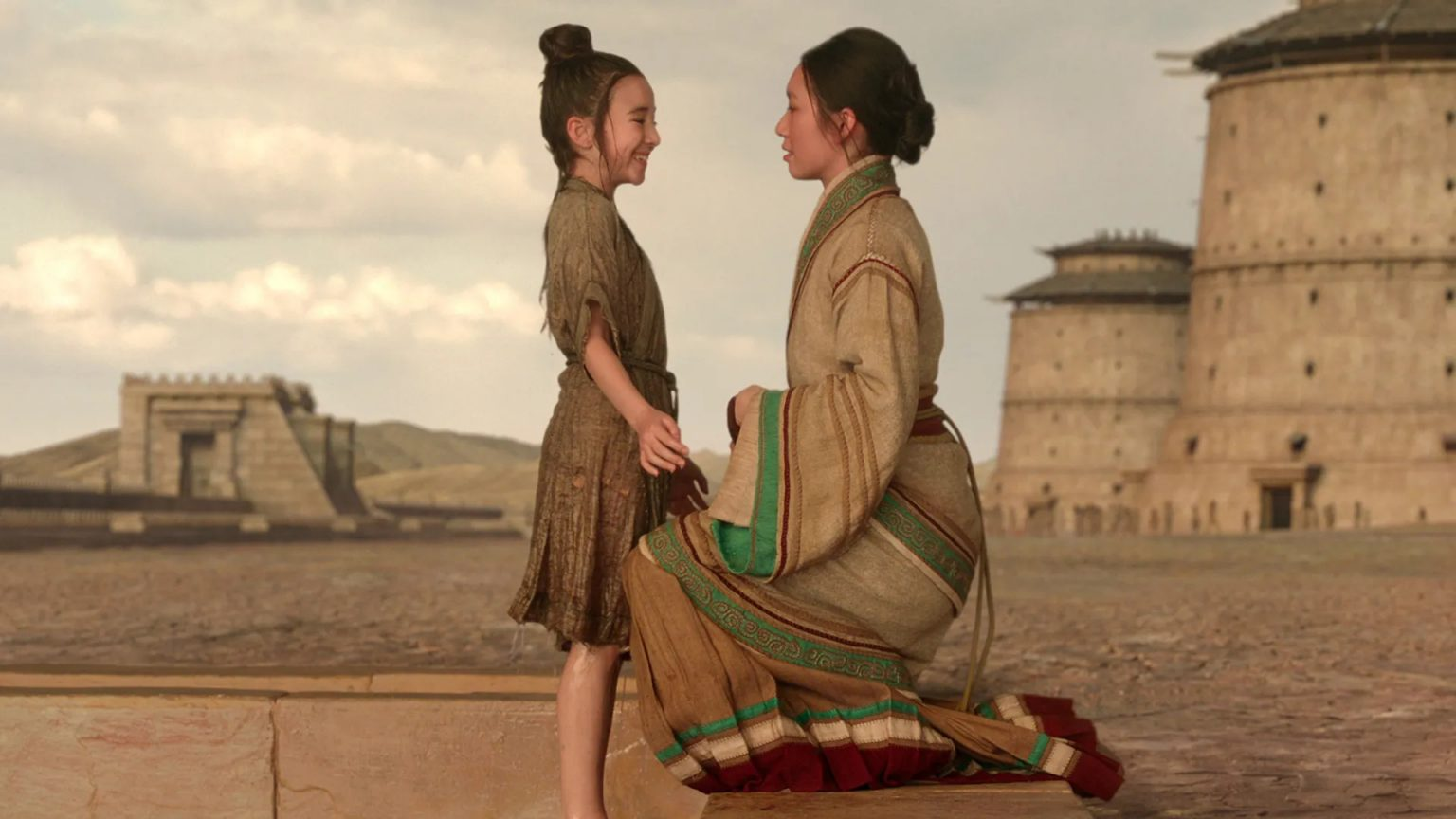
Enfolding world-building, community-making, and problem solving, the act of play is itself a powerful act of speculation. It can offer entertainment or education. It encourages, or sometimes sidesteps, empathy. It draws attention to the ways that stories are constructed and how we experience them.
In the context of video games, the recent announcement by Sony that it will halt production of physical game discs by 2028—and the attendant backlash from the gaming community—encourages us to think about physical vs. digital media and legacy access, and how economics factors into how we play, and for how long. Some games, like That Dragon, Cancer and The Final Exam, may barely be said to be ‘played’ at all: more experienced, and learned from. Play can inspire joy, flow states, immersion—or desolation.
This special issue of Vector invites contributors to engage with the act of ‘play’ in its most expansive definition, including but not limited to:
- Tabletop RPGs
- Collectibles
- Video games
- VR/AR
- Physical media
- AI and game creation (backlash, adopters)
- Educational games
- Citizen science games
- Gamification of labour
- Games in speculative fiction
- Games as forms of art or activism
- Affect
- Materialist/new historicist readings
Please submit your proposal by September 30th to vector.submissions@gmail.com, including:
- a 150-500 word proposal, including estimated length;
- something about yourself, either a 50-100 word bio or a CV.
Articles should be between 1,000 and 8,000 words. Please let us know your estimated word count. We seek articles that are carefully grounded in scholarly research, while also being clear, engaging, and suitable for a broad audience (including non-academics). Articles will be due by November 30th
Please also feel free to make queries about other formats, e.g. reviews, interviews, curated reading lists, roundtable discussions, unusual / innovative formats.
Categories: Industry News
New Call for Proposals: Play
CfP Vector 304 – Play
The Three-Body Problem (Netflix, 2024)
Enfolding world-building, community-making, and problem solving, the act of play is itself a powerful act of speculation. It can offer entertainment or education. It encourages, or sometimes sidesteps, empathy. It draws attention to the ways that stories are constructed and how we experience them.
In the context of video games, the recent announcement by Sony that it will halt production of physical game discs by 2028—and the attendant backlash from the gaming community—encourages us to think about physical vs. digital media and legacy access, and how economics factors into how we play, and for how long. Some games, like That Dragon, Cancer and The Final Exam, may barely be said to be ‘played’ at all: more experienced, and learned from. Play can inspire joy, flow states, immersion—or desolation.
This special issue of Vector invites contributors to engage with the act of ‘play’ in its most expansive definition, including but not limited to:
- Tabletop RPGs
- Collectibles
- Video games
- VR/AR
- Physical media
- AI and game creation (backlash, adopters)
- Educational games
- Citizen science games
- Gamification of labour
- Games in speculative fiction
- Games as forms of art or activism
- Affect
- Materialist/new historicist readings
Please submit your proposal by September 30th to vector.submissions@gmail.com, including:
- a 150-500 word proposal, including estimated length;
- something about yourself, either a 50-100 word bio or a CV.
Articles should be between 1,000 and 8,000 words. Please let us know your estimated word count. We seek articles that are carefully grounded in scholarly research, while also being clear, engaging, and suitable for a broad audience (including non-academics). Articles will be due by November 30th
Please also feel free to make queries about other formats, e.g. reviews, interviews, curated reading lists, roundtable discussions, unusual / innovative formats.
Categories: Industry News
Zoefuturism as CoFuturism: Revisiting the genre argument
Dr. Patrick Anthony Barbosa Brock
CoFutures
CoFutures
What do we do when we talk about Zoefuturism? This essay argues that Zoefuturism and CoFuturisms are not merely aesthetic or speculative categories, but infrastructural practices of collective world-making. I propose a framework for understanding how these movements intervene in social imaginaries through genre formation, manifestos, and boundary-making practices, while also examining their material implications for the communities and infrastructures from which they emerge. To that end, I draw on my previous theorization of the role genre mechanics play in the formation of collectivities.
Although they are envisioned here as operationally connected, speculative fiction, CoFuturisms, and Zoefuturism should not be treated as interchangeable categories. Speculative fiction is a broad narrative mode oriented toward hypothetical worlds, alternative temporalities, and estrangement from consensus reality. CoFuturisms, by contrast, designate culturally situated interventions that mobilize speculative methods to contest dominant imaginaries and produce alternative social horizons. Zoefuturism differs from both in that its central organizing principle is relationality itself: an ontological emphasis on “interconnected becoming” across human, nonhuman, ecological, and material forms of life. Where speculative fiction often asks what futures might exist, and CoFuturisms ask who gets to imagine and inhabit those futures, Zoefuturism asks how forms of life become entangled in the production of futurity.
CoFuturisms as a conceptual umbrella emerged with the publication of the Routledge Handbook of CoFuturisms and its survey of speculative works from the world’s periphery, many of which blur the boundaries between art and activism. Like the imaginaries from which they emerge, CoFuturisms are collective constructions shaped by forces operating at both macro and micro levels. As digital media theorist, poet, and software designer Jason Edward Lewis writes, they “create a field of ‘future facts,’ a fully realized reality that exists somewhere down the timeline, waiting for us to catch up to it” (11). More broadly, CoFuturisms often emerge through science fiction (SF) and speculative practices, commonly appropriating their methods, to critique dominant imaginaries and intervene micropolitically in the present. As science fiction scholar Taryne Jade Taylor observes, “CoFuturisms is a movement that is found both within science fiction and fantasy and also reaches past the boundaries of speculative fiction” (2023).
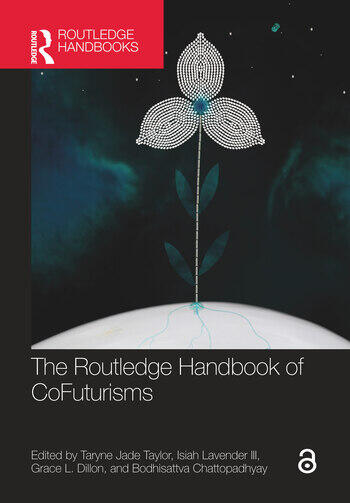
In conversation with the editors of this special issue, I was provided with the following conceptualization of Zoefuturism: “Zoefuturism as a genre is founded upon the understanding that all things are relational—where descriptors, characteristics, or even a sense of ‘being’ depend upon everything around them—and that everything is constantly becoming, much like our DNA. As such, Zoefuturism is not political.”
I interpret Zoefuturism as an attempt to articulate a relational understanding of the world that moves beyond binary frameworks by foregrounding becoming, interdependence, and ecological entanglement. Unlike many futurisms organized around identity, technological acceleration, or emancipatory struggle, Zoefuturism situates relationality itself as the condition of futurity. Its emphasis falls less on representing marginalized futures than on rethinking the ontological assumptions through which futures are imagined in the first place. Yet Zoefuturism cannot escape political implications simply by rejecting explicit political identification. Like CoFuturisms, it shapes how reality is narratively and institutionally organized through language, cultural production, archives, and the social imaginaries that orient collective life. Its politics emerge less through ideological declaration than through interventions into the conceptual and affective infrastructures governing how relations between life forms are understood.
These interventions occur through genre itself. Genres are not merely aesthetic containers but social formations circulating among texts, communities, markets, and institutions. Because genres organize recognition, expectation, and participation, they function as technologies of collective becoming. Speculative fiction provides many of the formal tools that make such interventions narratively intelligible, while CoFuturisms mobilize those tools toward situated cultural and political projects. Zoefuturism, in turn, redirects speculative practice toward relational ontologies that destabilize distinctions between nature and culture, subject and environment, and human and nonhuman life.
Manifesting Worlds
CoFuturisms are intersectional movements that combine narrative, ethical reflection, and speculative world-building across diverse epistemological traditions. If SF is commonly described as a genre that imagines the future, CoFuturisms seek instead to reshape the present. They assemble heterogeneous archives, practices, and modes of creation into new frameworks for collective life. Unlike speculative fiction broadly conceived, CoFuturisms are defined less by narrative conventions than by situated interventions into historical asymmetries of power, visibility, and futurity.
Observing how SF practitioners in Northeast Brazil sought to intervene in the genre as an emancipatory act, and how similar processes appeared elsewhere, I termed this phenomenon genre genesis (Brock 2022). Genre genesis describes how creators reshape the symbolic foundations of a genre to construct new collectivities and modes of belonging. Writers from Brazil’s Northeast, for instance, responded to their inferiorized position within the national imagination by coining sertãopunk, a form of science fiction rooted in the region’s ecological and political realities.
Comparable acts of conceptual creation appear across multiple CoFuturist contexts. Examples include Nnedi Okorafor’s Africanfuturism, the Afropantheology developed by Oghenechovwe Donald Ekpeki and Joshua Uchenna Omenga, Scott Russel Duncan’s Xicanxfuturism, and forms of Andean Futurism developed by Peruvian SF writers. These practices do more than produce new literary categories; they reshape the infrastructures through which speculative thinking circulates and acquires legitimacy. Zoefuturism operates through similar mechanisms, though with a distinctive emphasis on relationality as both method and ontology rather than primarily identity, territory, or historical exclusion. Fundamentally, they are creations that beget further creations, becoming self-replicating or generative through the interplay of individual agency and collective effort.
Furthermore, I believe that three interconnected processes help explain how these movements function: the pedagogical qualities of SF and speculative thinking; the interventionist tradition of manifestos; the mobilizing role of genres as boundary objects.
a) The pedagogical qualities of SF and speculative thinking
Speculative thinking includes counterfactual reasoning, prefactual thinking, the processing of spatial and temporal asymmetries, and the ability to distinguish between perceived reality and hypothetical scenarios (Lun et al. 2021). These capacities help individuals and communities to imagine alternative pasts and futures, and innovative solutions to problems. Emerging research suggests that speculative behaviors may also appear in nonhuman animals, including forms of play and curiosity observed among bees and zebrafish (Galpayage Dona et al. 2022; Franks et al. 2023).
SF amplifies speculative thinking by distributing it socially through narrative and mass culture. The genre combines recognizable conventions with remarkable flexibility, enabling continual reinvention (Wolfe 2011). Darko Suvin’s concept of the novum, for instance, describes the transformative innovation that estranges readers from familiar reality while opening new perspectives on it. SF thus enables writers to explore time, history, science, and social organization through speculative scenarios that cultivate both wonder and critical reflection.
As Seo-Young Chu argues, SF does not abandon realism but intensifies it through heightened complexity (2010). Because it is highly imaginative, SF often constructs worlds capable of revealing otherwise invisible structures of reality. Increasingly, SF also shapes political discourse rather than remaining confined to escapist entertainment (Taskale 2026). This helps explain why SF aligns so naturally with CoFuturisms and Zoefuturism alike. Speculative fiction supplies the formal and cognitive conditions through which alternative worlds become imaginable. CoFuturisms appropriate those capacities to intervene in disputes over culture, identity, historical memory, and futurity. Zoefuturism mobilizes them differently: not primarily to recover excluded identities or produce counter-histories, but to foreground relational interdependence as the basis for imagining collective existence across ecological and ontological scales.
b) Manifestos
If speculative fiction provides the imaginative conditions for collective world-building, manifestos provide its declarative form. Reading the call for papers for this special issue, I was struck by how closely it resembled a manifesto: “Zoefuturism takes its name from the Greek word for life, zoe (ζωή, zoí). It is a futurism of connectedness, engagement, and relationality, a futurism of ‘life-becomings.’” This statement situates Zoefuturism philosophically, identifies representative works, and proposes a framework through which they should be interpreted. It also intervenes by reorganizing a field of meaning around a new conceptual category.
Manifestos have historically functioned as instruments of political and cultural intervention. Originally associated with declarations of sovereign authority in the fifteenth century, they gradually evolved into vehicles for public participation. Earlier examples include the manifestos of the Levellers and Diggers in seventeenth-century England, which sought to establish new forms of public speech and political participation (Lamb 2022).
The manifesto form became especially influential within twentieth-century artistic movements. Although Filippo Tommaso Marinetti’s Futurist Manifesto carried deeply reactionary politics, its methodological influence in Latin America proved substantial (Schnapp and Rocha 1996; Sartor 2012; Aguirre et al. 2017). Writers and intellectuals appropriated the form to redefine national cultures and articulate alternative aesthetic programs. Brazilian and Peruvian modernists, for example, used manifestos to intervene directly in debates over cultural modernity (Montenegro 2017).
Manifestos therefore operate not simply as declarations but as interventions into public discourse. Entire literary works may function manifesto-like by reorganizing perception and political imagination. In the case of Zoefuturism, the intervention emerges through editorial framing itself: the decision to foreground Zoefuturism as a category for organizing a constellation of related works and ideas. Unlike many earlier futurist manifestos centered on rupture, acceleration, or technological conquest, Zoefuturism emphasizes interdependence, permeability, and becoming.
c) Boundary Objects and Genre Infrastructure
If manifestos provide interventionist declarations, genres provide the infrastructures through which those interventions circulate and become socially durable. Humans are deeply oriented toward cooperation and cumulative cultural learning. Through language, ritual, performance, and material artifacts, societies transmit vast bodies of non-genetic information across generations (Henrich and Muthukrishna 2018).
Drawing on science and technology studies, John Rieder adopts the concept of boundary objects to explain the cultural power of SF (2017). In this framework, SF encompasses not only literary texts but also the broader network of social, commercial, and institutional relations through which meanings circulate. Genres function as boundary objects because they remain flexible enough to accommodate multiple interpretations while stable enough to sustain collective participation.
My concepts of genre genesis and genre infrastructure extend this framework (Brock 2022; 2024). Genre genesis refers to the reshaping of symbolic foundations through collective cultural intervention. Genre infrastructure describes the institutional systems through which these interventions are sustained: publishing networks, reading communities, archives, digital platforms, markets, and criticism.
Creators engaged in these processes demonstrate a sophisticated awareness of what Frelik calls “boundary discourse” (2011): the socially negotiated construction of meaning through genre conventions. Genres are therefore not merely aesthetic categories but cultural and economic systems. By proposing new genre labels or redefining existing ones, creators intervene directly in the symbolic economy of literature and cultural production.
This is why CoFuturisms and Zoefuturism possess unavoidable political dimensions. Yet they do so differently. CoFuturisms tend to organize around highly situated struggles over representation, historical memory, and cultural agency. Zoefuturism instead foregrounds the relational conditions through which forms of life become mutually constituted. If CoFuturisms frequently ask who is excluded from dominant futures, Zoefuturism asks how futurity itself might be reorganized through interdependence rather than separation. Genres thus function not only as aesthetic categories but as infrastructures for negotiating different ontologies of collective existence.
Another Future, If You Can Keep It
The political significance of Zoefuturism and other CoFuturisms emerges not only from their explicit themes but from the infrastructures they construct and transform. By intervening in genres, archives, and systems of cultural circulation, these movements reshape the conditions under which futures become imaginable. Their micropolitics operate through negotiation, coalition-building, and symbolic intervention rather than singular revolutionary rupture.
Critics have argued that CoFuturisms risk absorption into the same capitalist systems they seek to challenge (Boyden 2024). Yet this tension does not invalidate their political significance. On the contrary, it reveals how struggles over futurity increasingly unfold through culture, narrative, and infrastructure. Across the political spectrum, movements are turning toward myth-making and storytelling as mechanisms for shaping public consciousness and social possibility.
CoFuturisms therefore should not be understood simply as expressions of modernity’s obsession with the future. Rather, they attempt to reconfigure that obsession by constructing alternative boundary objects through which communities negotiate meaning differently. Zoefuturism participates in this broader movement, but does so by emphasizing relational ontologies rather than primarily identity-based or civilizational alternatives. Its intervention lies in reframing futurity itself as an emergent property of entangled forms of life.
To recognize that CoFuturisms are constructing new archives is also to recognize that they intervene in the infrastructures through which ideas become realities. The movement from imagination to institutionalization unfolds unevenly across law, politics, economics, and culture. Some ideas remain marginal for decades; others become rapidly assimilated into dominant systems. Yet communities continue to act within this uncertain terrain, contesting the forces that seek to define the future on their behalf.
As anthropologist, anarchist, and social and political activist David Graeber observed, “the ultimate hidden truth of the world is that it is something that we make, and could just as easily make differently” (2024). While the process is rarely easy, CoFuturisms and Zoefuturism emerge from this recognition that we can start changing the present through the exquisite pathways described here, starting by just talking about them.
Works cited
Abrahamsen, Rita, Jean-François Drolet, Michael C. Williams, Srdjan Vucetic, Karin Narita, and Alexandra Gheciu. 2024. “The Gramscian Right, or Turning Gramsci on His Head.” In World of the Right: Radical Conservatism and Global Order. Cambridge: Cambridge University Press: pp. 34–66.
Aguirre, Mariana, Rosa Sarabia, Renée M. Silverman, and Ricardo Vasconcelos, ed. 2017. “Futurism in Latin America.” Special Issue, International Yearbook of Futurism Studies, Volume 7, De Gruyter.
Boyden, Michael. 2025. “Heterotemporality and Posthumanism in Alternative Futurisms.” Concentric: Literary and Cultural Studies 50.1 (2024): 69-87. Airiti Library. Web. 1 Aug.
Brock, Patrick A. B. 2022. “Futurism and genre genesis in Brazilian science fiction.” Zanzalá-Revista Brasileira de Estudos sobre Gêneros Cinematográficos e Audiovisuais, número 8.1: 8-18.
Brock, Patrick A. B. 2023. “Brazilian Afrofuturism, Heuristic Function, and the Mass Cultural Genre System.” SFRA Review 53.3, Summer, pp. 18-27.
Brock, Patrick A. B. 2024. “Genre Infrastructure as Speculative Method in Latin America.” Journal of the Fantastic in the Arts 34.3: pp. 277-303.
Chu, Seo-Young. 2010. Do Metaphors Dream of Literal Sleep? A Science-Fictional Theory of Representation. Harvard University Press.
Finchelstein, Federico. 2022. Fascist Mythologies: The History and Politics of Unreason in Borges, Freud, and Schmitt. Columbia University Press, 2022. https://doi.org/10.7312/finc18320
Franks, Becca, Leigh P. Gaffney, Courtney Graham and Daniel M. Weary. 2023. Curiosity in zebrafish (Danio rerio)? Behavioral responses to 30 novel objects. Front. Vet. Sci. 9:1062420. doi: 10.3389/fvets.2022.1062420
Frelik, Paweł. 2011. “Of Slipstream and Others: SF and Genre Boundary Discourses.” Science Fiction Studies, vol. 38, no. 1: pp. 20–45.
Galpayage Dona, Hiruni Samadi, Cwyn Solvi, Amelia Kowalewska, Kaarle Mäkelä, HaDi MaBouDi and Lars Chittka. 2022. “Do bumble bees play?” Animal Behaviour, Volume 194, Pages 239-251. https://doi.org/10.1016/j.anbehav.2022.08.013.
Ginway, M. Elizabeth, and J. Andrew Brown, editors. 2012. Latin American Science Fiction. Palgrave Macmillan US.
Graeber, David. 2024. The Ultimate Hidden Truth of the World. Penguin Books, 2024.
Henrich, Joseph and Michael Muthukrishna. 2021. “The Origins and Psychology of Human Cooperation.” Annual Review of Psychology 72:1: 207–240.
Jade Taylor, Taryne. 2023. “Introduction to CoFuturisms.” The Routledge Handbook of Cofuturisms. Taylor, T.J., Lavender III, I., Dillon, G.L., & Chattopadhyay, B. (Eds.) Routledge.
Komporozos-Athanasiou, Aris. 2023. Speculative Communities: Living with Uncertainty in a Financialized World. University of Chicago Press, 2023.
Lamb, Matthew. 2022. “So You Want to Write a Manifesto? (Part 1 of 2).” Public Things Newsletter, Substack, 3 April. publicthings.substack.com/p/so-you-want-to-write-a-manifesto.
Lewis, Jason Edward. 2023. “The Future Imaginary.” The Routledge Handbook of CoFuturisms. Edited By Taryne Jade Taylor, Isiah Lavender III, Grace L. Dillon, Bodhisattva Chattopadhyay. Routledge: pp. 11-22.
Lun, Huang, Xie Yibo and Chen Xiaolin. 2021. “A Review of Functions of Speculative Thinking.” Frontiers in Psychology, vol. 12: pp. 728946.
Montenegro, Giovanna. 2017. “Indigenismo and Futurism in Latin America: José Carlos Mariátegui and the Peruvian Avant-Garde.” International Yearbook of Futurism Studies. Special Issue: Futurism in Latin America. Volume 7, De Gruyter: pp. 29-59.
Rieder, John. 2017. Science Fiction and the Mass Cultural Genre System. Wesleyan University Press.
Sartor, Mario. 2012. “Italian Futurism and Its Latin American Echoes.” Seminário Internacional de Conservação de Escultura Moderna. MAC USP, 2012. Available in: http://www.mac.usp.br/mac/conteudo/academico/publicacoes/anais/modernidade/pdfs/MARIO_ESP.pdf.
Schnapp, J. T. and João Cezar de Castro Rocha. 1996. “Brazilian Velocities: On Marinetti’s 1926 Trip to South America.” South Central Review, 13(2/3): pp. 105–156.
Suvin, Darko. 2010. “Chapter 3: Science Fiction and the Novum (1977).” Defined by a Hollow: Essays on Utopia, Science Fiction and Political Epistemology. Ralahine Utopian Studies, v. 6: pp. 67-92.
Taskale, Ali Riza. 2026. “Materialized Science Fiction: The Tech Oligarchy’s Blueprint for a New Global Order.” Global Studies Quarterly, Volume 6, Issue 1, January 2026.
Wolfe, Gary K. 2011. Evaporating Genres: Essays on Fantastic Literature. Wesleyan University Press.
Categories: Industry News
Zoefuturism as CoFuturism: Revisiting the genre argument
Dr. Patrick Anthony Barbosa Brock
CoFutures
CoFutures
What do we do when we talk about Zoefuturism? This essay argues that Zoefuturism and CoFuturisms are not merely aesthetic or speculative categories, but infrastructural practices of collective world-making. I propose a framework for understanding how these movements intervene in social imaginaries through genre formation, manifestos, and boundary-making practices, while also examining their material implications for the communities and infrastructures from which they emerge. To that end, I draw on my previous theorization of the role genre mechanics play in the formation of collectivities.
Although they are envisioned here as operationally connected, speculative fiction, CoFuturisms, and Zoefuturism should not be treated as interchangeable categories. Speculative fiction is a broad narrative mode oriented toward hypothetical worlds, alternative temporalities, and estrangement from consensus reality. CoFuturisms, by contrast, designate culturally situated interventions that mobilize speculative methods to contest dominant imaginaries and produce alternative social horizons. Zoefuturism differs from both in that its central organizing principle is relationality itself: an ontological emphasis on “interconnected becoming” across human, nonhuman, ecological, and material forms of life. Where speculative fiction often asks what futures might exist, and CoFuturisms ask who gets to imagine and inhabit those futures, Zoefuturism asks how forms of life become entangled in the production of futurity.
CoFuturisms as a conceptual umbrella emerged with the publication of the Routledge Handbook of CoFuturisms and its survey of speculative works from the world’s periphery, many of which blur the boundaries between art and activism. Like the imaginaries from which they emerge, CoFuturisms are collective constructions shaped by forces operating at both macro and micro levels. As digital media theorist, poet, and software designer Jason Edward Lewis writes, they “create a field of ‘future facts,’ a fully realized reality that exists somewhere down the timeline, waiting for us to catch up to it” (11). More broadly, CoFuturisms often emerge through science fiction (SF) and speculative practices, commonly appropriating their methods, to critique dominant imaginaries and intervene micropolitically in the present. As science fiction scholar Taryne Jade Taylor observes, “CoFuturisms is a movement that is found both within science fiction and fantasy and also reaches past the boundaries of speculative fiction” (2023).
In conversation with the editors of this special issue, I was provided with the following conceptualization of Zoefuturism: “Zoefuturism as a genre is founded upon the understanding that all things are relational—where descriptors, characteristics, or even a sense of ‘being’ depend upon everything around them—and that everything is constantly becoming, much like our DNA. As such, Zoefuturism is not political.”
I interpret Zoefuturism as an attempt to articulate a relational understanding of the world that moves beyond binary frameworks by foregrounding becoming, interdependence, and ecological entanglement. Unlike many futurisms organized around identity, technological acceleration, or emancipatory struggle, Zoefuturism situates relationality itself as the condition of futurity. Its emphasis falls less on representing marginalized futures than on rethinking the ontological assumptions through which futures are imagined in the first place. Yet Zoefuturism cannot escape political implications simply by rejecting explicit political identification. Like CoFuturisms, it shapes how reality is narratively and institutionally organized through language, cultural production, archives, and the social imaginaries that orient collective life. Its politics emerge less through ideological declaration than through interventions into the conceptual and affective infrastructures governing how relations between life forms are understood.
These interventions occur through genre itself. Genres are not merely aesthetic containers but social formations circulating among texts, communities, markets, and institutions. Because genres organize recognition, expectation, and participation, they function as technologies of collective becoming. Speculative fiction provides many of the formal tools that make such interventions narratively intelligible, while CoFuturisms mobilize those tools toward situated cultural and political projects. Zoefuturism, in turn, redirects speculative practice toward relational ontologies that destabilize distinctions between nature and culture, subject and environment, and human and nonhuman life.
Manifesting Worlds
CoFuturisms are intersectional movements that combine narrative, ethical reflection, and speculative world-building across diverse epistemological traditions. If SF is commonly described as a genre that imagines the future, CoFuturisms seek instead to reshape the present. They assemble heterogeneous archives, practices, and modes of creation into new frameworks for collective life. Unlike speculative fiction broadly conceived, CoFuturisms are defined less by narrative conventions than by situated interventions into historical asymmetries of power, visibility, and futurity.
Observing how SF practitioners in Northeast Brazil sought to intervene in the genre as an emancipatory act, and how similar processes appeared elsewhere, I termed this phenomenon genre genesis (Brock 2022). Genre genesis describes how creators reshape the symbolic foundations of a genre to construct new collectivities and modes of belonging. Writers from Brazil’s Northeast, for instance, responded to their inferiorized position within the national imagination by coining sertãopunk, a form of science fiction rooted in the region’s ecological and political realities.
Comparable acts of conceptual creation appear across multiple CoFuturist contexts. Examples include Nnedi Okorafor’s Africanfuturism, the Afropantheology developed by Oghenechovwe Donald Ekpeki and Joshua Uchenna Omenga, Scott Russel Duncan’s Xicanxfuturism, and forms of Andean Futurism developed by Peruvian SF writers. These practices do more than produce new literary categories; they reshape the infrastructures through which speculative thinking circulates and acquires legitimacy. Zoefuturism operates through similar mechanisms, though with a distinctive emphasis on relationality as both method and ontology rather than primarily identity, territory, or historical exclusion. Fundamentally, they are creations that beget further creations, becoming self-replicating or generative through the interplay of individual agency and collective effort.
Furthermore, I believe that three interconnected processes help explain how these movements function: the pedagogical qualities of SF and speculative thinking; the interventionist tradition of manifestos; the mobilizing role of genres as boundary objects.
a) The pedagogical qualities of SF and speculative thinking
Speculative thinking includes counterfactual reasoning, prefactual thinking, the processing of spatial and temporal asymmetries, and the ability to distinguish between perceived reality and hypothetical scenarios (Lun et al. 2021). These capacities help individuals and communities to imagine alternative pasts and futures, and innovative solutions to problems. Emerging research suggests that speculative behaviors may also appear in nonhuman animals, including forms of play and curiosity observed among bees and zebrafish (Galpayage Dona et al. 2022; Franks et al. 2023).
SF amplifies speculative thinking by distributing it socially through narrative and mass culture. The genre combines recognizable conventions with remarkable flexibility, enabling continual reinvention (Wolfe 2011). Darko Suvin’s concept of the novum, for instance, describes the transformative innovation that estranges readers from familiar reality while opening new perspectives on it. SF thus enables writers to explore time, history, science, and social organization through speculative scenarios that cultivate both wonder and critical reflection.
As Seo-Young Chu argues, SF does not abandon realism but intensifies it through heightened complexity (2010). Because it is highly imaginative, SF often constructs worlds capable of revealing otherwise invisible structures of reality. Increasingly, SF also shapes political discourse rather than remaining confined to escapist entertainment (Taskale 2026). This helps explain why SF aligns so naturally with CoFuturisms and Zoefuturism alike. Speculative fiction supplies the formal and cognitive conditions through which alternative worlds become imaginable. CoFuturisms appropriate those capacities to intervene in disputes over culture, identity, historical memory, and futurity. Zoefuturism mobilizes them differently: not primarily to recover excluded identities or produce counter-histories, but to foreground relational interdependence as the basis for imagining collective existence across ecological and ontological scales.
b) Manifestos
If speculative fiction provides the imaginative conditions for collective world-building, manifestos provide its declarative form. Reading the call for papers for this special issue, I was struck by how closely it resembled a manifesto: “Zoefuturism takes its name from the Greek word for life, zoe (ζωή, zoí). It is a futurism of connectedness, engagement, and relationality, a futurism of ‘life-becomings.’” This statement situates Zoefuturism philosophically, identifies representative works, and proposes a framework through which they should be interpreted. It also intervenes by reorganizing a field of meaning around a new conceptual category.
Manifestos have historically functioned as instruments of political and cultural intervention. Originally associated with declarations of sovereign authority in the fifteenth century, they gradually evolved into vehicles for public participation. Earlier examples include the manifestos of the Levellers and Diggers in seventeenth-century England, which sought to establish new forms of public speech and political participation (Lamb 2022).
The manifesto form became especially influential within twentieth-century artistic movements. Although Filippo Tommaso Marinetti’s Futurist Manifesto carried deeply reactionary politics, its methodological influence in Latin America proved substantial (Schnapp and Rocha 1996; Sartor 2012; Aguirre et al. 2017). Writers and intellectuals appropriated the form to redefine national cultures and articulate alternative aesthetic programs. Brazilian and Peruvian modernists, for example, used manifestos to intervene directly in debates over cultural modernity (Montenegro 2017).
Manifestos therefore operate not simply as declarations but as interventions into public discourse. Entire literary works may function manifesto-like by reorganizing perception and political imagination. In the case of Zoefuturism, the intervention emerges through editorial framing itself: the decision to foreground Zoefuturism as a category for organizing a constellation of related works and ideas. Unlike many earlier futurist manifestos centered on rupture, acceleration, or technological conquest, Zoefuturism emphasizes interdependence, permeability, and becoming.
c) Boundary Objects and Genre Infrastructure
If manifestos provide interventionist declarations, genres provide the infrastructures through which those interventions circulate and become socially durable. Humans are deeply oriented toward cooperation and cumulative cultural learning. Through language, ritual, performance, and material artifacts, societies transmit vast bodies of non-genetic information across generations (Henrich and Muthukrishna 2018).
Drawing on science and technology studies, John Rieder adopts the concept of boundary objects to explain the cultural power of SF (2017). In this framework, SF encompasses not only literary texts but also the broader network of social, commercial, and institutional relations through which meanings circulate. Genres function as boundary objects because they remain flexible enough to accommodate multiple interpretations while stable enough to sustain collective participation.
My concepts of genre genesis and genre infrastructure extend this framework (Brock 2022; 2024). Genre genesis refers to the reshaping of symbolic foundations through collective cultural intervention. Genre infrastructure describes the institutional systems through which these interventions are sustained: publishing networks, reading communities, archives, digital platforms, markets, and criticism.
Creators engaged in these processes demonstrate a sophisticated awareness of what Frelik calls “boundary discourse” (2011): the socially negotiated construction of meaning through genre conventions. Genres are therefore not merely aesthetic categories but cultural and economic systems. By proposing new genre labels or redefining existing ones, creators intervene directly in the symbolic economy of literature and cultural production.
This is why CoFuturisms and Zoefuturism possess unavoidable political dimensions. Yet they do so differently. CoFuturisms tend to organize around highly situated struggles over representation, historical memory, and cultural agency. Zoefuturism instead foregrounds the relational conditions through which forms of life become mutually constituted. If CoFuturisms frequently ask who is excluded from dominant futures, Zoefuturism asks how futurity itself might be reorganized through interdependence rather than separation. Genres thus function not only as aesthetic categories but as infrastructures for negotiating different ontologies of collective existence.
Another Future, If You Can Keep It
The political significance of Zoefuturism and other CoFuturisms emerges not only from their explicit themes but from the infrastructures they construct and transform. By intervening in genres, archives, and systems of cultural circulation, these movements reshape the conditions under which futures become imaginable. Their micropolitics operate through negotiation, coalition-building, and symbolic intervention rather than singular revolutionary rupture.
Critics have argued that CoFuturisms risk absorption into the same capitalist systems they seek to challenge (Boyden 2024). Yet this tension does not invalidate their political significance. On the contrary, it reveals how struggles over futurity increasingly unfold through culture, narrative, and infrastructure. Across the political spectrum, movements are turning toward myth-making and storytelling as mechanisms for shaping public consciousness and social possibility.
CoFuturisms therefore should not be understood simply as expressions of modernity’s obsession with the future. Rather, they attempt to reconfigure that obsession by constructing alternative boundary objects through which communities negotiate meaning differently. Zoefuturism participates in this broader movement, but does so by emphasizing relational ontologies rather than primarily identity-based or civilizational alternatives. Its intervention lies in reframing futurity itself as an emergent property of entangled forms of life.
To recognize that CoFuturisms are constructing new archives is also to recognize that they intervene in the infrastructures through which ideas become realities. The movement from imagination to institutionalization unfolds unevenly across law, politics, economics, and culture. Some ideas remain marginal for decades; others become rapidly assimilated into dominant systems. Yet communities continue to act within this uncertain terrain, contesting the forces that seek to define the future on their behalf.
As anthropologist, anarchist, and social and political activist David Graeber observed, “the ultimate hidden truth of the world is that it is something that we make, and could just as easily make differently” (2024). While the process is rarely easy, CoFuturisms and Zoefuturism emerge from this recognition that we can start changing the present through the exquisite pathways described here, starting by just talking about them.
Works cited
Abrahamsen, Rita, Jean-François Drolet, Michael C. Williams, Srdjan Vucetic, Karin Narita, and Alexandra Gheciu. 2024. “The Gramscian Right, or Turning Gramsci on His Head.” In World of the Right: Radical Conservatism and Global Order. Cambridge: Cambridge University Press: pp. 34–66.
Aguirre, Mariana, Rosa Sarabia, Renée M. Silverman, and Ricardo Vasconcelos, ed. 2017. “Futurism in Latin America.” Special Issue, International Yearbook of Futurism Studies, Volume 7, De Gruyter.
Boyden, Michael. 2025. “Heterotemporality and Posthumanism in Alternative Futurisms.” Concentric: Literary and Cultural Studies 50.1 (2024): 69-87. Airiti Library. Web. 1 Aug.
Brock, Patrick A. B. 2022. “Futurism and genre genesis in Brazilian science fiction.” Zanzalá-Revista Brasileira de Estudos sobre Gêneros Cinematográficos e Audiovisuais, número 8.1: 8-18.
Brock, Patrick A. B. 2023. “Brazilian Afrofuturism, Heuristic Function, and the Mass Cultural Genre System.” SFRA Review 53.3, Summer, pp. 18-27.
Brock, Patrick A. B. 2024. “Genre Infrastructure as Speculative Method in Latin America.” Journal of the Fantastic in the Arts 34.3: pp. 277-303.
Chu, Seo-Young. 2010. Do Metaphors Dream of Literal Sleep? A Science-Fictional Theory of Representation. Harvard University Press.
Finchelstein, Federico. 2022. Fascist Mythologies: The History and Politics of Unreason in Borges, Freud, and Schmitt. Columbia University Press, 2022. https://doi.org/10.7312/finc18320
Franks, Becca, Leigh P. Gaffney, Courtney Graham and Daniel M. Weary. 2023. Curiosity in zebrafish (Danio rerio)? Behavioral responses to 30 novel objects. Front. Vet. Sci. 9:1062420. doi: 10.3389/fvets.2022.1062420
Frelik, Paweł. 2011. “Of Slipstream and Others: SF and Genre Boundary Discourses.” Science Fiction Studies, vol. 38, no. 1: pp. 20–45.
Galpayage Dona, Hiruni Samadi, Cwyn Solvi, Amelia Kowalewska, Kaarle Mäkelä, HaDi MaBouDi and Lars Chittka. 2022. “Do bumble bees play?” Animal Behaviour, Volume 194, Pages 239-251. https://doi.org/10.1016/j.anbehav.2022.08.013.
Ginway, M. Elizabeth, and J. Andrew Brown, editors. 2012. Latin American Science Fiction. Palgrave Macmillan US.
Graeber, David. 2024. The Ultimate Hidden Truth of the World. Penguin Books, 2024.
Henrich, Joseph and Michael Muthukrishna. 2021. “The Origins and Psychology of Human Cooperation.” Annual Review of Psychology 72:1: 207–240.
Jade Taylor, Taryne. 2023. “Introduction to CoFuturisms.” The Routledge Handbook of Cofuturisms. Taylor, T.J., Lavender III, I., Dillon, G.L., & Chattopadhyay, B. (Eds.) Routledge.
Komporozos-Athanasiou, Aris. 2023. Speculative Communities: Living with Uncertainty in a Financialized World. University of Chicago Press, 2023.
Lamb, Matthew. 2022. “So You Want to Write a Manifesto? (Part 1 of 2).” Public Things Newsletter, Substack, 3 April. publicthings.substack.com/p/so-you-want-to-write-a-manifesto.
Lewis, Jason Edward. 2023. “The Future Imaginary.” The Routledge Handbook of CoFuturisms. Edited By Taryne Jade Taylor, Isiah Lavender III, Grace L. Dillon, Bodhisattva Chattopadhyay. Routledge: pp. 11-22.
Lun, Huang, Xie Yibo and Chen Xiaolin. 2021. “A Review of Functions of Speculative Thinking.” Frontiers in Psychology, vol. 12: pp. 728946.
Montenegro, Giovanna. 2017. “Indigenismo and Futurism in Latin America: José Carlos Mariátegui and the Peruvian Avant-Garde.” International Yearbook of Futurism Studies. Special Issue: Futurism in Latin America. Volume 7, De Gruyter: pp. 29-59.
Rieder, John. 2017. Science Fiction and the Mass Cultural Genre System. Wesleyan University Press.
Sartor, Mario. 2012. “Italian Futurism and Its Latin American Echoes.” Seminário Internacional de Conservação de Escultura Moderna. MAC USP, 2012. Available in: http://www.mac.usp.br/mac/conteudo/academico/publicacoes/anais/modernidade/pdfs/MARIO_ESP.pdf.
Schnapp, J. T. and João Cezar de Castro Rocha. 1996. “Brazilian Velocities: On Marinetti’s 1926 Trip to South America.” South Central Review, 13(2/3): pp. 105–156.
Suvin, Darko. 2010. “Chapter 3: Science Fiction and the Novum (1977).” Defined by a Hollow: Essays on Utopia, Science Fiction and Political Epistemology. Ralahine Utopian Studies, v. 6: pp. 67-92.
Taskale, Ali Riza. 2026. “Materialized Science Fiction: The Tech Oligarchy’s Blueprint for a New Global Order.” Global Studies Quarterly, Volume 6, Issue 1, January 2026.
Wolfe, Gary K. 2011. Evaporating Genres: Essays on Fantastic Literature. Wesleyan University Press.
Categories: Industry News
Rehabilitating Eva Hauserová’s Biopunk
By Cyril Simsa

Eva Hauserová promoting her non-fiction title Na koštěti se dá i lítat [Broomsticks can also be used for flying], 1995
Of the many contemporary subgenres of sf that can claim they originated as a reaction to the cyberpunk revolution of the 1980s, one of the oldest is certainly “biopunk”, especially if one counts the mini-genre of “ribofunk” – shouted into existence by the American writer Paul Di Filippo (1954-) in 1990, and just as quickly extinguished – as a legitimate precursor (Di Filippo 1990). Probably only “steampunk”, coined by K.W. Jeter (1950-) in 1987, is older (Nicholls and Langford 2025).
“Biopunk”, as it is used today, refers to a subgenre of sf that adopts many of the stylistic and narrative tropes of cyberpunk – a focus on stories built around an ensemble cast of petty criminals, (gene) hackers and chancers, urban subcultures, and a “revolt into style” (if the reader will pardon the throwback to the cultural criticism of an earlier era) (Melly 1970) – while sourcing its McGuffins from biotechnology, rather than cybernetics. In this contemporary sense, biopunk has its origins in the American genre writing of the 1990s, with the first documented use (from two different, and almost certainly unconnected sources) in 1992, and the subsequent attempt to identify precursors in earlier genre history.1
Di Filippo takes this as far back as H.G. Wells’ The Island of Doctor Moreau (1896); of more recent antecedents, Greg Bear’s Blood Music (1985) and Bruce Sterling’s Schismatrix (1985) are frequently cited (Di Filippo 1990; Schmeink 2014b, 32). From these American genre roots, biopunk has spread around the world and into other media, film and TV in particular. The hit TV show, Orphan Black (2013-2017), with its saga of a shadowy organisation trying to direct the future of human evolution through gene hacking and the complications that arise when some of its human clones escape, would be a good example. All of which makes a neat teleological narrative of exactly the kind that, in theory, every self-respecting punk of whatever persuasion is supposed to abhor; and none of which quite holds together when examined in a broader framework.
Because there is a catch – of course, there is – and in a European context, this neat timeline is disrupted by the Czech writer Eva Hauserová (1954-2023), also known as Eva Hauser, who in 1988 independently came up with a literary intervention she called “biopunk,” and her coinage pre-dates the American one. This sits uncomfortably with the official chronicle, making her something later critics have had to explain away, though there are also those who have simply ignored her. (For the former, see Schmeink, who will be discussed below; for the latter, a simple Google search will reveal any number of biopunk, or biopunk-adjacent websites that have no idea of Eva’s existence.)
Eva was living behind the Iron Curtain at the time she came up with the notion of “biopunk,” with limited access to American sources and no contact with her American contemporaries. However, like the American writers who later dreamt up their version of biopunk in the 1990s, her ideas were formed in reaction to cyberpunk – or rather, her vague impression of what she imagined cyberpunk to be, in the absence of any direct experience of the foundational texts – but with a change of focus to genetics and biology, rather than information technology and computer programming. (No doubt her educational background as a microbiologist played a role in that.) There are, then, some parallels between Eva’s initial impulse towards biopunk and that of the writers who later adopted the same term in America, though there are also significant differences.
In the 1980s, there was a common consensus in Czechoslovak fandom that cyberpunk was not really a viable literary genre in the conditions of latter-day Communism. As the Czech writer Ondřej Neff (1945-) argued in a classic lecture at Parcon, the Czechoslovak national sf convention, in June 1987: “It’s difficult to develop cyberpunk in a country, where one can’t even find a working telephone box.” (Neff 1987, cited from Hauser 1993, 15)
In devising her concept of biopunk, Eva took this insight one step further, arguing that the differences between East and West in relation to cyberpunk were not just a question of technology, but also of social conditioning:
The heroes of cyberpunk, in spite of all the novelty and colour of cyberpunk narrative, are at heart the same, familiar American boys – optimistic, active, greedy for money and longing for success. The heroes of biopunk, similarly to the people that I saw each day in my surroundings, couldn’t be nearly so straightforward.
When the disintegration and paralysis of society reaches a certain level, people lose their motivation to do anything at all. This is what we experienced in Czechoslovakia in the 1980s: people became extremely sceptical and passive as they realised, time and time again, that no matter what they tried, they couldn’t bring about any results, that no revolt, no expression of anger was capable of changing anything… (Hauser 1993, 15)
Worse, in Eva’s view, people living under totalitarianism become so accustomed to the limitations imposed on them that they come to consider them normal:
For example, the heroes of my stories often consider their situation to be marvellous and pleasant, even though by any rational analysis it is in actual fact frightening or utterly repulsive: this reflects totalitarian society with its grotesque voluntarism, its newspapers which continually declared that we, the people, were extremely happy, that we were living in a highly developed society, and that if we still had a few problems, they weren’t really so serious… (Hauser 1993, 15)2
Biopunk, then, was a literary device that allowed Eva to express the inner deformations of life under totalitarianism by externalising them into speculative biological traits. Her societies become the playground of “mutants, genetic diseases and deformations, chimaeric organisms,” (Hauser 1993, 15), and her protagonists are unable to imagine another state of being. Under the pressures of totalitarianism, her protagonists literally become monsters.
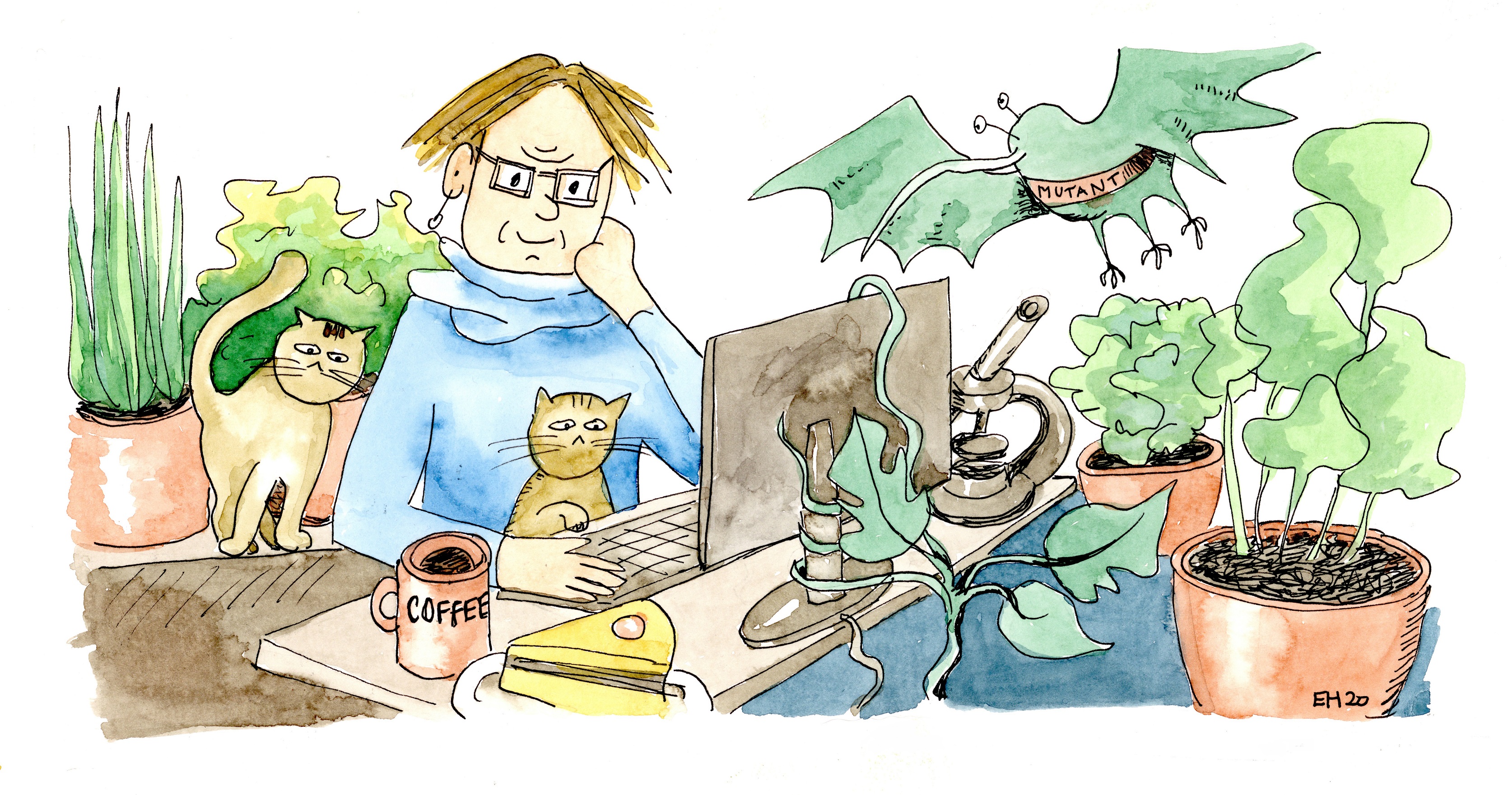
Eva Hauserová: Self-portrait (2020)
American biopunk clearly comes from a very different impulse: the exploration of how biotechnology is going to impact society in the framework of a more-or-less corporate future. Its extrapolated biotechnology is based on real science, not metaphor.3 Its social assumptions are those of capitalism, not the sunset years of Soviet-style Communism and the collapsing economy of a failed experiment in centrally-planned socialism, based on nineteenth-century notions of industrial development and twentieth-century surveillance technology.
There is no question that the “biopunk” of contemporary film and fiction is not the same animal as Eva’s, and that her coinage of an earlier Central-East European homonym is an inconvenience to the people who take the contemporary, “Western” variant seriously. It therefore makes perfect sense that they should seek to sideline Eva’s rogue intervention, though the ways they do so are sometimes quite problematic.
The most detailed attempt I have found to date is that of Lars Schmeink (1975-) in his article “Biopunk 101,” which was published in two slightly different versions in 2014 (Schmeink 2014a; Schmeink 2014b). Schmeink is today a respected independent scholar, based in Hamburg, with an impressive CV and a long publications list, but in 2014 he was just finishing his Ph.D. at Humboldt University Berlin , which two years later yielded his monograph Biopunk Dystopias: Genetic Engineering, Society and Science Fiction, published by Liverpool University Press (Schmeink 2016). The monograph itself makes no mention of Eva or her Czech biopunk – justifiably so, as it has no relevance to his argument – but one assumes that one of the reasons for his earlier essay was to tidy away this awkward forerunner, so as to avoid cluttering up his later book.
As far as I have been able to reconstruct the publishing history, the two versions of “Biopunk 101” appeared within a couple of months of each other. The first, longer version appeared on Schmeink’s personal blog in May 2014 and is now accessible only on the Wayback Machine; the second, more formal (and shorter) variant appeared as an essay in SFRA Review in Summer 2014 (Schmeink 2014a; Schmeink 2014b). The discussion of Eva’s work in both versions is based on a mini-feature about biopunk, which appeared in the BSFA’s critical journal Vector in 1993, and which was curated by the present author.
This comprised of three items:
1. A slightly edited and polished version of Eva’s English-language essay, “Biopunk: A New Literary Movement for Post-Totalitarian Regimes”, first published under a slightly variant title in her personal fanzine, Wild Sharkaah, in 1990 (Hauser 1990; Hauser 1993).
2. An English translation of “A Few Notes About Biopunk”, by Miroslav Fišer (1965-), first published in Czech in 1991, to illustrate how Eva’s biopunk had been received in Czech critical circles (Fišer 1993).
3. An introduction by myself to set the context (Simsa 1993).
Given the relatively late date of these publications (1991 for the first Czech appearance of Fišer, 1993 for Vector), both Fišer and I make the point that biopunk – which Eva herself declared to be a response to the experience of living under totalitarianism (see above) – was no longer a going concern by the time Vector appeared, because the fall of Communism had done away with the conditions that gave rise to it. This in turn leads Schmeink, whose account of Eva’s biopunk seems mostly intended to demonstrate its discontinuity from his own research, to base his discussion almost entirely on Fišer’s essay. We thus have the paradoxical situation, where Schmeink talks about biopunk as if it was some kind of impersonal movement from Eastern Europe, with Fišer as its spokesman, rather than the personal project of one individual (Eva Hauserová), supported by a couple of her acolytes (Simsa, Fišer), who essentially contributed nothing, except as a kind of all-singing, all-dancing team of bespoke fanboy cheer leaders.
Eva is cited by Schmeink only in support of Fišer’s arguments: “Eva Hauser, another writer of Czech biopunk, in a manifest[o] from 1990 […] translated into English in Vector, underlines some of Fišer’s statements and adds to the definition” (Schmeink 2014a, a passage that is found only in the web version of the article; it has been deleted from the abridged version published as Schmeink 2014b). In the longer version of the essay on his blog, Schmeink does at least quote a few words from Eva herself, but in the shorter (and more official) version in SFRA Review, he quotes only Fišer and myself. Eva is named, but not allowed to speak, and one can only conclude that Schmeink has completely misunderstood the distribution of roles between Eva, Fišer and the present author; and in particular, the fact that biopunk was Eva’s invention, not ours.
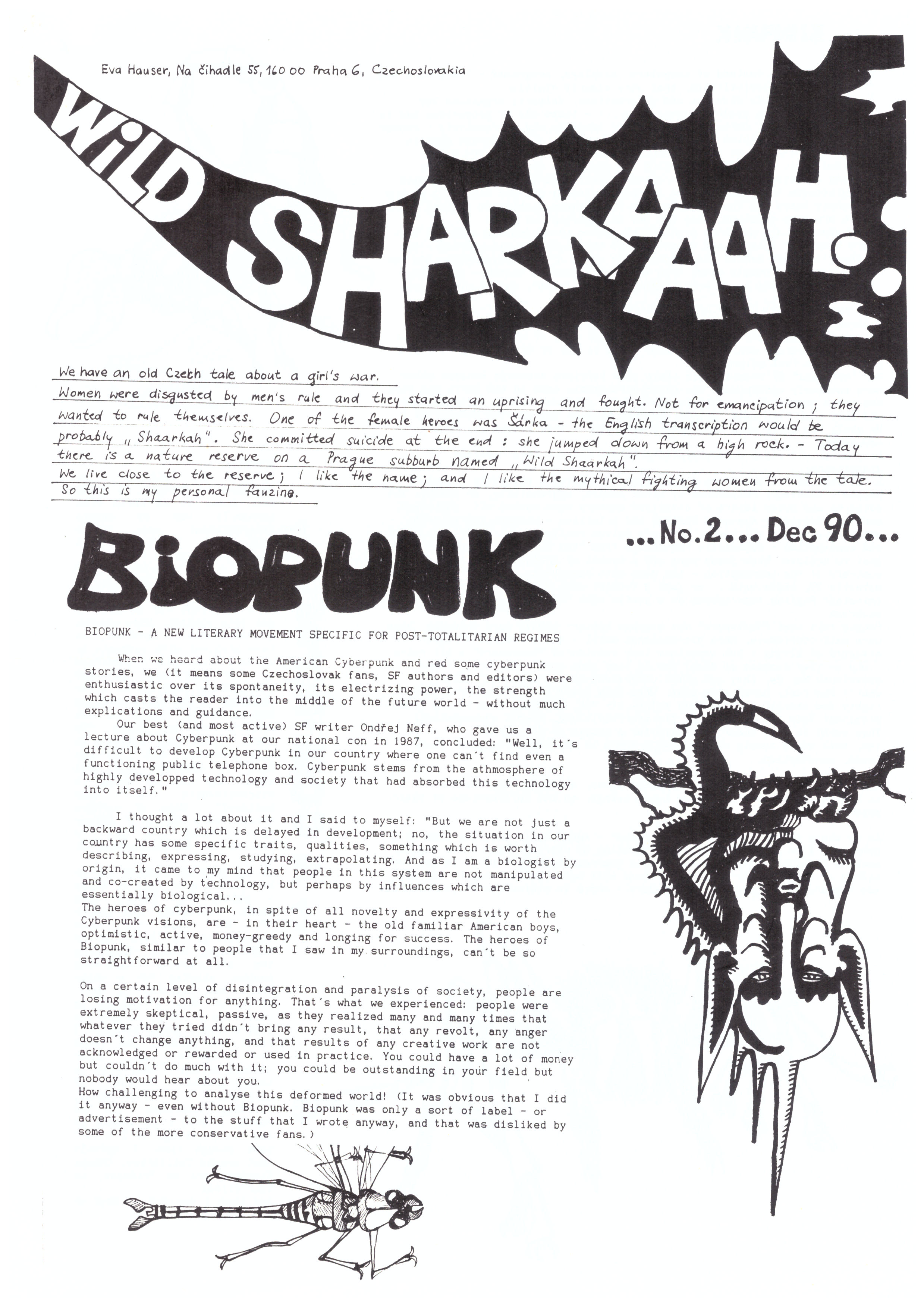
The original fanzine publication of “Biopunk: A New Literary Movement Specific for Post-Totalitarian Regimes”. Wild Sharkaaah, No.2, December 1990.
In fairness to Schmeink, Eva’s Wild Sharkaah was not available online at the time he was writing (it was not posted on efanzines.com till 2018), and paper copies would have been hard to find in 2014. It is therefore likely he had had no opportunity to verify the provenance of Eva’s article for himself, which might have helped clarify the pivotal nature of Eva’s contribution. The handwritten heading, the hand-drawn illustrations, and the way the article is integrated into the free-flowing text of Eva’s personal fanzine can leave little doubt about how individual this project was for her. Certainly, anyone who has read the original fanzine version of “Biopunk: A New Literary Movement for Post-Totalitarian Regimes” would find it hard to claim that “it remains unclear who originally coined the term,” as Schmeink does in both versions of his text (Schmeink 2014a; Schmeink 2014b, 33). That being said, I did include details of the article’s earlier publication in the bibliographic notes in Vector and a simple comparison of Eva’s author bio to Fišer’s should have been enough to show which of the two was the more significant writer. (By the time the Vector feature appeared, Eva had professionally published one novel and a short story collection, had been working as a professional editor for three years and her bio listed multiple publication credits. Fišer had gafiated. This is stated explicitly. Simsa 1993, 18.) One, therefore, cannot help wondering whether gender bias may also have played a role.
Another factor may have been how much time had elapsed since Eva first published her biopunk manifesto. In the early 1990s, immediately after the fall of Communism, the world was swept by a wave of interest in the post-Communist societies that had newly reopened to direct contacts with “the West,” and this was no less true of sf and sf fandom than it was of the rest of society. Eva was a known quantity in English-speaking fandom in the 1990s: she had worked as a professional editor at Ikárie magazine in Prague, which was newly publishing so many British and American writers, and had contributed stories and articles to a range of English-language publications, including a previous issue of Vector (Hauser 1992b). (Other English-language genre publications in which she appeared around this time included Matrix, BBR, Shards of Babel and Science-Fiction Studies: see Hauser 1991a, Hauser 1992a, Hauser 1992d, and Hauser 1994.) She was also publishing her own English-language fanzine; attending multiple international conventions, including the Chicago Worldcon in 1991, and Syncon 92 in Australia as the official European GUFF delegate, the first fan from post-Communist Central Europe to be selected for one of the major international fan funds (convention reports available in Hauser 1991b for Chicago and Hauser 1992c for Australia); and she had become one of the regular ports of call for Western writers visiting Prague, including Bruce Sterling, who wrote about her in a travelogue for Wired (Sterling 1995, 155-156 plus photo on 103).
In other words, at the time the Vector feature was published, anyone with at least a passing interest in European sf would have had an idea of who Eva was, and the editors did not see any need to emphasise this; but twenty years later, when Schmeink came to write his piece, this was evidently no longer the case and his discussion misses the context.
In his focus on contemporary forms of biopunk, Schmeink does his best to locate Eva’s Central-East European biopunk in the past, to contain it in a bubble of late-totalitarian DIY punk subculture that has long ceased to be of anything but historical interest. In essence, he tries to present it as something like a dead language, leaving her mutants and chimaeric organisms to wander the margins of the post-Communist genre landscape, like hopeful monsters – another species of the weird zombies of Communism that are still endemic to the culture over here…
The problem with all this is that contemporary genre scholarship is not the only possible frame of reference for studying Eva’s oeuvre, and if one takes a step back to look at her work in the framework of Gender Studies or Slavic Studies, she is still considered an appropriate topic of research. Indeed, there has been a marked upswing of interest in her work in recent years. University theses have been written about her sf of the 1980s and her involvement in fandom (Praženková 2007; Czechaczek 2015); essays have been published about the overlap between her science fiction and her involvement in the Czech women’s movement of the 1990s (Blažková 2025); at least one conference paper has been devoted specifically to her version of biopunk (Czechaczek 2018); and the Polish Scholar Joanna Czaplińska has drawn heavily on Eva’s stories in her recent study of gender aspects of Czech science fiction (Czaplińska 2022). The donation of Eva’s literary archive to the Czech Literature Museum (Muzeum literatury–Památník národního písemnictví), after her untimely death in 2023, has also opened up new opportunities for study, as detailed by her son in an upcoming essay for the journal, Literární archiv (Hauser J. 2026).
In short, Eva’s work is not going away and there are fields of scholarship in which it is her version of biopunk that is seen as the genuine article and the global version is the distraction. In fact, to be slightly provocative about this, from a Central European perspective, the globalised biopunk that has dominated cultural discourse for the last thirty-odd years looks increasingly like the vision of a dying corporate Utopia – a “localized referent” for a historically specific, culturally limited moment, to paraphrase Schmeink (Schmeink 2014b, 33) – while it is Eva’s biopunk and its raw engagement with the structures of totalitarianism that is once again becoming alarmingly relevant in the face of the new, post-democratic social order that seems to be sweeping our way from Airstrip Two, on the far side of the water.
“Dystopia is already here, it’s just unevenly distributed.”
~
FULL DISCLOSURE: Eva Hauserová was my partner. We lived together from 1994 until her death in 2023. We were not yet partners in 1991, at the time I prepared the biopunk feature that was eventually published in Vector.
Eva Hauserová (1954-2023)Eva Hauserová was born in Prague and originally planned to become a research scientist, receiving a Master’s degree in microbiology in 1978 and later starting an unfinished doctorate. However, in parallel to her scientific activities, she had always had an interest in creative writing and in the 1980s this began to dominate.
She discovered fandom in 1985 and rapidly began to produce the stories that became the basis of her idea of biopunk and her first short story collection, Hostina mutagenů [A Feast of Mutagens, 1992]. In 1988, she also won the prestigious Karel Čapek Award for her story “U nás v Agónii” [“Here, in Agony”, where Agony is the name of a planet].
She narrowly missed becoming one of the founding editors of the premier Czech sf magazine, Ikárie, in 1990, joining the editorial staff from the second issue. She went on to work as an editor for a range of Prague publishers, as well as a freelance translator, eventually producing somewhere in the region of a hundred book-length translations from English (she herself lost count), starting with The Vampire Tapestry by Suzy McKee Charnas in 1993. Her other translations included genre-adjacent work by Fay Weldon, Ruth Ozeki and Eve Ensler, and a host of Harlequin romances under various pseudonyms. Her last translation, Clive King’s classic children’s fantasy, Stig of the Dump, is being published in 2026.
In her own writing, she published an sf novel, Cvokyně [The Madwoman] in 1992, and continued to write genre-inflected stories throughout her career, such as those collected in Když se sudičky spletou [When the Fates Make a Mistake, 2000]. However, her later novels moved into the mainstream. She also wrote several volumes of non-fiction, initially in relation to her voluntary work at the Prague Gender Studies Center, perhaps most notably Na koštěti se dá i lítát aneb Nemožné ženy dokažou i nemožné [Broomsticks can also be Used for Flying, or Impossible Women can Achieve the Impossible, 1995], one of the very first attempts to provide an overview of what would today be called second-wave feminism for Czech readers. The book was an unexpected hit.
It was also around this time that she was most active internationally, attending multiple sf conventions, contributing to English-language publications (both within the genre and in Gender Studies), and publishing her own fanzine. Much of her English-language work from this period is signed Eva Hauser.
Later in life, her focus shifted to environmental issues. She was chair of the Czech Permaculture Association for several years and her last major publication was the gigantic three-volume Encyklopedie soběstačnosti pro 21. století [Encylopedia of Self-sufficiency for the 21st Century, 2016-2022], which she edited and co-wrote.
She died in 2023. Her final, posthumous novel, based on her experiences in the environmental movement, is forthcoming.
Cyril SimsaCyril Simsa is an Anglo-Czech writer (born in London to Czech parents, but now living in Prague), with stories and articles in a range of genre publications. His short story collection is Lost Cartographies: Tales of Another Europe (Invocations Press, 2014). A second collection, Starspawn and Other Stories, is forthcoming.
~
SOURCES
Blažková, Hana. 2025. “Pozapomenutá sci-fi tradice českého feminismu. Emancipace Evy Hauserové a Caroly Biedermannové v 80. a 90. letech 20. století”. Gender a výzkum/Gender and Research online: https://doi.org/10.13060/gav.2025.004 [accessed 29 Mar 2026].
Czaplińska, Joanna. 2022. “Does Czech Science Fiction Have a (Feminine) Gender?” Revista Hélice, 8 (1), whole no. 32, 9-20. Translated by Carleton Bulkin. Online at https://w ww.revistahelice.com/en/book/helice-32-2/ [accessed 29 Mar 2026]. Previously published in Czech in 2015.
Czechaczek, Jan. 2015. “Cena Karla Čapka ve fanzinech.” Master’s thesis, Masaryk University, Brno.
Czechaczek, Jan. 2018. “Biopunk Evy Hauserové.” Paper presented at the conference Fantasy and Myth in the Anthropocene/Fantastika a mýtus v antropocénu, Masaryk University, Brno, October 5, 2018. One-page abstract available at: https://ceska-literatura.phil.muni.cz/fantastika/en/fantasy-and-myth-in-the-anthropocene/conference-program [accessed 29 Mar 2026]
Di Filippo, Paul. 1990. “Ribofunk.” Boing-Boing, Winter 1990, 24. Republished online as “Ribofunk: the Manifesto”, currently at https://www.streettech.com/bcp/BCPtext/Manifestos/Ribofunk.html [accessed 29 Mar 2026]. Print version not seen.
Fišer, Miroslav. 1993. “A Few Notes about Biopunk.” Vector, 174, 17-18. Translated by Cyril Simsa. Online at https://fanac.org/fanzines/Vector/Vector174.pdf [accessed 29 Mar 2026]. Previously published in Czech in 1991.
Hauser, Eva. 1990. “Biopunk: A New Literary Movement Specific for Post-Totalitarian Regimes.” Wild Sharkaaah, 2, 1-2. Online at https://efanzines.com/WildSharkaah/WildSharkaah-02.pdf [accessed 29 Mar 2026]. The spelling of the fanzine title is inconsistent.
Hauser Eva. 1991a. “The Changing Face of Europe.” Matrix, 94, 23-24. Online at: https://www.fanac.org/fanzines/Matrix/Matrix94.pdf [accessed 29 Mar 2026].
Hauser, Eva. 1991b. “A Czech Fan in America: Chicago WorldCon Impressions.” Shards of Babel, 34, 6-7. Online at https://fanac.org/fanzines/Shards_of_Babel/Shards_of_Babel34-06.html [accessed 29 Mar 2026].
Hauser, Eva. 1992a. “Will People in Czechoslovakia Read SF in the Future?” Shards of Babel, 35, 7. Online at https://fanac.org/fanzines/Shards_of_Babel/Shards_of_Babel35-07.html [accessed 29 Mar 2026].
Hauser, Eva. 1992b. “The View from Olympus.” Vector, 166, 14-16. Translated by Cyril Simsa. Online at: https://fanac.org/fanzines/Vector/Vector166.pdf [accessed 29 Mar 2026]. Previously published in Czech in 1991.
Hauser, Eva. 1992c. “My Australian Diary: Syncon ’92 – and Something More.” Wild Shaarkah, 8, 1-12 [whole issue]. Online at https://efanzines.com/WildSharkaah/WildSharkaah-08.pdf [accessed 29 Mar 2026]. Reprinted with corrections in GUFF: The Incomplete Chronicles, edited by David Langford. Ansible Editions, 2025. Online at https://taff.org.uk/ebooks.php?x=guffanth [accessed 29 Mar 2026]. The spelling of the fanzine title is inconsistent.
Hauser, Eva. 1992d. “A Toothsome Smile, an Artificial Death.” Back Brain Recluse, 21, 21-23. Translated by Cyril Simsa. Online at: https://archive.org/details/back-brain-recluse-no.-21-1992 [accessed 29 Mar 2026]. Previously published in Czech in 1991.
Hauser, Eva, 1993. “Biopunk: A New Literary Movement for Post-Totalitarian Regimes.” Vector, 174, 15-16. Online at https://fanac.org/fanzines/Vector/Vector174.pdf [accessed 29 Mar 2026]. Slightly revised version of Hauser 1990.
Hauser, Eva. 1994. “Science Fiction in the Czech Republic and the Former Czechoslovakia: The Pleasures and the Disappointments of the New Cosmopolitanism.” Science-Fiction Studies 21 (2), whole no. 63, 133-140. https://doi.org/10.1525/sfs.21.2.0133
Hauser, Jakub. [2026]. “‘Svůj ženský úděl ponesu mužně.’ Zpráva o literární pozůstalosti Evy Hauserové (1954–2023) v Literárním archivu PNP.” Literární archiv, 58, 2026 [in press].
McHale, Brian. 1992. Constructing Postmodernism. Routledge. Cited from Schmeink 2014b. Original not seen.
Melly, George. 1970. Revolt into Style: the Pop Arts in Britain. Allen Lane. Cited from the Kindle edition: Faber, 2012.
Neff, Ondřej. 1987. “Nová vlná v SF a kyberpunk.” Lecture delivered at Parcon, the Czechoslovak national sf convention, June 13, 1987. Noted in the convention programme in Interkom, 6/1987 [online at https://interkom.vecnost.cz/1987/19870654.htm; accessed 29 Mar 2026], and commonly referenced by other writers of the period, but I have not been able to find a published text of the lecture itself.
Nicholls, Peter, and David Langford. [2025]. “Steampunk.” In The Encyclopedia of Science Fiction. 4th edn., edited by John Clute, David Langford et al. https://sf-encyclopedia.com/entry/steampunk [accessed 4 Apr 2026]. Entry last updated 7 Apr 2025.
Orwell, George. 1949. Nineteen Eighty-Four. Secker & Warburg. Cited from pdf e-book at https://www.fadedpage.com/showbook.php?pid=20120511 [accessed 4 Apr 2026].
Praženková, Monika. 2007. “Světy feministické fikce v díle Evy Hauserové.” Bachelor thesis, Masaryk University, Brno.
Prucher, Jeff, ed. 2007. Brave New Words: The Oxford Dictionary of Science Fiction. Oxford University Press.
Schmeink, Lars. 2014a. “Biopunk 101” [blog post], May 1, 2014, http://larsschmeink.de/?p=2548 [accessed 10 Nov 2016]. No longer available at this address but cached at https://web.archive.org/web/20150214054235/http:/larsschmeink.de/?p=2548 [accessed 29 Mar 2026].
Schmeink, Lars. 2014b. “Biopunk 101”, SFRA Review, 309, 31-36. Web version not accessible as of 29 Mar 2026.
Schmeink, Lars. 2016. Biopunk Dystopias: Genetic Engineering, Society and Science Fiction. (Liverpool Science Fiction Texts and Studies.) Liverpool University Press. Online at https://www.liverpooluniversitypress.co.uk/doi/book/10.3828/9781781383766 [accessed 29 Mar 2026].
Simsa, Cyril. 1993. “Two Short Articles about Biopunk.” Vector, 174, 12-14, 18. Online at https://fanac.org/fanzines/Vector/Vector174.pdf [accessed 29 Mar 2026].
Sterling, Bruce. 1995. “Triumph of the Plastic People”. Wired, 3.01, 100-107, 154-158. Plain text (minus photos) archived at https://www.wired.com/1995/01/prague/ [partially pay-walled] [accessed 29 Mar 2026].
- Prucher 2007, 16, attributes the first appearance to a Usenet post relating to the role-playing game GURPS on 17 May 1992; Schmeink 2014b, 33, cites the literary theorist Brian McHale (1952-2025), who uses the term in his monograph, Constructing Postmodernism (McHale 1992), 255. The two sources appeared in rapid succession, and the chances of them being related seem close to zero. ︎
- Cf. Winston Smith’s declaration at the end of Nineteen Eighty-Four: “[T]he struggle was finished. He had won the victory over himself. He loved Big Brother”. Orwell 1949, 361. ︎
- Cf. Di Filippo 1990: “Ribofunk is speculative fiction which acknowledges, is informed by and illustrates the tenet that the next revolution – the only one that really matters – will be in the field of biology.” ︎
Categories: Industry News
Rehabilitating Eva Hauserová’s Biopunk
By Cyril Simsa
Eva Hauserová promoting her non-fiction title Na koštěti se dá i lítat [Broomsticks can also be used for flying], 1995
Of the many contemporary subgenres of sf that can claim they originated as a reaction to the cyberpunk revolution of the 1980s, one of the oldest is certainly “biopunk”, especially if one counts the mini-genre of “ribofunk” – shouted into existence by the American writer Paul Di Filippo (1954-) in 1990, and just as quickly extinguished – as a legitimate precursor (Di Filippo 1990). Probably only “steampunk”, coined by K.W. Jeter (1950-) in 1987, is older (Nicholls and Langford 2025).
“Biopunk”, as it is used today, refers to a subgenre of sf that adopts many of the stylistic and narrative tropes of cyberpunk – a focus on stories built around an ensemble cast of petty criminals, (gene) hackers and chancers, urban subcultures, and a “revolt into style” (if the reader will pardon the throwback to the cultural criticism of an earlier era) (Melly 1970) – while sourcing its McGuffins from biotechnology, rather than cybernetics. In this contemporary sense, biopunk has its origins in the American genre writing of the 1990s, with the first documented use (from two different, and almost certainly unconnected sources) in 1992, and the subsequent attempt to identify precursors in earlier genre history.1
Di Filippo takes this as far back as H.G. Wells’ The Island of Doctor Moreau (1896); of more recent antecedents, Greg Bear’s Blood Music (1985) and Bruce Sterling’s Schismatrix (1985) are frequently cited (Di Filippo 1990; Schmeink 2014b, 32). From these American genre roots, biopunk has spread around the world and into other media, film and TV in particular. The hit TV show, Orphan Black (2013-2017), with its saga of a shadowy organisation trying to direct the future of human evolution through gene hacking and the complications that arise when some of its human clones escape, would be a good example. All of which makes a neat teleological narrative of exactly the kind that, in theory, every self-respecting punk of whatever persuasion is supposed to abhor; and none of which quite holds together when examined in a broader framework.
Because there is a catch – of course, there is – and in a European context, this neat timeline is disrupted by the Czech writer Eva Hauserová (1954-2023), also known as Eva Hauser, who in 1988 independently came up with a literary intervention she called “biopunk,” and her coinage pre-dates the American one. This sits uncomfortably with the official chronicle, making her something later critics have had to explain away, though there are also those who have simply ignored her. (For the former, see Schmeink, who will be discussed below; for the latter, a simple Google search will reveal any number of biopunk, or biopunk-adjacent websites that have no idea of Eva’s existence.)
Eva was living behind the Iron Curtain at the time she came up with the notion of “biopunk,” with limited access to American sources and no contact with her American contemporaries. However, like the American writers who later dreamt up their version of biopunk in the 1990s, her ideas were formed in reaction to cyberpunk – or rather, her vague impression of what she imagined cyberpunk to be, in the absence of any direct experience of the foundational texts – but with a change of focus to genetics and biology, rather than information technology and computer programming. (No doubt her educational background as a microbiologist played a role in that.) There are, then, some parallels between Eva’s initial impulse towards biopunk and that of the writers who later adopted the same term in America, though there are also significant differences.
In the 1980s, there was a common consensus in Czechoslovak fandom that cyberpunk was not really a viable literary genre in the conditions of latter-day Communism. As the Czech writer Ondřej Neff (1945-) argued in a classic lecture at Parcon, the Czechoslovak national sf convention, in June 1987: “It’s difficult to develop cyberpunk in a country, where one can’t even find a working telephone box.” (Neff 1987, cited from Hauser 1993, 15)
In devising her concept of biopunk, Eva took this insight one step further, arguing that the differences between East and West in relation to cyberpunk were not just a question of technology, but also of social conditioning:
The heroes of cyberpunk, in spite of all the novelty and colour of cyberpunk narrative, are at heart the same, familiar American boys – optimistic, active, greedy for money and longing for success. The heroes of biopunk, similarly to the people that I saw each day in my surroundings, couldn’t be nearly so straightforward.
When the disintegration and paralysis of society reaches a certain level, people lose their motivation to do anything at all. This is what we experienced in Czechoslovakia in the 1980s: people became extremely sceptical and passive as they realised, time and time again, that no matter what they tried, they couldn’t bring about any results, that no revolt, no expression of anger was capable of changing anything… (Hauser 1993, 15)
Worse, in Eva’s view, people living under totalitarianism become so accustomed to the limitations imposed on them that they come to consider them normal:
For example, the heroes of my stories often consider their situation to be marvellous and pleasant, even though by any rational analysis it is in actual fact frightening or utterly repulsive: this reflects totalitarian society with its grotesque voluntarism, its newspapers which continually declared that we, the people, were extremely happy, that we were living in a highly developed society, and that if we still had a few problems, they weren’t really so serious… (Hauser 1993, 15)2
Biopunk, then, was a literary device that allowed Eva to express the inner deformations of life under totalitarianism by externalising them into speculative biological traits. Her societies become the playground of “mutants, genetic diseases and deformations, chimaeric organisms,” (Hauser 1993, 15), and her protagonists are unable to imagine another state of being. Under the pressures of totalitarianism, her protagonists literally become monsters.
Eva Hauserová: Self-portrait (2020)
American biopunk clearly comes from a very different impulse: the exploration of how biotechnology is going to impact society in the framework of a more-or-less corporate future. Its extrapolated biotechnology is based on real science, not metaphor.3 Its social assumptions are those of capitalism, not the sunset years of Soviet-style Communism and the collapsing economy of a failed experiment in centrally-planned socialism, based on nineteenth-century notions of industrial development and twentieth-century surveillance technology.
There is no question that the “biopunk” of contemporary film and fiction is not the same animal as Eva’s, and that her coinage of an earlier Central-East European homonym is an inconvenience to the people who take the contemporary, “Western” variant seriously. It therefore makes perfect sense that they should seek to sideline Eva’s rogue intervention, though the ways they do so are sometimes quite problematic.
The most detailed attempt I have found to date is that of Lars Schmeink (1975-) in his article “Biopunk 101,” which was published in two slightly different versions in 2014 (Schmeink 2014a; Schmeink 2014b). Schmeink is today a respected independent scholar, based in Hamburg, with an impressive CV and a long publications list, but in 2014 he was just finishing his Ph.D. at Humboldt University Berlin , which two years later yielded his monograph Biopunk Dystopias: Genetic Engineering, Society and Science Fiction, published by Liverpool University Press (Schmeink 2016). The monograph itself makes no mention of Eva or her Czech biopunk – justifiably so, as it has no relevance to his argument – but one assumes that one of the reasons for his earlier essay was to tidy away this awkward forerunner, so as to avoid cluttering up his later book.
As far as I have been able to reconstruct the publishing history, the two versions of “Biopunk 101” appeared within a couple of months of each other. The first, longer version appeared on Schmeink’s personal blog in May 2014 and is now accessible only on the Wayback Machine; the second, more formal (and shorter) variant appeared as an essay in SFRA Review in Summer 2014 (Schmeink 2014a; Schmeink 2014b). The discussion of Eva’s work in both versions is based on a mini-feature about biopunk, which appeared in the BSFA’s critical journal Vector in 1993, and which was curated by the present author.
This comprised of three items:
1. A slightly edited and polished version of Eva’s English-language essay, “Biopunk: A New Literary Movement for Post-Totalitarian Regimes”, first published under a slightly variant title in her personal fanzine, Wild Sharkaah, in 1990 (Hauser 1990; Hauser 1993).
2. An English translation of “A Few Notes About Biopunk”, by Miroslav Fišer (1965-), first published in Czech in 1991, to illustrate how Eva’s biopunk had been received in Czech critical circles (Fišer 1993).
3. An introduction by myself to set the context (Simsa 1993).
Given the relatively late date of these publications (1991 for the first Czech appearance of Fišer, 1993 for Vector), both Fišer and I make the point that biopunk – which Eva herself declared to be a response to the experience of living under totalitarianism (see above) – was no longer a going concern by the time Vector appeared, because the fall of Communism had done away with the conditions that gave rise to it. This in turn leads Schmeink, whose account of Eva’s biopunk seems mostly intended to demonstrate its discontinuity from his own research, to base his discussion almost entirely on Fišer’s essay. We thus have the paradoxical situation, where Schmeink talks about biopunk as if it was some kind of impersonal movement from Eastern Europe, with Fišer as its spokesman, rather than the personal project of one individual (Eva Hauserová), supported by a couple of her acolytes (Simsa, Fišer), who essentially contributed nothing, except as a kind of all-singing, all-dancing team of bespoke fanboy cheer leaders.
Eva is cited by Schmeink only in support of Fišer’s arguments: “Eva Hauser, another writer of Czech biopunk, in a manifest[o] from 1990 […] translated into English in Vector, underlines some of Fišer’s statements and adds to the definition” (Schmeink 2014a, a passage that is found only in the web version of the article; it has been deleted from the abridged version published as Schmeink 2014b). In the longer version of the essay on his blog, Schmeink does at least quote a few words from Eva herself, but in the shorter (and more official) version in SFRA Review, he quotes only Fišer and myself. Eva is named, but not allowed to speak, and one can only conclude that Schmeink has completely misunderstood the distribution of roles between Eva, Fišer and the present author; and in particular, the fact that biopunk was Eva’s invention, not ours.
The original fanzine publication of “Biopunk: A New Literary Movement Specific for Post-Totalitarian Regimes”. Wild Sharkaaah, No.2, December 1990.
In fairness to Schmeink, Eva’s Wild Sharkaah was not available online at the time he was writing (it was not posted on efanzines.com till 2018), and paper copies would have been hard to find in 2014. It is therefore likely he had had no opportunity to verify the provenance of Eva’s article for himself, which might have helped clarify the pivotal nature of Eva’s contribution. The handwritten heading, the hand-drawn illustrations, and the way the article is integrated into the free-flowing text of Eva’s personal fanzine can leave little doubt about how individual this project was for her. Certainly, anyone who has read the original fanzine version of “Biopunk: A New Literary Movement for Post-Totalitarian Regimes” would find it hard to claim that “it remains unclear who originally coined the term,” as Schmeink does in both versions of his text (Schmeink 2014a; Schmeink 2014b, 33). That being said, I did include details of the article’s earlier publication in the bibliographic notes in Vector and a simple comparison of Eva’s author bio to Fišer’s should have been enough to show which of the two was the more significant writer. (By the time the Vector feature appeared, Eva had professionally published one novel and a short story collection, had been working as a professional editor for three years and her bio listed multiple publication credits. Fišer had gafiated. This is stated explicitly. Simsa 1993, 18.) One, therefore, cannot help wondering whether gender bias may also have played a role.
Another factor may have been how much time had elapsed since Eva first published her biopunk manifesto. In the early 1990s, immediately after the fall of Communism, the world was swept by a wave of interest in the post-Communist societies that had newly reopened to direct contacts with “the West,” and this was no less true of sf and sf fandom than it was of the rest of society. Eva was a known quantity in English-speaking fandom in the 1990s: she had worked as a professional editor at Ikárie magazine in Prague, which was newly publishing so many British and American writers, and had contributed stories and articles to a range of English-language publications, including a previous issue of Vector (Hauser 1992b). (Other English-language genre publications in which she appeared around this time included Matrix, BBR, Shards of Babel and Science-Fiction Studies: see Hauser 1991a, Hauser 1992a, Hauser 1992d, and Hauser 1994.) She was also publishing her own English-language fanzine; attending multiple international conventions, including the Chicago Worldcon in 1991, and Syncon 92 in Australia as the official European GUFF delegate, the first fan from post-Communist Central Europe to be selected for one of the major international fan funds (convention reports available in Hauser 1991b for Chicago and Hauser 1992c for Australia); and she had become one of the regular ports of call for Western writers visiting Prague, including Bruce Sterling, who wrote about her in a travelogue for Wired (Sterling 1995, 155-156 plus photo on 103).
In other words, at the time the Vector feature was published, anyone with at least a passing interest in European sf would have had an idea of who Eva was, and the editors did not see any need to emphasise this; but twenty years later, when Schmeink came to write his piece, this was evidently no longer the case and his discussion misses the context.
In his focus on contemporary forms of biopunk, Schmeink does his best to locate Eva’s Central-East European biopunk in the past, to contain it in a bubble of late-totalitarian DIY punk subculture that has long ceased to be of anything but historical interest. In essence, he tries to present it as something like a dead language, leaving her mutants and chimaeric organisms to wander the margins of the post-Communist genre landscape, like hopeful monsters – another species of the weird zombies of Communism that are still endemic to the culture over here…
The problem with all this is that contemporary genre scholarship is not the only possible frame of reference for studying Eva’s oeuvre, and if one takes a step back to look at her work in the framework of Gender Studies or Slavic Studies, she is still considered an appropriate topic of research. Indeed, there has been a marked upswing of interest in her work in recent years. University theses have been written about her sf of the 1980s and her involvement in fandom (Praženková 2007; Czechaczek 2015); essays have been published about the overlap between her science fiction and her involvement in the Czech women’s movement of the 1990s (Blažková 2025); at least one conference paper has been devoted specifically to her version of biopunk (Czechaczek 2018); and the Polish Scholar Joanna Czaplińska has drawn heavily on Eva’s stories in her recent study of gender aspects of Czech science fiction (Czaplińska 2022). The donation of Eva’s literary archive to the Czech Literature Museum (Muzeum literatury–Památník národního písemnictví), after her untimely death in 2023, has also opened up new opportunities for study, as detailed by her son in an upcoming essay for the journal, Literární archiv (Hauser J. 2026).
In short, Eva’s work is not going away and there are fields of scholarship in which it is her version of biopunk that is seen as the genuine article and the global version is the distraction. In fact, to be slightly provocative about this, from a Central European perspective, the globalised biopunk that has dominated cultural discourse for the last thirty-odd years looks increasingly like the vision of a dying corporate Utopia – a “localized referent” for a historically specific, culturally limited moment, to paraphrase Schmeink (Schmeink 2014b, 33) – while it is Eva’s biopunk and its raw engagement with the structures of totalitarianism that is once again becoming alarmingly relevant in the face of the new, post-democratic social order that seems to be sweeping our way from Airstrip Two, on the far side of the water.
“Dystopia is already here, it’s just unevenly distributed.”
~
FULL DISCLOSURE: Eva Hauserová was my partner. We lived together from 1994 until her death in 2023. We were not yet partners in 1991, at the time I prepared the biopunk feature that was eventually published in Vector.
Eva Hauserová (1954-2023)Eva Hauserová was born in Prague and originally planned to become a research scientist, receiving a Master’s degree in microbiology in 1978 and later starting an unfinished doctorate. However, in parallel to her scientific activities, she had always had an interest in creative writing and in the 1980s this began to dominate.
She discovered fandom in 1985 and rapidly began to produce the stories that became the basis of her idea of biopunk and her first short story collection, Hostina mutagenů [A Feast of Mutagens, 1992]. In 1988, she also won the prestigious Karel Čapek Award for her story “U nás v Agónii” [“Here, in Agony”, where Agony is the name of a planet].
She narrowly missed becoming one of the founding editors of the premier Czech sf magazine, Ikárie, in 1990, joining the editorial staff from the second issue. She went on to work as an editor for a range of Prague publishers, as well as a freelance translator, eventually producing somewhere in the region of a hundred book-length translations from English (she herself lost count), starting with The Vampire Tapestry by Suzy McKee Charnas in 1993. Her other translations included genre-adjacent work by Fay Weldon, Ruth Ozeki and Eve Ensler, and a host of Harlequin romances under various pseudonyms. Her last translation, Clive King’s classic children’s fantasy, Stig of the Dump, is being published in 2026.
In her own writing, she published an sf novel, Cvokyně [The Madwoman] in 1992, and continued to write genre-inflected stories throughout her career, such as those collected in Když se sudičky spletou [When the Fates Make a Mistake, 2000]. However, her later novels moved into the mainstream. She also wrote several volumes of non-fiction, initially in relation to her voluntary work at the Prague Gender Studies Center, perhaps most notably Na koštěti se dá i lítát aneb Nemožné ženy dokažou i nemožné [Broomsticks can also be Used for Flying, or Impossible Women can Achieve the Impossible, 1995], one of the very first attempts to provide an overview of what would today be called second-wave feminism for Czech readers. The book was an unexpected hit.
It was also around this time that she was most active internationally, attending multiple sf conventions, contributing to English-language publications (both within the genre and in Gender Studies), and publishing her own fanzine. Much of her English-language work from this period is signed Eva Hauser.
Later in life, her focus shifted to environmental issues. She was chair of the Czech Permaculture Association for several years and her last major publication was the gigantic three-volume Encyklopedie soběstačnosti pro 21. století [Encylopedia of Self-sufficiency for the 21st Century, 2016-2022], which she edited and co-wrote.
She died in 2023. Her final, posthumous novel, based on her experiences in the environmental movement, is forthcoming.
Cyril SimsaCyril Simsa is an Anglo-Czech writer (born in London to Czech parents, but now living in Prague), with stories and articles in a range of genre publications. His short story collection is Lost Cartographies: Tales of Another Europe (Invocations Press, 2014). A second collection, Starspawn and Other Stories, is forthcoming.
~
SOURCES
Blažková, Hana. 2025. “Pozapomenutá sci-fi tradice českého feminismu. Emancipace Evy Hauserové a Caroly Biedermannové v 80. a 90. letech 20. století”. Gender a výzkum/Gender and Research online: https://doi.org/10.13060/gav.2025.004 [accessed 29 Mar 2026].
Czaplińska, Joanna. 2022. “Does Czech Science Fiction Have a (Feminine) Gender?” Revista Hélice, 8 (1), whole no. 32, 9-20. Translated by Carleton Bulkin. Online at https://w ww.revistahelice.com/en/book/helice-32-2/ [accessed 29 Mar 2026]. Previously published in Czech in 2015.
Czechaczek, Jan. 2015. “Cena Karla Čapka ve fanzinech.” Master’s thesis, Masaryk University, Brno.
Czechaczek, Jan. 2018. “Biopunk Evy Hauserové.” Paper presented at the conference Fantasy and Myth in the Anthropocene/Fantastika a mýtus v antropocénu, Masaryk University, Brno, October 5, 2018. One-page abstract available at: https://ceska-literatura.phil.muni.cz/fantastika/en/fantasy-and-myth-in-the-anthropocene/conference-program [accessed 29 Mar 2026]
Di Filippo, Paul. 1990. “Ribofunk.” Boing-Boing, Winter 1990, 24. Republished online as “Ribofunk: the Manifesto”, currently at https://www.streettech.com/bcp/BCPtext/Manifestos/Ribofunk.html [accessed 29 Mar 2026]. Print version not seen.
Fišer, Miroslav. 1993. “A Few Notes about Biopunk.” Vector, 174, 17-18. Translated by Cyril Simsa. Online at https://fanac.org/fanzines/Vector/Vector174.pdf [accessed 29 Mar 2026]. Previously published in Czech in 1991.
Hauser, Eva. 1990. “Biopunk: A New Literary Movement Specific for Post-Totalitarian Regimes.” Wild Sharkaaah, 2, 1-2. Online at https://efanzines.com/WildSharkaah/WildSharkaah-02.pdf [accessed 29 Mar 2026]. The spelling of the fanzine title is inconsistent.
Hauser Eva. 1991a. “The Changing Face of Europe.” Matrix, 94, 23-24. Online at: https://www.fanac.org/fanzines/Matrix/Matrix94.pdf [accessed 29 Mar 2026].
Hauser, Eva. 1991b. “A Czech Fan in America: Chicago WorldCon Impressions.” Shards of Babel, 34, 6-7. Online at https://fanac.org/fanzines/Shards_of_Babel/Shards_of_Babel34-06.html [accessed 29 Mar 2026].
Hauser, Eva. 1992a. “Will People in Czechoslovakia Read SF in the Future?” Shards of Babel, 35, 7. Online at https://fanac.org/fanzines/Shards_of_Babel/Shards_of_Babel35-07.html [accessed 29 Mar 2026].
Hauser, Eva. 1992b. “The View from Olympus.” Vector, 166, 14-16. Translated by Cyril Simsa. Online at: https://fanac.org/fanzines/Vector/Vector166.pdf [accessed 29 Mar 2026]. Previously published in Czech in 1991.
Hauser, Eva. 1992c. “My Australian Diary: Syncon ’92 – and Something More.” Wild Shaarkah, 8, 1-12 [whole issue]. Online at https://efanzines.com/WildSharkaah/WildSharkaah-08.pdf [accessed 29 Mar 2026]. Reprinted with corrections in GUFF: The Incomplete Chronicles, edited by David Langford. Ansible Editions, 2025. Online at https://taff.org.uk/ebooks.php?x=guffanth [accessed 29 Mar 2026]. The spelling of the fanzine title is inconsistent.
Hauser, Eva. 1992d. “A Toothsome Smile, an Artificial Death.” Back Brain Recluse, 21, 21-23. Translated by Cyril Simsa. Online at: https://archive.org/details/back-brain-recluse-no.-21-1992 [accessed 29 Mar 2026]. Previously published in Czech in 1991.
Hauser, Eva, 1993. “Biopunk: A New Literary Movement for Post-Totalitarian Regimes.” Vector, 174, 15-16. Online at https://fanac.org/fanzines/Vector/Vector174.pdf [accessed 29 Mar 2026]. Slightly revised version of Hauser 1990.
Hauser, Eva. 1994. “Science Fiction in the Czech Republic and the Former Czechoslovakia: The Pleasures and the Disappointments of the New Cosmopolitanism.” Science-Fiction Studies 21 (2), whole no. 63, 133-140. https://doi.org/10.1525/sfs.21.2.0133
Hauser, Jakub. [2026]. “‘Svůj ženský úděl ponesu mužně.’ Zpráva o literární pozůstalosti Evy Hauserové (1954–2023) v Literárním archivu PNP.” Literární archiv, 58, 2026 [in press].
McHale, Brian. 1992. Constructing Postmodernism. Routledge. Cited from Schmeink 2014b. Original not seen.
Melly, George. 1970. Revolt into Style: the Pop Arts in Britain. Allen Lane. Cited from the Kindle edition: Faber, 2012.
Neff, Ondřej. 1987. “Nová vlná v SF a kyberpunk.” Lecture delivered at Parcon, the Czechoslovak national sf convention, June 13, 1987. Noted in the convention programme in Interkom, 6/1987 [online at https://interkom.vecnost.cz/1987/19870654.htm; accessed 29 Mar 2026], and commonly referenced by other writers of the period, but I have not been able to find a published text of the lecture itself.
Nicholls, Peter, and David Langford. [2025]. “Steampunk.” In The Encyclopedia of Science Fiction. 4th edn., edited by John Clute, David Langford et al. https://sf-encyclopedia.com/entry/steampunk [accessed 4 Apr 2026]. Entry last updated 7 Apr 2025.
Orwell, George. 1949. Nineteen Eighty-Four. Secker & Warburg. Cited from pdf e-book at https://www.fadedpage.com/showbook.php?pid=20120511 [accessed 4 Apr 2026].
Praženková, Monika. 2007. “Světy feministické fikce v díle Evy Hauserové.” Bachelor thesis, Masaryk University, Brno.
Prucher, Jeff, ed. 2007. Brave New Words: The Oxford Dictionary of Science Fiction. Oxford University Press.
Schmeink, Lars. 2014a. “Biopunk 101” [blog post], May 1, 2014, http://larsschmeink.de/?p=2548 [accessed 10 Nov 2016]. No longer available at this address but cached at https://web.archive.org/web/20150214054235/http:/larsschmeink.de/?p=2548 [accessed 29 Mar 2026].
Schmeink, Lars. 2014b. “Biopunk 101”, SFRA Review, 309, 31-36. Web version not accessible as of 29 Mar 2026.
Schmeink, Lars. 2016. Biopunk Dystopias: Genetic Engineering, Society and Science Fiction. (Liverpool Science Fiction Texts and Studies.) Liverpool University Press. Online at https://www.liverpooluniversitypress.co.uk/doi/book/10.3828/9781781383766 [accessed 29 Mar 2026].
Simsa, Cyril. 1993. “Two Short Articles about Biopunk.” Vector, 174, 12-14, 18. Online at https://fanac.org/fanzines/Vector/Vector174.pdf [accessed 29 Mar 2026].
Sterling, Bruce. 1995. “Triumph of the Plastic People”. Wired, 3.01, 100-107, 154-158. Plain text (minus photos) archived at https://www.wired.com/1995/01/prague/ [partially pay-walled] [accessed 29 Mar 2026].
- Prucher 2007, 16, attributes the first appearance to a Usenet post relating to the role-playing game GURPS on 17 May 1992; Schmeink 2014b, 33, cites the literary theorist Brian McHale (1952-2025), who uses the term in his monograph, Constructing Postmodernism (McHale 1992), 255. The two sources appeared in rapid succession, and the chances of them being related seem close to zero. ︎
- Cf. Winston Smith’s declaration at the end of Nineteen Eighty-Four: “[T]he struggle was finished. He had won the victory over himself. He loved Big Brother”. Orwell 1949, 361. ︎
- Cf. Di Filippo 1990: “Ribofunk is speculative fiction which acknowledges, is informed by and illustrates the tenet that the next revolution – the only one that really matters – will be in the field of biology.” ︎
Categories: Industry News
Thrutopia with Manda Scott and Denise Baden
Aware of other sub-genres that might sit alongside, overlap or appear to be similar to Zoefuturism, we welcomed contributions about them, to help shape our understanding of Zoefuturism relationally.
Below, Manda Scott and Denise Baden set out strong cases for Thrutopia.
This is interesting from a zoefuturist perspective because Thrutopia is about change and the journey; imagining positive futures and the practicalities of getting there has to be a good approach.
However, Zoefuturism does not presuppose an end point or a goal, more that there is a distinct need to fundamentally alter our world-view, of how we interact and fit in with the world in the broadest sense. It also does not delve in binarisms like positivity/negativity inasmuch as binaries are composites of a holistic purview of life.
We need healthy relationships between all of ‘life’ and ‘non-life’ in the now, acknowledging the diversities while engaging in the nuanced relationships that encompass nature, technology, and more. We need to understand that change is constant and how we live is what affects the possible futures that it is becoming.
We hope that celebrating other sub-genres while encouraging a Zoefuturist approach to reading and writing them will make them more impactful.
Yen Ooi and Stephen Oram (guest-editors, Zoefuturism) Read more: Thrutopia with Manda Scott and Denise Baden Thrutopian Road Maps An essay by Manda Scott (August 2025)“At times, a single fluctuation … may become so powerful … that it shatters the preexisting organization. At this revolutionary moment … it is inherently impossible to determine in advance which direction change will take: whether the system will disintegrate into ‘chaos’ or leap to a new, more differentiated, higher level of ‘order.’” – Alvin Toffler
If we who write can craft clear routes from a recognisable present, mapping towards a future that engages people at the limbic level, we can help tip the balance to a future where a critical mass of us begins to yearn for the outcomes offered, and change will happen.
This is the explicit foundation of the Thrutopian genre: offering route maps—of which there are, self-evidently, an almost infinite number—towards a future we would be proud to leave to the generations that will follow us.
If we can imagine forward seven generations and look into the eyes of a young person living in the world for which we have laid the foundations, if they feel safe, confident, fully connected to all parts of themselves, each other and the Web of Life, then we’re on the road to the emergent edge of inter-becoming from which an entirely new system can potentially arise.
As writers, we can gather the building blocks that are already emerging and make of them stepping stones across the river. Stretching the metaphor to breaking point, the narratives we thereby shape must at least offer a glimpse of a reason to cross (motivation), the means to make the crossing (agency), the route to take (direction) and the freedom to take it (empowerment).
This is the heart of behavioural change: MADE:
Motivation: with all my heart, I yearn for a future I can glimpse but not yet embrace;
Agency: I have the tools to take the first steps towards this future;
Direction: I know the routes away from my present state that will lead me towards the future I yearn for;
Empowerment: I am free of constraint in the present moment enabling me to take the steps and wield the tools in ways that will be effective.
Each of these belongs squarely in the realms of creative imagination. I am not pretending that crafting these is easy; it’s not. One of the many reasons there are so many dystopias and so few genuine Thrutopias is that it’s mind-bendingly hard to find peaceful routes to an equitable world in which humanity flourishes in concert with – even in service to – Life.
But it isn’t impossible and frankly, if the hardest thing we have to do in the next decade is get our heads around the thinking that already exists at the emergent edge of possibility, then we will be supremely lucky.
And this is the single most important point. If you take nothing else away, please believe me that there are people already working at the emergent edge of wide boundary systems thinking, of food and farming systems (we have to abandon industrial agriculture as a matter of urgency), of biomimicry, doughnut/ecological/degrowth economics, distributed governance systems, regenerative use of AI, urban and rural planning based on fully regenerative principles…
Every one of these is actively being pursued, it’s just that our legacy media runs with the old style mindset of ‘if it bleeds, it leads’ and they’re not up to speed (yet) with the idea that the existing system is disintegrating and a new one is already emerging from the ashes.
This is part of the Thrutopian narrative shift of which we are an integral part: building routes through, from a recognisable present towards a future we’d all be proud to leave to the generations that come after us.
Writing a future we’d like to see, the thrutopian approach. By Denise Baden (April 2026)Science fiction often envisions not just technological innovations but societal ones. For example, Ursula Le Guin’s The Dispossessed imagines an anarchic/communist society that is broadly utopian in its ideals and has distinctly different arrangements and values surrounding ownership. However, there are few novels that show the process by which we might get from where we are now to such a future. Kevin Kelly coined the term ‘protopia,’ which describes the process of improvement over time. Rupert Read similarly talks about ‘thrutopia’: how we get from where we are now to where we’d like to be, i.e. a flourishing, sustainable society. The idea was so powerful that bestselling author Manda Scott set up a Thrutopia masterclass for writers: “writing our way to a future we’d be proud to leave to the coming generations.” She moved from writing historical fiction to a novel set in the near future, Any Human Power, which adopts the thrutopian approach.
In this article I discuss some of the books published by Habitat Press, an indie publisher with a niche interest in stories that showcase thrutopian or protopian pathways. There are numerous ‘cli-fi’ stories that present dystopian visions of what will happen if we don’t act. These can be unexpectedly problematic, as research has highlighted the dangers of trying to ‘scare people green.’ Dystopian stories run the risk of fear-driven counterproductive responses, such as the blaming of marginalised groups or buying up all the toilet rolls. There are also numerous eco-fiction stories that persuade us to love nature and plant trees but get us no nearer to understanding what the really effective solutions are and, even more importantly, how we might get there from where we are today. This is a gap that I haven’t seen any fiction (other than Ministry for the Future) fulfil.
Steve Willis, a climate engineer and author (Fairhaven, Defying Futility) has allowed me to share his diagram of films, books etc., which plots dystopian/utopian visions of the future against plausibility. It’s clear that there’s little that is both positive and plausible.

Habitat Press has published several books that write into this space. Many emerged from the Green Stories project which I founded with the goal of embedding climate solutions into mainstream fiction. It has run 21 competitions since 2018, resulting in numerous publications. One of these is the anthology of 24 stories: No More Fairy Tales: Stories to Save Our Planet, where we teamed experienced writers with climate experts to come up with stories that had solutions at their heart.
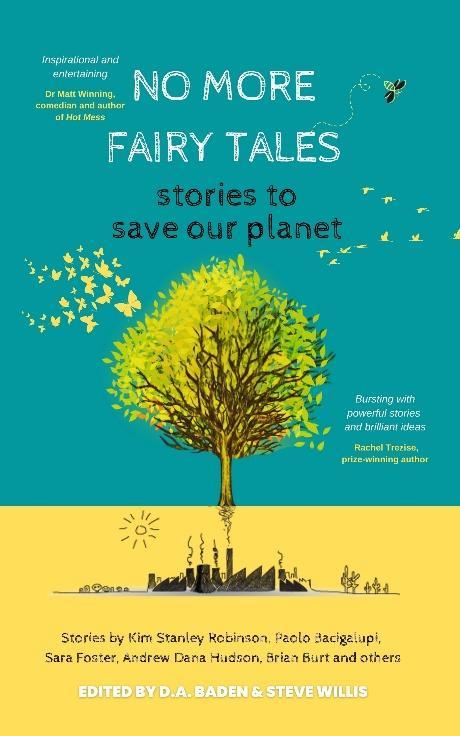
Stories range from technical solutions relating to carbon dioxide removal projects to more systemic aspects such as switching from GDP to a well-being index, sharing economy, personal carbon allowances, giving citizen assemblies legislative power – all of which would allow for a more sustainable long-term mindset conducive to directing investment towards sustainable technologies, practices, and decisions.
This anthology uses fiction as a testing ground to explore the more radical transformative ideas necessary for a truly sustainable society: ideas that are hard for politicians to talk about for fear of misunderstanding as they can’t easily fit into a soundbite. For example, an essential step is to upgrade our democracy to a form that allows us to think beyond short-term electoral cycles so that we can make more sustainable decisions. Citizens’ Assemblies are a positive step here.
One story from this anthology was adapted as a play called ‘Murder in the Citizens’ Jury.’ It’s a fun whodunit, set in a citizens’ assembly, where eight participants meet to deliberate upon climate solutions—and then there’s a murder!

Caption: flyer for theatre production by amateur theatre group, The Maskers.
The play also has an interactive element. A voting app and pullout voting and comment sheet in the programmes allows the audience to share their views on their favourite policies, so they feel like they are part of the citizen’s jury themselves. You can see a brief video of the first production by a local amateur theatre group here. The play is available to purchase from LazyBee, but if you approach me directly, I’m happy to allow amateur and student theatre groups to stage it royalty free.
The play is also available as a novella and audio book, ‘The Assassin’ of 16,000 words:
Eight people in a citizen’s jury, discussing the most important challenge in the history of humanity – how to save ourselves from the looming climate crisis. Exciting new solutions are proposed, each with their own champions and detractors. What they decide will affect us all. But they all have their own issues to deal with, and one of them has a hidden agenda. Who is the assassin and who are they there to kill?
Such storytelling is a great way to showcase new ideas. Usually in business or government, one would use a stakeholder analysis to see who is benefitted/harmed by any policy and how. These can be dry, and it’s hard to engage with the impacts emotionally as the groups affected seem distant. This story allows stakeholders to become characters and as such we identify with them and their needs more easily. We can then view any climate policy from the perspective of a variety of people, all of whom have a unique relationship to the proposal.
The Assassin also acts as a story within a story in a full-length novel The Philosopher and the Assassin. It’s rather different – think campus novel meets moral philosophy meets whodunnit.
There’s no more important job than educator, and no subject as necessary as moral philosophy. The trick is getting the students to turn up. So, when the Dean proposes the controversial concept of education entertainment, Professor Iris Tate goes all in with a moral philosophy course based on a whodunnit that all assume is hypothetical – a murder in a citizens’ assembly on climate. A variety of characters provide an entertaining source of ethical dilemmas, but what the students don’t know is that the ultimate dilemma is very real, and their conclusions will have far-reaching consequences.
An adaptation for TV won the Writing Climate Pitchfest, 2024. The book lays out in fiction format a roadmap to a sustainable future. It focuses on social science innovations in democratic, economic, financial, and social institutions.
No More Fairy Tales: Stories to Save Our Planet features three short stories that explore the idea of giving the ocean a nation status. One is about the seed of the idea; another is set when the Ocean as Nation has begun and is facing its first challenge, and the final story is set decades in the future outlining what the new Ocean Nation looks like and how it has progressed. It was expanded into a properly thrutopian full-length novel, Fairhaven, written by engineer Steve Willis and writer Jan Lee.
Visco won the 2020 Green Stories novel competition. The story imagines a giant music festival which allows free access to those who need care and their carers too. What emerges is a care-based mini-society. Those who attend love it so much, no one wants to go home when the music stops. So they don’t! This novel adopts the ‘protopian’ approach of imagining a quite plausible scenario whereby a mini community develops in stages. The characters face and overcome various challenges. David Fell brings to this novel all the knowledge he has gained in his years working as a sustainability consultant, using the novel to showcase alternative approaches such as the sharing economy and how a society based on care might work in practice.
Fiction, and science fiction in particular, is a great way to reach audiences beyond the environmental echo chamber, but to finish, I’ll talk about my next book, which is non-fiction but with a twist! It’s tentatively called A Jigsaw to Save the World. The twist – you guessed it – is that I plan to make it available also as a jigsaw.
I like the idea of a jigsaw as on the front cover is a picture which you are trying to get to. I read many books that do an excellent job of pinpointing the many problems society faces, and it’s usually not until the final chapter that any attempt is made at suggesting possible solutions. The news and pundits far and wide are keen to point out the problems we face. But it’s rare we take time to imagine what it might all look like if we did things better.
Rob Hopkins, in his book From What Is to What If, believes that when we take the time to immerse ourselves fully in imagining what kind of future we’d like to see, this creates a longing for it to happen. This in turn can galvanise action to make that dream come true. In his podcast From What Is to What Next, he asked guests to step into a virtual time machine, and to imagine themselves to be several years into the future and that we’ve done everything right and turned our society round. He then asked them to visualise what they see and hear around them. It’s a surprisingly powerful exercise when you do it yourself. Rob is right; it creates a yearning in the heart, a longing that almost makes you cry.
I do a lot of talks and workshops and often use this exercise myself. It’s remarkable that, in my experience, whatever the audience, the society people hunger for is always the same. First is always more nature. A close second is a sense of community, after that it’s more varied, but local food is often part of the picture, being outdoors more, less traffic. Public transport that is cheap, convenient and goes where you want, whenever you want. A more equal society, clean air and water. Access to health care and to feel hope for the future, or our children’s future. This is the picture on the front of the jigsaw. In every chapter, I will remind the reader of the society we are aiming towards.
Another reason I like the jigsaw metaphor is that we can see what pieces we may be part of in our own lives. It’s not just about building castles in the air for fun. The stakes are too high for that. We must work out how we get to our desired society. No one person or element can do it by themselves. We need every part of society to be working together to create this new picture. Whether we be in education, business, politics, members of our community, artists, journalists, or just as employees or voters with a voice, you can see where you fit in. At the end of every chapter, if you like what it’s proposing, I will suggest how you can make a difference.
I have an idea of the many pieces that will make up the jigsaw, and am working on the corners. The criteria for a policy to be a corner piece is that without that, all the other wonderful ideas or policies would not be as effective. Contenders for the corner pieces include citizens assemblies as our current democracy is constitutionally incapable of prioritising existential threats such as climate change over short-term issues. Another might be personal carbon allowances/tradeable energy quotas – also known as personal carbon trading. This would transform the decisions that are made by consumers and by businesses by incentivising us to choose low-carbon alternatives. Business purpose justifies a corner but it’s tricky. The current legal form of corporations makes it impossible for even well-meaning CEOs to prioritise societal welfare when it conflicts with profit maximisation for shareholders. What if all businesses were Benefit Corporations/social enterprises where their aim was sufficient profit to supply necessary goods and services rather than profit maximisation? What would happen to markets and pensions? It’s easy to imagine distant futures but the process of getting there without triggering collapse is harder. Yet the alternative could be human extinction. I’m running events to get people together to puzzle out these sticky problems. Details are available here.
While I’m writing the book I’m releasing abridged chapters as a fortnightly LinkedIn newsletter. Each edition focuses on one piece of the puzzle. Subscribe for free to feedback on the ideas and share your view on what the corner pieces should be. I’d love to know your thoughts!
Categories: Industry News
Thrutopia with Manda Scott and Denise Baden
Aware of other sub-genres that might sit alongside, overlap or appear to be similar to Zoefuturism, we welcomed contributions about them, to help shape our understanding of Zoefuturism relationally.
Below, Manda Scott and Denise Baden set out strong cases for Thrutopia.
This is interesting from a zoefuturist perspective because Thrutopia is about change and the journey; imagining positive futures and the practicalities of getting there has to be a good approach.
However, Zoefuturism does not presuppose an end point or a goal, more that there is a distinct need to fundamentally alter our world-view, of how we interact and fit in with the world in the broadest sense. It also does not delve in binarisms like positivity/negativity inasmuch as binaries are composites of a holistic purview of life.
We need healthy relationships between all of ‘life’ and ‘non-life’ in the now, acknowledging the diversities while engaging in the nuanced relationships that encompass nature, technology, and more. We need to understand that change is constant and how we live is what affects the possible futures that it is becoming.
We hope that celebrating other sub-genres while encouraging a Zoefuturist approach to reading and writing them will make them more impactful.
Yen Ooi and Stephen Oram (guest-editors, Zoefuturism) Read more: Thrutopia with Manda Scott and Denise Baden Thrutopian Road Maps An essay by Manda Scott (August 2025)“At times, a single fluctuation … may become so powerful … that it shatters the preexisting organization. At this revolutionary moment … it is inherently impossible to determine in advance which direction change will take: whether the system will disintegrate into ‘chaos’ or leap to a new, more differentiated, higher level of ‘order.’” – Alvin Toffler
If we who write can craft clear routes from a recognisable present, mapping towards a future that engages people at the limbic level, we can help tip the balance to a future where a critical mass of us begins to yearn for the outcomes offered, and change will happen.
This is the explicit foundation of the Thrutopian genre: offering route maps—of which there are, self-evidently, an almost infinite number—towards a future we would be proud to leave to the generations that will follow us.
If we can imagine forward seven generations and look into the eyes of a young person living in the world for which we have laid the foundations, if they feel safe, confident, fully connected to all parts of themselves, each other and the Web of Life, then we’re on the road to the emergent edge of inter-becoming from which an entirely new system can potentially arise.
As writers, we can gather the building blocks that are already emerging and make of them stepping stones across the river. Stretching the metaphor to breaking point, the narratives we thereby shape must at least offer a glimpse of a reason to cross (motivation), the means to make the crossing (agency), the route to take (direction) and the freedom to take it (empowerment).
This is the heart of behavioural change: MADE:
Motivation: with all my heart, I yearn for a future I can glimpse but not yet embrace;
Agency: I have the tools to take the first steps towards this future;
Direction: I know the routes away from my present state that will lead me towards the future I yearn for;
Empowerment: I am free of constraint in the present moment enabling me to take the steps and wield the tools in ways that will be effective.
Each of these belongs squarely in the realms of creative imagination. I am not pretending that crafting these is easy; it’s not. One of the many reasons there are so many dystopias and so few genuine Thrutopias is that it’s mind-bendingly hard to find peaceful routes to an equitable world in which humanity flourishes in concert with – even in service to – Life.
But it isn’t impossible and frankly, if the hardest thing we have to do in the next decade is get our heads around the thinking that already exists at the emergent edge of possibility, then we will be supremely lucky.
And this is the single most important point. If you take nothing else away, please believe me that there are people already working at the emergent edge of wide boundary systems thinking, of food and farming systems (we have to abandon industrial agriculture as a matter of urgency), of biomimicry, doughnut/ecological/degrowth economics, distributed governance systems, regenerative use of AI, urban and rural planning based on fully regenerative principles…
Every one of these is actively being pursued, it’s just that our legacy media runs with the old style mindset of ‘if it bleeds, it leads’ and they’re not up to speed (yet) with the idea that the existing system is disintegrating and a new one is already emerging from the ashes.
This is part of the Thrutopian narrative shift of which we are an integral part: building routes through, from a recognisable present towards a future we’d all be proud to leave to the generations that come after us.
Writing a future we’d like to see, the thrutopian approach. By Denise Baden (April 2026)Science fiction often envisions not just technological innovations but societal ones. For example, Ursula Le Guin’s The Dispossessed imagines an anarchic/communist society that is broadly utopian in its ideals and has distinctly different arrangements and values surrounding ownership. However, there are few novels that show the process by which we might get from where we are now to such a future. Kevin Kelly coined the term ‘protopia,’ which describes the process of improvement over time. Rupert Read similarly talks about ‘thrutopia’: how we get from where we are now to where we’d like to be, i.e. a flourishing, sustainable society. The idea was so powerful that bestselling author Manda Scott set up a Thrutopia masterclass for writers: “writing our way to a future we’d be proud to leave to the coming generations.” She moved from writing historical fiction to a novel set in the near future, Any Human Power, which adopts the thrutopian approach.
In this article I discuss some of the books published by Habitat Press, an indie publisher with a niche interest in stories that showcase thrutopian or protopian pathways. There are numerous ‘cli-fi’ stories that present dystopian visions of what will happen if we don’t act. These can be unexpectedly problematic, as research has highlighted the dangers of trying to ‘scare people green.’ Dystopian stories run the risk of fear-driven counterproductive responses, such as the blaming of marginalised groups or buying up all the toilet rolls. There are also numerous eco-fiction stories that persuade us to love nature and plant trees but get us no nearer to understanding what the really effective solutions are and, even more importantly, how we might get there from where we are today. This is a gap that I haven’t seen any fiction (other than Ministry for the Future) fulfil.
Steve Willis, a climate engineer and author (Fairhaven, Defying Futility) has allowed me to share his diagram of films, books etc., which plots dystopian/utopian visions of the future against plausibility. It’s clear that there’s little that is both positive and plausible.
Habitat Press has published several books that write into this space. Many emerged from the Green Stories project which I founded with the goal of embedding climate solutions into mainstream fiction. It has run 21 competitions since 2018, resulting in numerous publications. One of these is the anthology of 24 stories: No More Fairy Tales: Stories to Save Our Planet, where we teamed experienced writers with climate experts to come up with stories that had solutions at their heart.
Stories range from technical solutions relating to carbon dioxide removal projects to more systemic aspects such as switching from GDP to a well-being index, sharing economy, personal carbon allowances, giving citizen assemblies legislative power – all of which would allow for a more sustainable long-term mindset conducive to directing investment towards sustainable technologies, practices, and decisions.
This anthology uses fiction as a testing ground to explore the more radical transformative ideas necessary for a truly sustainable society: ideas that are hard for politicians to talk about for fear of misunderstanding as they can’t easily fit into a soundbite. For example, an essential step is to upgrade our democracy to a form that allows us to think beyond short-term electoral cycles so that we can make more sustainable decisions. Citizens’ Assemblies are a positive step here.
One story from this anthology was adapted as a play called ‘Murder in the Citizens’ Jury.’ It’s a fun whodunit, set in a citizens’ assembly, where eight participants meet to deliberate upon climate solutions—and then there’s a murder!
Caption: flyer for theatre production by amateur theatre group, The Maskers.
The play also has an interactive element. A voting app and pullout voting and comment sheet in the programmes allows the audience to share their views on their favourite policies, so they feel like they are part of the citizen’s jury themselves. You can see a brief video of the first production by a local amateur theatre group here. The play is available to purchase from LazyBee, but if you approach me directly, I’m happy to allow amateur and student theatre groups to stage it royalty free.
The play is also available as a novella and audio book, ‘The Assassin’ of 16,000 words:
Eight people in a citizen’s jury, discussing the most important challenge in the history of humanity – how to save ourselves from the looming climate crisis. Exciting new solutions are proposed, each with their own champions and detractors. What they decide will affect us all. But they all have their own issues to deal with, and one of them has a hidden agenda. Who is the assassin and who are they there to kill?
Such storytelling is a great way to showcase new ideas. Usually in business or government, one would use a stakeholder analysis to see who is benefitted/harmed by any policy and how. These can be dry, and it’s hard to engage with the impacts emotionally as the groups affected seem distant. This story allows stakeholders to become characters and as such we identify with them and their needs more easily. We can then view any climate policy from the perspective of a variety of people, all of whom have a unique relationship to the proposal.
The Assassin also acts as a story within a story in a full-length novel The Philosopher and the Assassin. It’s rather different – think campus novel meets moral philosophy meets whodunnit.
There’s no more important job than educator, and no subject as necessary as moral philosophy. The trick is getting the students to turn up. So, when the Dean proposes the controversial concept of education entertainment, Professor Iris Tate goes all in with a moral philosophy course based on a whodunnit that all assume is hypothetical – a murder in a citizens’ assembly on climate. A variety of characters provide an entertaining source of ethical dilemmas, but what the students don’t know is that the ultimate dilemma is very real, and their conclusions will have far-reaching consequences.
An adaptation for TV won the Writing Climate Pitchfest, 2024. The book lays out in fiction format a roadmap to a sustainable future. It focuses on social science innovations in democratic, economic, financial, and social institutions.
No More Fairy Tales: Stories to Save Our Planet features three short stories that explore the idea of giving the ocean a nation status. One is about the seed of the idea; another is set when the Ocean as Nation has begun and is facing its first challenge, and the final story is set decades in the future outlining what the new Ocean Nation looks like and how it has progressed. It was expanded into a properly thrutopian full-length novel, Fairhaven, written by engineer Steve Willis and writer Jan Lee.
Visco won the 2020 Green Stories novel competition. The story imagines a giant music festival which allows free access to those who need care and their carers too. What emerges is a care-based mini-society. Those who attend love it so much, no one wants to go home when the music stops. So they don’t! This novel adopts the ‘protopian’ approach of imagining a quite plausible scenario whereby a mini community develops in stages. The characters face and overcome various challenges. David Fell brings to this novel all the knowledge he has gained in his years working as a sustainability consultant, using the novel to showcase alternative approaches such as the sharing economy and how a society based on care might work in practice.
Fiction, and science fiction in particular, is a great way to reach audiences beyond the environmental echo chamber, but to finish, I’ll talk about my next book, which is non-fiction but with a twist! It’s tentatively called A Jigsaw to Save the World. The twist – you guessed it – is that I plan to make it available also as a jigsaw.
I like the idea of a jigsaw as on the front cover is a picture which you are trying to get to. I read many books that do an excellent job of pinpointing the many problems society faces, and it’s usually not until the final chapter that any attempt is made at suggesting possible solutions. The news and pundits far and wide are keen to point out the problems we face. But it’s rare we take time to imagine what it might all look like if we did things better.
Rob Hopkins, in his book From What Is to What If, believes that when we take the time to immerse ourselves fully in imagining what kind of future we’d like to see, this creates a longing for it to happen. This in turn can galvanise action to make that dream come true. In his podcast From What Is to What Next, he asked guests to step into a virtual time machine, and to imagine themselves to be several years into the future and that we’ve done everything right and turned our society round. He then asked them to visualise what they see and hear around them. It’s a surprisingly powerful exercise when you do it yourself. Rob is right; it creates a yearning in the heart, a longing that almost makes you cry.
I do a lot of talks and workshops and often use this exercise myself. It’s remarkable that, in my experience, whatever the audience, the society people hunger for is always the same. First is always more nature. A close second is a sense of community, after that it’s more varied, but local food is often part of the picture, being outdoors more, less traffic. Public transport that is cheap, convenient and goes where you want, whenever you want. A more equal society, clean air and water. Access to health care and to feel hope for the future, or our children’s future. This is the picture on the front of the jigsaw. In every chapter, I will remind the reader of the society we are aiming towards.
Another reason I like the jigsaw metaphor is that we can see what pieces we may be part of in our own lives. It’s not just about building castles in the air for fun. The stakes are too high for that. We must work out how we get to our desired society. No one person or element can do it by themselves. We need every part of society to be working together to create this new picture. Whether we be in education, business, politics, members of our community, artists, journalists, or just as employees or voters with a voice, you can see where you fit in. At the end of every chapter, if you like what it’s proposing, I will suggest how you can make a difference.
I have an idea of the many pieces that will make up the jigsaw, and am working on the corners. The criteria for a policy to be a corner piece is that without that, all the other wonderful ideas or policies would not be as effective. Contenders for the corner pieces include citizens assemblies as our current democracy is constitutionally incapable of prioritising existential threats such as climate change over short-term issues. Another might be personal carbon allowances/tradeable energy quotas – also known as personal carbon trading. This would transform the decisions that are made by consumers and by businesses by incentivising us to choose low-carbon alternatives. Business purpose justifies a corner but it’s tricky. The current legal form of corporations makes it impossible for even well-meaning CEOs to prioritise societal welfare when it conflicts with profit maximisation for shareholders. What if all businesses were Benefit Corporations/social enterprises where their aim was sufficient profit to supply necessary goods and services rather than profit maximisation? What would happen to markets and pensions? It’s easy to imagine distant futures but the process of getting there without triggering collapse is harder. Yet the alternative could be human extinction. I’m running events to get people together to puzzle out these sticky problems. Details are available here.
While I’m writing the book I’m releasing abridged chapters as a fortnightly LinkedIn newsletter. Each edition focuses on one piece of the puzzle. Subscribe for free to feedback on the ideas and share your view on what the corner pieces should be. I’d love to know your thoughts!
Categories: Industry News
Jean-Paul L. Garnier interviews A.D. Sui
Jean-Paul L. Garnier: One theme of The Iron Garden Sutra concerns failed generation ships and the existential troubles they face during their journeys. I have read several books recently with similar takes on generation ships. Do you feel that this kind of story reflects a growing tension between generations in the real world and youth feeling that they have been dealt a bad hand by previous generations?
A.D. Sui: Generation ships are a long-standing tradition in sci-fi. What’s not alluring about packing up ourselves into a tin can and running off into the universe in search of greener pastures? But in my opinion, it’s also a very naïve take. Space is hostile. Space is hard. But there is a romanticism in cutting and running. Staying is, arguably, far more difficult.
I think every generation feels that pull of running away from their reality. Every generation can say that they have been dealt a bad hand. Millennials are economically disadvantaged because of policies enacted by Gen X and Boomers (and yes, have lived through three recessions now, but who’s counting?). Gen Xers felt they’ve been invisible all their lives. Boomers, I’m sure, felt disadvantaged in some way as well. Hard to imagine now, but one might. The generation before probably felt that they were unfairly thrust into a war that was only possible because of what the previous generation had done. And this is just the North American perspective. There are many more global conflicts, recessions, and other strains on each generation. We all want to run away, thinking that it will be better. To where? No one knows for sure, but somewhere that isn’t here.
Part of The Iron Garden Sutra’s theme is deciding when to stand your ground and fight for the things we believe in. Even if we are one person. Even if the outcome doesn’t look hopeful. Millennials are of the age when our financial decisions and our voting have the most impact. Some of us are even in positions of influence. Some are making decisions on scales that will impact the next generation (hi, Gen Z, and sorry). We can continue to bemoan the hand we’ve been dealt, or we can also work towards leaving things better for those who are coming after us. I, personally, am a huge fan of complaining while doing the thing.
It’s going to suck and it’s going to be a lot of work, sure, but we can leave a better world for those after us.
You’ve also created a religion in this novel, The Starlit. What did the process of creating a theology look like for you, and please tell us about the introduction of cosmology into the religion of peoples who have colonized the stars?
The Starlit is loosely based on Zen Buddhism. I have a very strong preference for non-monotheistic religions and like pondering where they can end up in thousands of years. What is the natural progression of something like Zen if it was supported into the future? What would its practitioners decide to keep and what would they discard? Because religion does change! Doctrine does change! It changes very slowly since religious institutions are massive and can’t afford to throw their entire weight around every other week, but it does change.
I think the introduction of cosmology is the natural transition, given how we commonly incorporate elements from our immediate environments into religious texts. Parting the Red Sea, trudging through deserts, and all that. If people are traversing between stars frequently, then star-like language would begin bleeding into texts.
The Iron Garden Sutra has multiple AI characters. Would you have written these characters differently had you written this book today?
I’ve been doing a lot of laughing/crying since the book has come out. You can guess why.
A very niche fury that I’m experiencing about GenAI is that it has taken a very well-established trope in sci-fi and made it into a real-life abomination. I’ve been hearing some discussions in the genre that we need a new name for this concept now because any time we even drop the term “AI,” readers begin to think that we support the existence of Grok.
In The Iron Garden Sutra, I have tried to move from the term “AI” and sometimes use “synthetic consciousness” because that’s really what I’m describing here. This is a fully-fledged individual that can act (mostly) autonomously, who has agency and drive, but isn’t born from organics. This isn’t Claude writing an email. This is something that is as much of a person as other characters in the novel.
If I were to write this book again, I’d change nothing. I think I would lean into the AI ethics component of the book even harder to hammer the point home that these characters are sentient and deserving of individual rights. The caveat is that if I were to rewrite it, it would take several years for the book to get published and by that point we’d all be fighting Boston Robotics dogs for access to fresh water, and no one would be reading anymore.
Two of the characters in this book share a body. What complications arose during writing characters that do not have complete bodily autonomy and must occupy the same internal space?
Two characters/one body is becoming a very popular trope in spec fiction!
This was, arguably, my favorite dynamic to write and explore. What kind of relationship can you have when one of you cannot act on the physical world without the other’s permission? How does a relationship develop when you have complete access to someone’s deepest, darkest thoughts?
There’s a balance of power between Iris and VIFAI (Iris’s AI companion/helper) and I think this allows them to have a true relationship and friendship, even if Iris doesn’t believe it at first. It’s the closest and most meaningful relationship Iris has had in his entire life, but it cannot stay pure from the fact that he *is* the container for VIFAI and the one supposedly “in charge”. Without spoiling anything, this does budge a bit throughout the book and Iris does come to a deeper understanding that VIFAI is not as helpless as Iris had believed it to be.
The name of the main spaceship in the story is the Counsel of Nicaea, which suggests a Christian theological bent, and is a great contrast to the Starlit and their worldview reminiscent of Buddhism and Hinduism. What were your aims in creating such a stark, yet subtle, contrast?
The contrast does exist, but it was not intentional!
The Buddhist worldview is the one I am most familiar with and preferred writing from that vantage point, and I must admit that the Christian theological bent was inspired by the generation ship in the ‘Expanse’ series, and the Nauvoo, which was commissioned by a group of Mormons who wanted to travel far past the Solar System. It made sense to me that a group of people united by intense faith would do well in long-term space travel. Although, as we see with the Nicaea, that might not always be the case.
Without spoilers, the main character has revelatory experiences leading him to contemplate the meaning of the void and the space between the stars. Can you elaborate on how you used spiritual growth and crisis of faith in your character arcs?
Oh, poor Iris.
I wanted him to be a reluctant monk. I wanted him to look right, wear the right clothing, say the right things, but I wanted him to think all the wrong ones. Well, what he believes to be wrong. I think there is a stereotype of monks being happy and peaceful at all times, but in reality, they are just people, experiencing the same existence we are, who also hold a specific job. Being a monk is a job, above all else, and people come to it for very different and personal reasons.
And I wanted Iris to grapple with how he related to the doctrine and his role as a monk. I wanted to push him towards an understanding of what holding the role of a Vessel meant to him. There is a term in Buddhism called a koan. It’s kind of like a riddle used to impart a teaching of some sort and it’s often posed by a teacher to their pupil. The goal is for the pupil to have a revelation, to “get” the koan. There is no single answer to a koan, but rather a feeling that comes when one understands it. It’s like that feeling you get when you’re learning to ride a bike and after stumbling and falling, and trying over and over again, suddenly, you catch your balance. Hard to describe, but once you have it, you have it.
The entire experience aboard the Nicaea is a koan for Iris, a question of his relationship with faith that only he can answer, and only towards the end.
There’s a sequel coming, The Starlight Samsara.. Can you tell us about when and what we can expect from the continued adventure?
The sequel should be coming sometime near the summer of 2027! You can expect some new faces in the cast, but also some favorites returning. While The Iron Garden Sutra touched on the notion of AI ethics, The Starlight Samsara takes a deeper dive into the topic. And finally, things do get better for Iris, but not before they get significantly worse.
A.D. SUI is a Ukrainian-born, internationally raised speculative writer, Nebula winner, and Aurora, and Theodore Sturgeon Memorial Award finalist. They are the author of The Dragonfly Gambit (2024), The Iron Garden Sutra (2026), and more than two dozen short stories. A failed academic and retired fencer, they spend most days wrangling their two dogs and tending to their myriads of tropical plants.
You can find them on most social media platforms as @thesuiway and https://thesuiway.ca/
Jean-Paul L. Garnier is the owner of Space Cowboy Books bookstore and publishing house, producer of Simultaneous Times Podcast (2023/25 Laureate Award Winner, 2024 BSFA, Ignyte, and British Fantasy Award Finalist), and was the editor of the SFPA’s Star*Line magazine from 2021-2025. He is also Editor-in-Chief of Electronic Brain magazine. In 2024 he won the Laureate Award for Best Editor. He has written many books of poetry and science fiction. https://spacecowboybooks.com/
Categories: Industry News
Jean-Paul L. Garnier interviews A.D. Sui
Jean-Paul L. Garnier: One theme of The Iron Garden Sutra concerns failed generation ships and the existential troubles they face during their journeys. I have read several books recently with similar takes on generation ships. Do you feel that this kind of story reflects a growing tension between generations in the real world and youth feeling that they have been dealt a bad hand by previous generations?
A.D. Sui: Generation ships are a long-standing tradition in sci-fi. What’s not alluring about packing up ourselves into a tin can and running off into the universe in search of greener pastures? But in my opinion, it’s also a very naïve take. Space is hostile. Space is hard. But there is a romanticism in cutting and running. Staying is, arguably, far more difficult.
I think every generation feels that pull of running away from their reality. Every generation can say that they have been dealt a bad hand. Millennials are economically disadvantaged because of policies enacted by Gen X and Boomers (and yes, have lived through three recessions now, but who’s counting?). Gen Xers felt they’ve been invisible all their lives. Boomers, I’m sure, felt disadvantaged in some way as well. Hard to imagine now, but one might. The generation before probably felt that they were unfairly thrust into a war that was only possible because of what the previous generation had done. And this is just the North American perspective. There are many more global conflicts, recessions, and other strains on each generation. We all want to run away, thinking that it will be better. To where? No one knows for sure, but somewhere that isn’t here.
Part of The Iron Garden Sutra’s theme is deciding when to stand your ground and fight for the things we believe in. Even if we are one person. Even if the outcome doesn’t look hopeful. Millennials are of the age when our financial decisions and our voting have the most impact. Some of us are even in positions of influence. Some are making decisions on scales that will impact the next generation (hi, Gen Z, and sorry). We can continue to bemoan the hand we’ve been dealt, or we can also work towards leaving things better for those who are coming after us. I, personally, am a huge fan of complaining while doing the thing.
It’s going to suck and it’s going to be a lot of work, sure, but we can leave a better world for those after us.
You’ve also created a religion in this novel, The Starlit. What did the process of creating a theology look like for you, and please tell us about the introduction of cosmology into the religion of peoples who have colonized the stars?
The Starlit is loosely based on Zen Buddhism. I have a very strong preference for non-monotheistic religions and like pondering where they can end up in thousands of years. What is the natural progression of something like Zen if it was supported into the future? What would its practitioners decide to keep and what would they discard? Because religion does change! Doctrine does change! It changes very slowly since religious institutions are massive and can’t afford to throw their entire weight around every other week, but it does change.
I think the introduction of cosmology is the natural transition, given how we commonly incorporate elements from our immediate environments into religious texts. Parting the Red Sea, trudging through deserts, and all that. If people are traversing between stars frequently, then star-like language would begin bleeding into texts.
The Iron Garden Sutra has multiple AI characters. Would you have written these characters differently had you written this book today?
I’ve been doing a lot of laughing/crying since the book has come out. You can guess why.
A very niche fury that I’m experiencing about GenAI is that it has taken a very well-established trope in sci-fi and made it into a real-life abomination. I’ve been hearing some discussions in the genre that we need a new name for this concept now because any time we even drop the term “AI,” readers begin to think that we support the existence of Grok.
In The Iron Garden Sutra, I have tried to move from the term “AI” and sometimes use “synthetic consciousness” because that’s really what I’m describing here. This is a fully-fledged individual that can act (mostly) autonomously, who has agency and drive, but isn’t born from organics. This isn’t Claude writing an email. This is something that is as much of a person as other characters in the novel.
If I were to write this book again, I’d change nothing. I think I would lean into the AI ethics component of the book even harder to hammer the point home that these characters are sentient and deserving of individual rights. The caveat is that if I were to rewrite it, it would take several years for the book to get published and by that point we’d all be fighting Boston Robotics dogs for access to fresh water, and no one would be reading anymore.
Two of the characters in this book share a body. What complications arose during writing characters that do not have complete bodily autonomy and must occupy the same internal space?
Two characters/one body is becoming a very popular trope in spec fiction!
This was, arguably, my favorite dynamic to write and explore. What kind of relationship can you have when one of you cannot act on the physical world without the other’s permission? How does a relationship develop when you have complete access to someone’s deepest, darkest thoughts?
There’s a balance of power between Iris and VIFAI (Iris’s AI companion/helper) and I think this allows them to have a true relationship and friendship, even if Iris doesn’t believe it at first. It’s the closest and most meaningful relationship Iris has had in his entire life, but it cannot stay pure from the fact that he *is* the container for VIFAI and the one supposedly “in charge”. Without spoiling anything, this does budge a bit throughout the book and Iris does come to a deeper understanding that VIFAI is not as helpless as Iris had believed it to be.
The name of the main spaceship in the story is the Counsel of Nicaea, which suggests a Christian theological bent, and is a great contrast to the Starlit and their worldview reminiscent of Buddhism and Hinduism. What were your aims in creating such a stark, yet subtle, contrast?
The contrast does exist, but it was not intentional!
The Buddhist worldview is the one I am most familiar with and preferred writing from that vantage point, and I must admit that the Christian theological bent was inspired by the generation ship in the ‘Expanse’ series, and the Nauvoo, which was commissioned by a group of Mormons who wanted to travel far past the Solar System. It made sense to me that a group of people united by intense faith would do well in long-term space travel. Although, as we see with the Nicaea, that might not always be the case.
Without spoilers, the main character has revelatory experiences leading him to contemplate the meaning of the void and the space between the stars. Can you elaborate on how you used spiritual growth and crisis of faith in your character arcs?
Oh, poor Iris.
I wanted him to be a reluctant monk. I wanted him to look right, wear the right clothing, say the right things, but I wanted him to think all the wrong ones. Well, what he believes to be wrong. I think there is a stereotype of monks being happy and peaceful at all times, but in reality, they are just people, experiencing the same existence we are, who also hold a specific job. Being a monk is a job, above all else, and people come to it for very different and personal reasons.
And I wanted Iris to grapple with how he related to the doctrine and his role as a monk. I wanted to push him towards an understanding of what holding the role of a Vessel meant to him. There is a term in Buddhism called a koan. It’s kind of like a riddle used to impart a teaching of some sort and it’s often posed by a teacher to their pupil. The goal is for the pupil to have a revelation, to “get” the koan. There is no single answer to a koan, but rather a feeling that comes when one understands it. It’s like that feeling you get when you’re learning to ride a bike and after stumbling and falling, and trying over and over again, suddenly, you catch your balance. Hard to describe, but once you have it, you have it.
The entire experience aboard the Nicaea is a koan for Iris, a question of his relationship with faith that only he can answer, and only towards the end.
There’s a sequel coming, The Starlight Samsara.. Can you tell us about when and what we can expect from the continued adventure?
The sequel should be coming sometime near the summer of 2027! You can expect some new faces in the cast, but also some favorites returning. While The Iron Garden Sutra touched on the notion of AI ethics, The Starlight Samsara takes a deeper dive into the topic. And finally, things do get better for Iris, but not before they get significantly worse.
A.D. SUI is a Ukrainian-born, internationally raised speculative writer, Nebula winner, and Aurora, and Theodore Sturgeon Memorial Award finalist. They are the author of The Dragonfly Gambit (2024), The Iron Garden Sutra (2026), and more than two dozen short stories. A failed academic and retired fencer, they spend most days wrangling their two dogs and tending to their myriads of tropical plants.
You can find them on most social media platforms as @thesuiway and https://thesuiway.ca/
Jean-Paul L. Garnier is the owner of Space Cowboy Books bookstore and publishing house, producer of Simultaneous Times Podcast (2023/25 Laureate Award Winner, 2024 BSFA, Ignyte, and British Fantasy Award Finalist), and was the editor of the SFPA’s Star*Line magazine from 2021-2025. He is also Editor-in-Chief of Electronic Brain magazine. In 2024 he won the Laureate Award for Best Editor. He has written many books of poetry and science fiction. https://spacecowboybooks.com/
Categories: Industry News
No One at the Centre: Reading Dilman Dila’s The Blossoming of the Big Tree
By Kemi Cole
Adita does not want to lead anything. She is seventy years old, she would rather pedal a solar tractor across an acre than borrow a battery from a neighbour, and she has spent her life arranging her existence so that other people leave her alone. However, the system she lives under has other ideas.
Yat Madit, the political system Dilman Dila imagines in his novella The Blossoming of the Big Tree, distributes power so thoroughly that there is nowhere to hide from it. Dila has also written an essay tracing the precolonial Acholi governance structures that inspired this world, grounding the fiction in historical and political argument. This is the beating heart of the book, and also its best joke. Adita becomes the central figure of a narrative about a system explicitly built to have no central figures. The irony is precise and it does not soften.
What makes Adita remarkable is not that she changes. She does not. She remains uncomfortable in her own skin, hostile to touch, resistant to the idea that her interiority should be understood by anyone else. Dila never asks her to overcome this. The narrative does not cure her through the pressure of events or through a relationship. Instead, her introversion becomes the actual mechanism by which Yat Madit functions at scale. A leader who wants nothing consolidates nothing. A leader who retreats cannot become a tyrant. The political argument and the character are the same thing. That is what makes her work.
The world Dila builds around her is grounded and specific. Kampala is Kampala. Villages have names. Solar panels are made from a paste of leaves and algae. Governance runs on consensus down to the smallest communal decision. Dila embeds Acholi concepts into the narrative without translation. He is writing as if Uganda is the centre of the world, not a location that requires outsider comprehension. That act of centering is political. What is unusual is not the centering itself, which is a defining feature of Africanfuturism, but the depth and specificity of the political system he builds from precolonial Acholi structures, and his refusal to simplify it.
When war arrives, Adita must navigate the central paradox of Yat Madit: how do you mount a defence in a system explicitly built to reject centralised command? A federation of hundreds of villages cannot coordinate quickly enough through pure consensus. The problem emerges early. As someone says in frustration: “Really? An idea to defeat the mighty army of USA? You?” The question is not cruel. It is structural. Dila is naming what his system cannot do. In response, they create a War Council of twelve people to speed up decision-making, but that very act risks betraying the founding principle that power should not concentrate. The danger, as Dila makes clear, is that such small numbers could lead to centralism, to a few people making decisions that affect everyone. They have created the thing they feared most in order to survive.
In face of this massive threat of war, solutions seem to arrive faster than the reader can absorb them. A spaceship appears. Technology embedded with living jok code, a form of sentient programming rooted in Acholi spiritual tradition rather than Western computing logic, is deployed. A satellite is accessed. Because so much depends on mechanisms the narrative never fully clarifies, the resolution feels contingent in ways that might be intentional but are also difficult to settle into.
Lokang, who should be the most complex figure in the novella, sits at the centre of this problem. En, the pronoun used for Lokang, is not a god. En is not quite human. En designed much of Yat Madit and then withdrew from public life, quietly innovating for decades. The novella never gives the reader enough to know what en actually is beyond those outlines. This means Lokang cannot quite carry the weight the final movement of the story needs from en. Dila seems aware of this and does not try to solve it by making Lokang less opaque. It is a choice, but it costs something in the narrative and might leave a reader wanting more.
What is not in question is the seriousness of what Dila is attempting. He is not interested in the aesthetics of Africanfuturism. He is interested in whether a society built on consensus can survive the demand for speed that crisis requires, whether precolonial political structures powered by contemporary technology could actually function, whether you can write about power without making power the story. These are genuine questions and the kind that speculative fiction is uniquely positioned to ask, using narrative to stress-test political ideas that policy cannot yet imagine.
In the aftermath, the federation does not solidify into a new order. Power begins to reconcentrate around those who used it well during the crisis. The system’s founding commitments are already being tested. Adita is alone. The tree, in Acholi tradition the meeting place where the village gathers, remains. The conversation never ends. That is not a triumphant ending. It is an honest one. It is the kind of ending that makes you want to argue with the book, which is exactly what Dila has built it to do.
The Blossoming of the Big Tree is a genuinely absorbing read, funny and serious in equal measure, and Adita is one of the most quietly original protagonists I have encountered in the genre in some time.
Categories: Industry News
No One at the Centre: Reading Dilman Dila’s The Blossoming of the Big Tree
By Kemi Cole
Adita does not want to lead anything. She is seventy years old, she would rather pedal a solar tractor across an acre than borrow a battery from a neighbour, and she has spent her life arranging her existence so that other people leave her alone. However, the system she lives under has other ideas.
Yat Madit, the political system Dilman Dila imagines in his novella The Blossoming of the Big Tree, distributes power so thoroughly that there is nowhere to hide from it. Dila has also written an essay tracing the precolonial Acholi governance structures that inspired this world, grounding the fiction in historical and political argument. This is the beating heart of the book, and also its best joke. Adita becomes the central figure of a narrative about a system explicitly built to have no central figures. The irony is precise and it does not soften.
What makes Adita remarkable is not that she changes. She does not. She remains uncomfortable in her own skin, hostile to touch, resistant to the idea that her interiority should be understood by anyone else. Dila never asks her to overcome this. The narrative does not cure her through the pressure of events or through a relationship. Instead, her introversion becomes the actual mechanism by which Yat Madit functions at scale. A leader who wants nothing consolidates nothing. A leader who retreats cannot become a tyrant. The political argument and the character are the same thing. That is what makes her work.
The world Dila builds around her is grounded and specific. Kampala is Kampala. Villages have names. Solar panels are made from a paste of leaves and algae. Governance runs on consensus down to the smallest communal decision. Dila embeds Acholi concepts into the narrative without translation. He is writing as if Uganda is the centre of the world, not a location that requires outsider comprehension. That act of centering is political. What is unusual is not the centering itself, which is a defining feature of Africanfuturism, but the depth and specificity of the political system he builds from precolonial Acholi structures, and his refusal to simplify it.
When war arrives, Adita must navigate the central paradox of Yat Madit: how do you mount a defence in a system explicitly built to reject centralised command? A federation of hundreds of villages cannot coordinate quickly enough through pure consensus. The problem emerges early. As someone says in frustration: “Really? An idea to defeat the mighty army of USA? You?” The question is not cruel. It is structural. Dila is naming what his system cannot do. In response, they create a War Council of twelve people to speed up decision-making, but that very act risks betraying the founding principle that power should not concentrate. The danger, as Dila makes clear, is that such small numbers could lead to centralism, to a few people making decisions that affect everyone. They have created the thing they feared most in order to survive.
In face of this massive threat of war, solutions seem to arrive faster than the reader can absorb them. A spaceship appears. Technology embedded with living jok code, a form of sentient programming rooted in Acholi spiritual tradition rather than Western computing logic, is deployed. A satellite is accessed. Because so much depends on mechanisms the narrative never fully clarifies, the resolution feels contingent in ways that might be intentional but are also difficult to settle into.
Lokang, who should be the most complex figure in the novella, sits at the centre of this problem. En, the pronoun used for Lokang, is not a god. En is not quite human. En designed much of Yat Madit and then withdrew from public life, quietly innovating for decades. The novella never gives the reader enough to know what en actually is beyond those outlines. This means Lokang cannot quite carry the weight the final movement of the story needs from en. Dila seems aware of this and does not try to solve it by making Lokang less opaque. It is a choice, but it costs something in the narrative and might leave a reader wanting more.
What is not in question is the seriousness of what Dila is attempting. He is not interested in the aesthetics of Africanfuturism. He is interested in whether a society built on consensus can survive the demand for speed that crisis requires, whether precolonial political structures powered by contemporary technology could actually function, whether you can write about power without making power the story. These are genuine questions and the kind that speculative fiction is uniquely positioned to ask, using narrative to stress-test political ideas that policy cannot yet imagine.
In the aftermath, the federation does not solidify into a new order. Power begins to reconcentrate around those who used it well during the crisis. The system’s founding commitments are already being tested. Adita is alone. The tree, in Acholi tradition the meeting place where the village gathers, remains. The conversation never ends. That is not a triumphant ending. It is an honest one. It is the kind of ending that makes you want to argue with the book, which is exactly what Dila has built it to do.
The Blossoming of the Big Tree is a genuinely absorbing read, funny and serious in equal measure, and Adita is one of the most quietly original protagonists I have encountered in the genre in some time.
Categories: Industry News