Industry News
2026 Prix Rosny Aîné Winners
The winners for the 2026 Prix Rosny Aîné have been announced. The prize is awarded to SF novels and short stories written in French and published in print in 2025.
Best Novel
- WINNER: Sintonia, Audrey Pleynet (Belial)
- La Dernière Tentation de Judas, Phillipe Battaglia (Atalante)
- Echos Stellaires, David Bry (Flueve Eds)
- Aatea, Anouck Faure (Argyll)
- Soma, Floriane Soulas (R. Laffont)
Best Short Story
- WINNER: Les …Read More
The post 2026 Prix Rosny Aîné Winners appeared first on Locus.
Categories: Industry News, Industry News Home
Zoefuturism in creative practice: responses
Introduction by Yen Ooi and Stephen Oram
When we started thinking about the call for articles last year, we wanted to approach it in a Zoefuturistic manner – by giving space and creating opportunities for the issue(s) and articles to ‘become.’ As a new topic, we were very aware that this is a process of exploration and discovery, more than a call to enforce and curate what we think Zoefuturism is. It needed to be reflective and malleable.
In this article, we will look at three of these creative reflections of Zoefuturism through different lenses:
- Compost Futures by the London Science Fiction Research Community Co-Directorate
- Station to Station by Goblin Futures
- “Narrative Structures and Zoefuturism” by Christopher Morrison
While all three pieces explore very different topics and perspectives, they are all reflections of Zoefuturism through practitioners’ creative action, and they form a Zoefuturistic response, as reactions to the introduction of Zoefuturism, playing with the ideas of our futures through relationality and constant becomings.
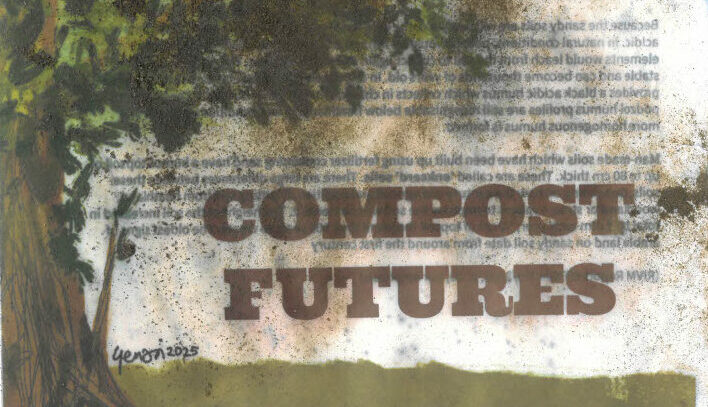
Compost Futures by the London Science Fiction Research Community (LSFRC). This creative-critical submission, in the form of a full zine, was made by the co-directorate of the LSFRC to explore questions around the relationships between humans with the other-than-human through the idea of “compost,” inspired by Zoefuturism. Follow the link to read and explore the articles and artworks, and to learn how co-authoring a zine with nature turned out.
Station to Station by Goblin Futures (https://goblin-futures.itch.io/station-to-station).
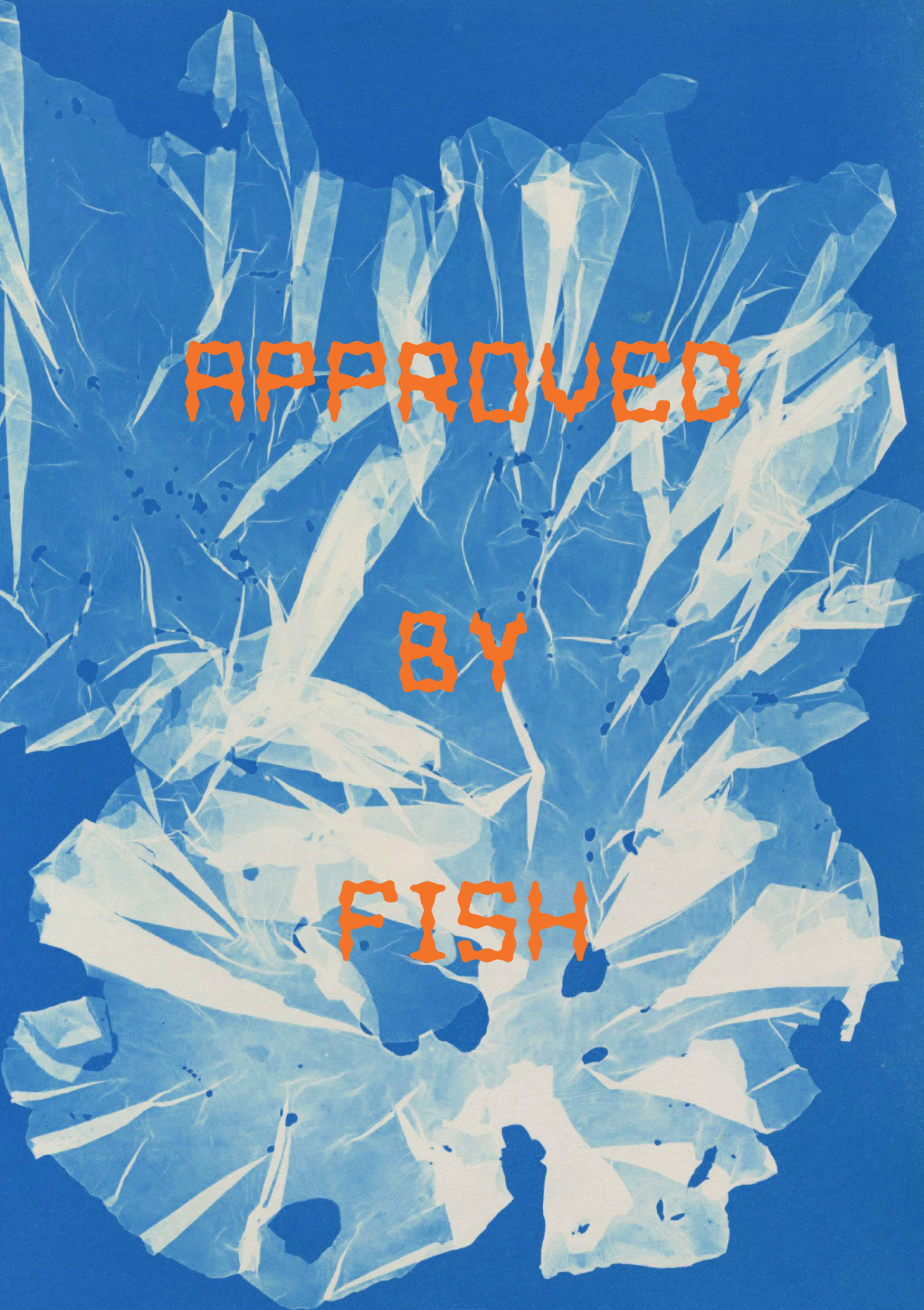
A fishpunk game: Station to Station*Fishpunk is something we made up, not a pre-existing genre. In other words, Station to Station is fishpunk, and anything else people want to consider fishpunk they can, just as long as it is Approved By Fish.
**Weirdhope is a term coined by COPY/PASTE CO-OP, which they describe as a form of eco-punk that is stylistically and thematically opposed to grimdark. For more, you can check out their game ECO MOFOS!! or the webpage for the Weird Hope Engines exhibition that ran in the Bonington Gallery in 2025.
Narrative Structures and ZoefuturismBy Christopher Morrison
In the West[1] there is one story structure primarily taught to readers and practitioners alike. The Aristotelean 3-Act Structure/The Hero’s Journey. I’m well aware that’s two structures, but they are so inter-linked now as to be extensions of one another. And, most importantly, they share a core philosophical purpose. That purpose: re-enforce Heroic Individualism. The Protagonist must be the one to solve the problem. They, and only THEY. Some assistance is rendered along the way, but in the climax, it is them and them alone (usually smashing) their way to the end. And that end as a teleological conclusion forgives (or ignores) all things that came before.
Anything else is considered a “subversion of” or “breaking the rules”. But, as Matthew Salsess asks, “Who writes those rules?” (Salesses, Matthew. Craft in the Real World: Rethinking Fiction Writing and Workshopping. New York: Catapult, 2021.) It is the dominant culture in the West. Patriarchal, white supremacist[2], heteronormative. Those values that hold up a human being… all at once illustrating the protagonist as special and the norm. The story’s purpose is to make them a static, fixed Hero.
So, if this structure serves to support the Culture of Being in the West, what structures could support a culture of Becoming from Asian Cultures not shackled to the mast of Individualism?[3] What structures could a writer creating in a Zoefuturist context rely on to illustrate Human Becoming and relieve their woes about what comes next in their story?
Taking a cue from the absolute basic root of Dr. Ames’ work and the language he is immersed in, let’s look at ShengSheng (生生) – Procreativity. This word Dr. Ames presents as a crucial part of the early Cosmology of Confucian thought[4] and gives us a perfect jumping-off point:
Repetition.
We all understand one of the crushing features of humanity is the repetition of life. Buddhism tackles this issue with the simple mantra: “Before enlightenment: chop wood, carry water. After enlightenment: chop wood, carry water.” The road to human becoming must run directly through repetition just as the word and pictogram in Chinese suggests in its very form.
However, the West abhors repetition[5] (except in cases of utter personal sacrifice to the destruction of oneself[6]) and worships at the feet of novelty.
New or perish! You are only as good as your last ____!
Yet repetition itself holds true meaning-making. True becoming. But in Western storytelling it’s relegated to a “callback” or some “comment” on one form or another and not the core engine to drive story and meaning.
Let’s explore a few structures where repetition is the heart and engine of its purpose.
Spirals: first brought to my attention through the work of Jane Alison.[7] Humans are pattern recognition machines, therefore to create a literary or dramatic spiral one repeats meaning by bringing back a panoply of artistic resources. Place, character(s), theme(s), color, etc. Most powerful in the resource kit is repeating events in your story. What one may lose in novelty one gains in grounding your audience – their pattern recognition (and their simple act of becoming themselves – living life) brings the repetition to awareness and, if done well, the question – Why? Why repeat this now? Here? Or the repetition simply becomes the Breath of the narrative. Inhaling on return – exhaling on leaving – or vice versa. It is a structure that is close to life itself.
While not a Zoefuturist film, let’s look at Wong Kar-Wai’s In the Mood for Love (Wong Kar-wai, dir. In the Mood for Love. Block 2 Pictures, 2000). A love story where its lovers are not allowed to consummate their love… or even say the word to each other. They are married to others while falling in love with each other. It is primarily a Spiral of place. Hallway, stairway, alleyway. All intermediate places – not defined. Not of themselves, but conduits to other locations. Perfect locations for a relationship that isn’t formed – isn’t one or the other. The characters are also suspended; neither really married nor free; not in love, but in love. Repetitions of their own conditions. The continuous use of smoke as a repeated image in the film is powerful. Sure, it looks damn cool, but it’s neither solid nor liquid. Neither here nor there… just slowly looping around itself and evaporating. Repeating. Spiraling.
Next, we’ll look at ‘nested’ structure.
Mainly known from the 1001 Arabian Nights and the film Rashomon. Nested stories are stories-within-stories without being anthology or connected episodic in nature. Story layers. Characters may re-appear, settings may re-appear[8] but what certainly repeats is theme and/or a central question or as Henry Lien likes to point out: culture[9].
Again, here’s a structure that reflects life’s journey. We are stories-within-stories. We hold our story, our family’s story, we are minor or major characters in everyone’s stories that surround us. And other’s stories can affect us directly or indirectly if we appear in them or not. As Dr. Ames points out through Zoetological philosophy we are “…interdependent human ‘becomings’ rather than discreet human beings… [through a relational understanding].[10]”
Nested structure allows writers to sift through the depth of our humanity all in one frame. The flow of this structure is the essence of interconnected ‘becoming’. Again, like life, the more we lift the lid and interact with the depths and layers underneath the more meaning and interconnectedness we experience.
In conclusion, ‘spiral’ and ‘nested’ narrative structures are available to writers of every form and genre, but are especially powerful in a Zoetological and/or Zoefuturist context. They allow for a direct reflection into the bones of the work and to elevate stories from a single individualist journey into the wider world-view of human becomings. By leaving behind the strictures of Western storytelling obsessions we can imagine and enact a more interconnected future.
[1] Excluding Indigenous cultures.
[2] Colonial, at best.
[3] This is where I’ll ask you to forgive me. I’m a practitioner and not a scholar, perhaps others have done this work – I look forward to hearing about them if so… Henry Lien’s work comes to mind.
[4] Ames, R. T. (2025). Living Chinese Philosophy: Zoetology as First Philosophy (p. 8). State University of New York Press.
[5] To the point: In an early screenwriting class the “wisdom” of never repeating a location was handed down to me. (This was the working philosophy of a high-powered producer and their thoughts on scriptwriting.)
[6] Puritan work ethic for example. Or (especially for women) the carer role taken to its extreme… it is lauded and pitied and ridiculed all at once.
[7] Alison, J. (2019). Meander, Spiral, Explode: Design and Pattern in Narrative (p. 143). Catapult.
[8] Or remain the same as with Rashomon.
[9] Lien, H. (2025). Spring, summer, asteroid, bird: The art of Eastern storytelling (1st ed.). W. W. Norton & Company.
[10] Ames, R. T. (2025). Living Chinese Philosophy: Zoetology as First Philosophy (p. 8). State University of New York Press.
Categories: Industry News
Zoefuturism in creative practice: responses
Introduction by Yen Ooi and Stephen Oram
When we started thinking about the call for articles last year, we wanted to approach it in a Zoefuturistic manner – by giving space and creating opportunities for the issue(s) and articles to ‘become.’ As a new topic, we were very aware that this is a process of exploration and discovery, more than a call to enforce and curate what we think Zoefuturism is. It needed to be reflective and malleable.
In this article, we will look at three of these creative reflections of Zoefuturism through different lenses:
- Compost Futures by the London Science Fiction Research Community Co-Directorate
- Station to Station by Goblin Futures
- “Narrative Structures and Zoefuturism” by Christopher Morrison
While all three pieces explore very different topics and perspectives, they are all reflections of Zoefuturism through practitioners’ creative action, and they form a Zoefuturistic response, as reactions to the introduction of Zoefuturism, playing with the ideas of our futures through relationality and constant becomings.
Compost Futures by the London Science Fiction Research Community (LSFRC). This creative-critical submission, in the form of a full zine, was made by the co-directorate of the LSFRC to explore questions around the relationships between humans with the other-than-human through the idea of “compost,” inspired by Zoefuturism. Follow the link to read and explore the articles and artworks, and to learn how co-authoring a zine with nature turned out.
Station to Station by Goblin Futures (https://goblin-futures.itch.io/station-to-station).
A fishpunk game: Station to Station*Fishpunk is something we made up, not a pre-existing genre. In other words, Station to Station is fishpunk, and anything else people want to consider fishpunk they can, just as long as it is Approved By Fish.
**Weirdhope is a term coined by COPY/PASTE CO-OP, which they describe as a form of eco-punk that is stylistically and thematically opposed to grimdark. For more, you can check out their game ECO MOFOS!! or the webpage for the Weird Hope Engines exhibition that ran in the Bonington Gallery in 2025.
Narrative Structures and ZoefuturismBy Christopher Morrison
In the West[1] there is one story structure primarily taught to readers and practitioners alike. The Aristotelean 3-Act Structure/The Hero’s Journey. I’m well aware that’s two structures, but they are so inter-linked now as to be extensions of one another. And, most importantly, they share a core philosophical purpose. That purpose: re-enforce Heroic Individualism. The Protagonist must be the one to solve the problem. They, and only THEY. Some assistance is rendered along the way, but in the climax, it is them and them alone (usually smashing) their way to the end. And that end as a teleological conclusion forgives (or ignores) all things that came before.
Anything else is considered a “subversion of” or “breaking the rules”. But, as Matthew Salsess asks, “Who writes those rules?” (Salesses, Matthew. Craft in the Real World: Rethinking Fiction Writing and Workshopping. New York: Catapult, 2021.) It is the dominant culture in the West. Patriarchal, white supremacist[2], heteronormative. Those values that hold up a human being… all at once illustrating the protagonist as special and the norm. The story’s purpose is to make them a static, fixed Hero.
So, if this structure serves to support the Culture of Being in the West, what structures could support a culture of Becoming from Asian Cultures not shackled to the mast of Individualism?[3] What structures could a writer creating in a Zoefuturist context rely on to illustrate Human Becoming and relieve their woes about what comes next in their story?
Taking a cue from the absolute basic root of Dr. Ames’ work and the language he is immersed in, let’s look at ShengSheng (生生) – Procreativity. This word Dr. Ames presents as a crucial part of the early Cosmology of Confucian thought[4] and gives us a perfect jumping-off point:
Repetition.
We all understand one of the crushing features of humanity is the repetition of life. Buddhism tackles this issue with the simple mantra: “Before enlightenment: chop wood, carry water. After enlightenment: chop wood, carry water.” The road to human becoming must run directly through repetition just as the word and pictogram in Chinese suggests in its very form.
However, the West abhors repetition[5] (except in cases of utter personal sacrifice to the destruction of oneself[6]) and worships at the feet of novelty.
New or perish! You are only as good as your last ____!
Yet repetition itself holds true meaning-making. True becoming. But in Western storytelling it’s relegated to a “callback” or some “comment” on one form or another and not the core engine to drive story and meaning.
Let’s explore a few structures where repetition is the heart and engine of its purpose.
Spirals: first brought to my attention through the work of Jane Alison.[7] Humans are pattern recognition machines, therefore to create a literary or dramatic spiral one repeats meaning by bringing back a panoply of artistic resources. Place, character(s), theme(s), color, etc. Most powerful in the resource kit is repeating events in your story. What one may lose in novelty one gains in grounding your audience – their pattern recognition (and their simple act of becoming themselves – living life) brings the repetition to awareness and, if done well, the question – Why? Why repeat this now? Here? Or the repetition simply becomes the Breath of the narrative. Inhaling on return – exhaling on leaving – or vice versa. It is a structure that is close to life itself.
While not a Zoefuturist film, let’s look at Wong Kar-Wai’s In the Mood for Love (Wong Kar-wai, dir. In the Mood for Love. Block 2 Pictures, 2000). A love story where its lovers are not allowed to consummate their love… or even say the word to each other. They are married to others while falling in love with each other. It is primarily a Spiral of place. Hallway, stairway, alleyway. All intermediate places – not defined. Not of themselves, but conduits to other locations. Perfect locations for a relationship that isn’t formed – isn’t one or the other. The characters are also suspended; neither really married nor free; not in love, but in love. Repetitions of their own conditions. The continuous use of smoke as a repeated image in the film is powerful. Sure, it looks damn cool, but it’s neither solid nor liquid. Neither here nor there… just slowly looping around itself and evaporating. Repeating. Spiraling.
Next, we’ll look at ‘nested’ structure.
Mainly known from the 1001 Arabian Nights and the film Rashomon. Nested stories are stories-within-stories without being anthology or connected episodic in nature. Story layers. Characters may re-appear, settings may re-appear[8] but what certainly repeats is theme and/or a central question or as Henry Lien likes to point out: culture[9].
Again, here’s a structure that reflects life’s journey. We are stories-within-stories. We hold our story, our family’s story, we are minor or major characters in everyone’s stories that surround us. And other’s stories can affect us directly or indirectly if we appear in them or not. As Dr. Ames points out through Zoetological philosophy we are “…interdependent human ‘becomings’ rather than discreet human beings… [through a relational understanding].[10]”
Nested structure allows writers to sift through the depth of our humanity all in one frame. The flow of this structure is the essence of interconnected ‘becoming’. Again, like life, the more we lift the lid and interact with the depths and layers underneath the more meaning and interconnectedness we experience.
In conclusion, ‘spiral’ and ‘nested’ narrative structures are available to writers of every form and genre, but are especially powerful in a Zoetological and/or Zoefuturist context. They allow for a direct reflection into the bones of the work and to elevate stories from a single individualist journey into the wider world-view of human becomings. By leaving behind the strictures of Western storytelling obsessions we can imagine and enact a more interconnected future.
[1] Excluding Indigenous cultures.
[2] Colonial, at best.
[3] This is where I’ll ask you to forgive me. I’m a practitioner and not a scholar, perhaps others have done this work – I look forward to hearing about them if so… Henry Lien’s work comes to mind.
[4] Ames, R. T. (2025). Living Chinese Philosophy: Zoetology as First Philosophy (p. 8). State University of New York Press.
[5] To the point: In an early screenwriting class the “wisdom” of never repeating a location was handed down to me. (This was the working philosophy of a high-powered producer and their thoughts on scriptwriting.)
[6] Puritan work ethic for example. Or (especially for women) the carer role taken to its extreme… it is lauded and pitied and ridiculed all at once.
[7] Alison, J. (2019). Meander, Spiral, Explode: Design and Pattern in Narrative (p. 143). Catapult.
[8] Or remain the same as with Rashomon.
[9] Lien, H. (2025). Spring, summer, asteroid, bird: The art of Eastern storytelling (1st ed.). W. W. Norton & Company.
[10] Ames, R. T. (2025). Living Chinese Philosophy: Zoetology as First Philosophy (p. 8). State University of New York Press.
Categories: Industry News
2026 SFRA Awards
TheScience Fiction Research Association (SFRA) has announced the 2026 winners of its annual book awards.
The SFRA Award for Lifetime Contributions to SF Scholarship
- Istvan Csicsery-Ronay, Jr.
The SFRA Innovative Research Award
- Growth, Resource, Population: The GRP Triangle in Contemporary Chinese Science Fiction by Female Writers. , Regina Kanyu Wang (SFRA Review Summer '25)
Thomas D. Clareson Award for Distinguished Service
- Patrick Sharp
The post 2026 SFRA Awards appeared first on Locus.
Categories: Industry News, Industry News Home
2026 World Fantasy Lifetime Achievement Awards
Clive Barker and Joyce Carol Oates have been announced as the recipients of the 2026 World Fantasy Awards for Lifetime Achievement, presented annually to individuals who have demonstrated outstanding service to the fantasy field. The final ballot for the 2026 World Fantasy Awards was previously announced.
The awards will be presented during the 2026 World Fantasy Convention, to be held October 22-25, 2026 in Oakland CA.
For more information, see …Read More
The post 2026 World Fantasy Lifetime Achievement Awards appeared first on Locus.
Categories: Industry News, Industry News Home
2026 Mythopoeic Awards Winners
The Mythopoeic Society announced the 2026 Mythopoeic Awards winners during Mythcon 54, held July 24-27, 2026 in Weatherford OK.
Mythopoeic Fantasy Award for Adult Literature
- WINNER: Snake-Eater, T. Kingfisher (47North)
- The Charlatan Duology, Holly Black (Tor)
- Audition for the Fox, Martin Cahill (Tachyon)
- The Bright Sword, Lev Grossman (Viking)
- The West Passage, Jared Pechaček (Tordotcom)
- Water Moon, Samantha Sotto Yambao (Del Rey)
- The Incandescent, Emily Tesh (Tor)
The post 2026 Mythopoeic Awards Winners appeared first on Locus.
Categories: Industry News, Industry News Home
2026 N3F Awards
The National Fantasy Fan Federation(N3F) has announced the winners of the2026 National Fantasy Fan Federation Laureate Awards(AKA the Neffy Awards).
Best Novel
- All That We See or Seem, Ken Liu (Saga)
Best Shorter Work or Anthology
- The Dagger in Vichy, Alastair Reynolds (Subterranean)
Best Poem or Collection
- Entropocene, Jean-Paul L. Garnier (Space Cowboy)
Best Editor
- Toni Weisskopf (Baen)
The post 2026 N3F Awards appeared first on Locus.
Categories: Industry News, Industry News Home
Aurealis Awards Changes
The Queensland Writers Centre (QWC) has updated the entry guidelines for the 2026 Aurealis Awards, established to recognize the best in Australian speculative fiction, making changes including expanded terms for entry fees.
The Aurealis Awards were established in 1995 by Chimaera Publications, the team behind the magazine Aurealis. The Awards later partnered with different organizations to administer them. According to the Aurealis Awards web page, these have included Fantastic Queensland, …Read More
The post Aurealis Awards Changes appeared first on Locus.
Categories: Industry News, Industry News Home
2026 Dragon Awards Ballot
Dragon Con has announced the ballot for the 2026 Dragon Awards.
Best Science Fiction Novel
- God's Junk Drawer, Peter Clines (Blackstone)
- The Faith of Beasts, James S.A. Corey (Orbit)
- Operation Bounce House, Matt Dinniman (Ace)
- Radiant Star, Ann Leckie (Orbit US)
- Slow Gods, Claire North (Orbit US; Orbit UK)
- The Shattering Peace, John Scalzi (Tor; Tor UK)
Best Fantasy Novel (Including Paranormal)
- Twelve Months, Jim Butcher (Ace)
The post 2026 Dragon Awards Ballot appeared first on Locus.
Categories: Industry News, Industry News Home
2026 Dream Foundry Contest Finalists
Dream Foundry, a non-profit dedicated to bolstering the careers of nascent professionals working with the speculative arts, hasannounced the finalists for its 2026 contests.
Writing Contest
- Ooreoluwa O. Agbede
- Sara Ang
- N.A. Blair
- Tomás Xavier Díaz
- Angela Luo
- Natalie Anai Nowo Lydick
- Fatima Masood
- Femi Salami
- Ashleigh Spencer
- Plamen Ivanov Vasilev
Art Contest
- River Barton
- Ginger Bertoni
- Emelia Feldman
- Javiera Díaz
- Sierra Eston
- Olive Humphrey
- Niko Kristic
The post 2026 Dream Foundry Contest Finalists appeared first on Locus.
Categories: Industry News, Industry News Home
Reclaiming Your Focus with a Writer Deck
by James Stegall
Read by Misha Grifka WanderHow often do you escape doomscrolling, capture the spark of an idea, then find time to write only to open your laptop to a buzz of distractions?
Restart to update Word. Here’s a tool tip. Please rate our app. Copilot can rewrite that for you!
Did you forget what you wanted to write?
Sure, handwriting is an option, but you need to maximize available time. It would be nice to write on a device that doesn’t actively get in the way.
You’re not alone. In response to this swarm of digital mosquitoes, writers and tinkerers have started building their own devices they call writer decks.
A well-used Alphasmart Neo2. Photo by James Stegall.The goals of a writer deck are simple: get to the cursor as fast as possible, long battery life, usable screen, and the ability to easily save and move files. Portability, ergonomics, keyboard quality, and personal style also play big roles. A writer deck is for enabling flow state, not editing.
The name writer deck evolved from building cyberdecks, a hobby paying homage to the history of computing, while imagining alternate timelines of industrial design.While cyberdecks can be more for art than utility, writer decks are designed for productivity. They can be purpose-built or be a repurposed old laptop with reduced connectivity, or a commercial device made for instant-on word processing.
On reddit.com/r/WriterDeck, newcomers ask “Why?” so often that it’s become an inside joke. Why not just use your laptop? Why not just turn off the Wi-Fi? Why not tap into your endless reserve of discipline to crank out words when the whole world wants to get inside your head? The answer can be frustration, the hunt for better tools, accessibility, a desire to express yourself through your devices, or reduce carbon footprint by using an older device as long as possible. It could also be reclaiming headspace in an increasingly hostile software environment or a desire to protect your work from a future where platforms lock it behind a subscription or incompatible file types.
Getting StartedMany newcomers start with devices in their drawers and closets. The most basic writer deck can be an old phone in airplane mode running Word or Google Docs on an adjustable stand, paired with a Bluetooth keyboard. The upside of this setup is keyboard customization, ergonomics, and simply getting started. Breaking out of the standard shape of a PC to write with a keyboard on your desk and the screen at eye-height can be a game changer for accessibility.
Older LaptopsAny older laptop with a USB port can make a great writer deck. The oldest don’t even have Wi-Fi, which is ideal.
The Achilles’ heel of most laptops is the battery. Remove it completely, making the device lighter, and use a 100-watt portable battery designed for laptops, with a USB-C to DC power jack adapter available at many retailers.Your laptop probably still has Microsoft Word. Or other word processors can be found on archive.org. Don’t let tinkering with the laptop get in the way of using it as a writing device though. Notepad will do the job and save to a USB stick.
A ThinkPad X61, 12-inch laptop. Photo by James Stegall.A warning: Remember that older devices don’t autosave. Get in the habit of pressing CTL-S on PC or CMD-S on a Mac every few minutes. Save everything to a USB stick for easy transfer. If you’re feeling adventurous, replace the old spinning hard drive with an inexpensive SATA SSD to really speed things up.
It can be fun to repurpose a cool older laptop with early 2000s design language and hand-friendly curves. While some keyboards are unequivocally terrible, others can be much nicer than the standard chiclet keyboard on today’s machines. And without all the cloud bloat in modern operating systems, an older CPU with limited RAM is often snappier than expected.
If you don’t have an older laptop, a user on /r/WriterDeck has developed an OS on a USB stick that boots to a simplified desktop for distraction-free writing. Another option is MicroJournal for PC.
Off-the-ShelfReady-made writer decks probably started with the AlphaSmart, but now companies like Astrohaus serve the niche. Their Smart Typewriter, Traveler, and Alpha devices offer e-ink screens, cloud syncing, and long battery life. The boutique nature of these products are reflected in the prices though.
The Pomera D250US. Photo by James Stegall.As AlphaSmart devices disappear from secondary markets, more commercial products are available every day. Kickstarter has enabled devices such as the Zerowriter, BYOK (Bring Your Own Keyboard), and Pomera D250 with US Keyboard. E-ink tablets are also growing more popular and offer long battery life and screens free of blinking distractions.
DIYThe popularity of the Raspberry Pi single board computer has greatly lowered the barrier to entry on building your own writer deck. Most projects are open source with build guides on GitHub. YouTube, Hackaday Reddit, and WriterDeck.org also have resources to get started. Members of the writer deck community love to see builds in progress and enjoy offering thoughts on case design, hinge operation, power management, and whatever else makes the device work.
The BYOK with a Bluetooth keyboard. Photo by James Stegall.The key behind a great build is to think of the drafting device as a tool that serves you, and mod it any way you like. Clamshell cases, chunky typewriter styles, ultra portable or alternate materials like wood, leather, or metal are all fair game.
Personal StyleWhether you decide on an older laptop or build your own, the best feature of writer decks is personality. Writers love to decorate their decks with stickers, paint, fuzzy fabrics, or custom keyboards to make them a joy to work on. The goal is to create a device that inspires you and doesn’t get in the way of creation.
Sounds like fun? Time to check the closets for old tech and get some work done.
Explore more articles from Writing by Other Means
James Stegall is a member of SFWA. Writing as James S. Aaron, he is the author of the Aeon 14: Sentience Wars and Galactic Law series. His novel Retreat Hell is coming in 2026 from Aethon Books. He lives in Oregon and likes doing dad things, tinkering, digging in the yard, riding bikes and reading. Learn more at jamesaaron.net.
The post Reclaiming Your Focus with a Writer Deck appeared first on SFWA - The Science Fiction & Fantasy Writers Association.
Categories: Industry News, Industry News Home
2026 World Fantasy Awards Finalists
The World Fantasy Awards ballot for works published in 2025 has been announced. The awards will be presented during the 2026 World Fantasy Convention, scheduled for October 22-25, 2026 in Oakland CA.
The World Fantasy Awards finalists are:
Best Novel
- Audition for the Fox, Martin Cahill (Tachyon)
- Once Was Willem, M.R. Carey (Orbit US; Orbit UK)
- The Secret Market of the Dead, Giovanni De Feo (Saga)
- The Everlasting, Alix …Read More
The post 2026 World Fantasy Awards Finalists appeared first on Locus.
Categories: Industry News, Industry News Home
Ursula K. Le Guin’s Home Recognized as National Historic Landmark, to host Writers’ Residency
Ursula K. Le Guin's longtime residence at 3321 NW Thurman St. in Portland, Oregon has been added to the National Register of Historic Places in recognition of its significance to American literature and women's history.
During the 58 years she spent in the distinctive Queen Anne-style home until her death in 2018, Le Guin wrote many of the novels that have since been canonized among the most celebrated classics …Read More
The post Ursula K. Le Guin’s Home Recognized as National Historic Landmark, to host Writers’ Residency appeared first on Locus.
Categories: Industry News, Industry News Home
Dreams of Arcadia: Zoefuturism and the Re-Enchantment of the Deep Self
By Kiti McGlashan
As meaning-seeking beings, we live in alternating cycles of embracing or fearing the natural world. Literature offers a good framework for observing this ancient and ongoing ‘battle’ for the human spirit between the manifestation of our reverence and stewardship of nature and our fear of something that could so easily kill us. As industrialisation moved us further away from nature, and humans started living almost completely dis-attached from the natural world, we saw a resurgence of the need to find belonging in the greater order. The last two hundred years have presented a shift in our attitudes towards our surroundings and an influx of philosophies and literature that try to reconnect humans with nature.
Environmentalism has clearly entered the focus of modern worries, but it often presents shortsighted forms that ignore the bigger picture. By focusing on the more immediate and visible concerns, environmental campaigns often prioritise narrow objectives while overlooking the negative structural downside of some of the green politics (e.g. “green colonialism). The climate crisis and the development of the Anthropocene as a theoretical background for our concerns are lacking in a holistic outlook of reality and often showcase similar dangers as our previous attitudes towards the natural world. While there is a rising concern about the land, it is through an anthropocentric point of view. As long as we keep seeing ourselves as separate to the non-human lifeworld, we will live incomplete existences, and our solutions will be forever lacking. What is needed is “a futurism of connectedness, engagement, and relationality, a futurism of ‘life-becomings’” (Ooi, n.d.). And this reflection on the need for interconnectedness has recently been championed by new subgenres of science fiction.
Storytelling has always been a mirror to the soul of humanity. It focuses the collective emotions and concerns in a metaphorical and philosophical format that offers more than simple escapism. Up until now, science fiction in particular has offered the best platform where the concerns of our present and future are laid out in the format of cautionary tales of how our environmental damage leads to post-apocalyptic scenarios. There are countless examples of stories focused on ecological collapse such as The First and Last Men by Olaf Stapledon that explores humanity’s eventual extinction, the dystopian future of Metro 2033 by Dmitry Glukhovsky where humanity is almost extinct and earth ravaged by radiation, The Road by Cormac McCarthy that is set in a post-apocalyptic setting following a cataclysmic event, the grimdark world of the Warhammer 40K universe where after the AI wars mankind is plummeted into a dark universe of chaos and death. These are just some examples out of a very vast body of literature which express the climate anxiety our society feels.
It is distressing to see that today we have a medically recognised definition for our dis-connection from nature. Solastagia “is the distress that is produced by environmental change impacting on people while they are directly connected to their home environment” (Albrecht, et al, 2007). The powerlessness to prevent environmental change and the crisis of being cut out from nature is leading to a whole generation of young people thinking they won’t survive to old age. People are refusing to have children because they think they wouldn’t survive the impending environmental catastrophe (Carrington, 2020). This is reflected in most of the existing science fiction literature which provides a very gloomy outlook for humanity’s future, diminishing hope and increasing ‘dis-ease’. While the devastation inflicted on Earth is almost catastrophic, it isn’t irreparable as long as we take steps in the right direction.
However, there is a shift in the current science fiction scene and the philosophical aspects surrounding it that reflect a discontent with the present pessimism by advocating for hope and optimism. Many genres have emerged that claim to break the connection of science fiction’s prevalent dystopian pessimism by advocating for a sustainable future where man and nature are connected. Solarpunk, Hopepunk, and other subgenres offer an outlook of how humanity can achieve a utopic existence connected to nature. Ursula Le Guin’s Always Coming Home, the Star Trek universe, the worlds of Hayao Miyazaki’s Castle in the Sky and Nausicaä of the Valley of the Wind, all present a better future: one in which environmental crisis isn’t inevitable.
The main criticism of these genres is the fact that they generally still tend to be human-centric, and in a way they are another expression of post-apocalyptic literature. The change that rekindles our interconnectedness to nature cannot be achieved by placing man at the centre of reality, be it fictive or real. Even if European culture is acknowledging its spiritual and environmental challenges, the damage done by over two millennia of our thinking being moulded by Socratic, Platonic, and Christian philosophy has shaped our mindset in a way that is hard to come back from.
The most positive and holistic framework present today is seen in a recent philosophy that echoes the spirit of old nature belief systems like Animism or the modern philosophical outlooks that merges biology with a nature-oriented philosophy like the Biophilia Hypothesis (Keller, S. R., & Wilson, E. O.,1993). By offering an exploration in a way of thinking that is holistic and drives our intrinsic curiosity as a species towards a new frontier of interconnectedness, Zoefuturism, an outlook proposed by writer and researcher Yen Ooi which “explores the reality of human nature as human ‘becomings’ (instead of ‘beings’) where constant change rooted in all nature is acknowledged as fundamental to living”. Inspired by East Asian philosophy, “Zoefuturism doesn’t belong within one culture or philosophy.” In a way, it is the link between European Animism and ancient Chinese philosophy, as well as Japanese Shintoism. Zoefuturism presents a great framework for observing the similarities between different cultures. We all get lost in the elaboration of our faiths and philosophies but if you take away the embellishments underneath there is a shared connectivity between all of humanity.
At the core of the philosophy of the Chinese Book of Changes, also known as I Ching or Yijing, is constant change. Life is defined by its impermanence, and this concept is of key importance in Eastern spiritual traditions. By addressing human finitude, our difficulty of making sense of our surroundings without a set of symbols, the Book of Changes “aims to alleviate our self-inflicted anxiety and agony” (n.a., 2020) by reminding us of our limited ability to know our surroundings and offering a system of symbols to navigate the unknowable nature of our world.” Zoefuturism echoes the philosophy of harmony of the Book of Changes, which advocates the need for self-realisation and accepting one’s position within the flow of change of birth, life, and death. In these philosophies humans become part of nature rather than apart from it. Only by aligning ourselves with the natural order can we find peace.
This way of thinking is also the core of Shintoism which recognises “the destructive aspect of nature, deeming it necessary to keep the balance and control over its growth on earth.” The origin myths of societies all over the globe reflect the dual aspect of awe and fear that nature inspires. Disasters are accepted as part of reality. Volcanoes make the soil more fertile by imbuing it with minerals and metals. Aokigahara, the legendary forest at the base of Mt. Fuji, is a “lush and mysterious landscape [that] emerged following the last major eruption of the volcano in the 9th century” (Staughton 2023). Floods replenish the groundwater, enrich the soil, and create new habitats. Nothing in nature is black and white. Only by adopting a better understanding of the interconnectedness of reality—which the West has mostly forgotten but that is still alive in East Asian thinking — can we hope to achieve a living version of utopia.
As Ooi argues, “we are made through all the interactions we have with our world, conscious and unconscious, purposefully and not, intangible and tangible. These interactions constantly shape us and our world through changes and ‘life-becomings.” If we acknowledge our place in the natural world, our disenchantment will end.
Even the most idyllic science fiction needs to rethink how it envisions our future. We need to break away from the centrality of humans in our thinking. Without finding balance between us and nature, without breaking from the human-centric mindset, even the most optimistic visions of imagined futures risk falling in the same pitfall of imbalance which has distanced and isolated us from nature.
Our dreams should be the trailblazer to a future where we break our isolation from the natural world.
Sources
Albrecht, G., Sartore, G.-M., Connor, L., Higginbotham, N., Freeman, S., Kelly, B., Stain, H., Tonna, A., & Pollard, G. (2007). Solastalgia: The distress caused by environmental change. Australasian Psychiatry: Bulletin of Royal Australian and New Zealand College of Psychiatrists, 15 Suppl 1, S95-98. https://doi.org/10.1080/10398560701701288
Abraham, D. (2017). The Spell of the Sensuous: Perception and Language in a More-Than-Human World. Vintage Book.
Armstrong, K. (2014). Fields of Blood: Religion and the History of Violence. Vintage.
Carrington, D., & editor, D. C. E. (2020, November 27). Climate ‘apocalypse’ fears stopping people having children – study. The Guardian. https://www.theguardian.com/environment/2020/nov/27/climate-apocalypse-fears-stopping-people-having-children-study
Climate Anxiety | Harvard Medicine Magazine. (n.d.). Retrieved 30 July 2025, from https://magazine.hms.harvard.edu/articles/climate-anxiety
Harvard University Education. Gaia Hypothesis. https://courses.seas.harvard.edu/climate/eli/Courses/EPS281r/Sources/Gaia/Gaia-hypothesis-wikipedia.pdf
Hon, T.-K. (2024). Chinese Philosophy of Change (Yijing). In E. N. Zalta & U. Nodelman (Eds), The Stanford Encyclopedia of Philosophy (Summer 2024). Metaphysics Research Lab, Stanford University. https://plato.stanford.edu/archives/sum2024/entries/chinese-change/
n.a. (2020). How Shinto Philosophy can Bring us Closer to Nature. The Orbital. https://theorbital.co.uk/how-shinto-philosophy-can-bring-us-closer-to-nature/
Kang Wolter, H. (n.d.). Hayao Miyazaki, Studio Ghibli, and the ‘Environmental Message’. The Cambridge Language Collective. Retrieved 30 July 2025, from https://www.thecambridgelanguagecollective.com/asia/hayao-miyazaki-studio-ghibli-and-the-environmental-message
Keller, S. R., & Wilson, E. O. (1993). The Biophilia Hypothesis (1st ed.). Island Press.
Schmidt, C. (n.d.). Climate Anxiety | Harvard Medicine Magazine. Retrieved 30 July 2025, from https://magazine.hms.harvard.edu/articles/climate-anxiety
Staughton, J. (2019). Why Is Volcanic Soil So Fertile? ScienceABC. https://www.scienceabc.com/nature/why-is-volcanic-soil-so-fertile.html
Park, S.-H., & Mattson, R. H. (2009). Ornamental indoor plants in hospital rooms enhanced health outcomes of patients recovering from surgery. Journal of Alternative and Complementary Medicine (New York, N.Y.), 15(9), 975–980. https://doi.org/10.1089/acm.2009.0075
Ooi, Y. (n.d.). Zoefuturism. Retrieved 31 July 2025, from https://www.yenooi.com/zoefuturism
Tuppan, L. (2022, June 27). Animism. The Rune-Gild Europe. https://rune-gild-europe.org/magic/animism/
Wilson, O. R. (1993). The Biophilia Hypothesis. Island Press.
Categories: Industry News
Dreams of Arcadia: Zoefuturism and the Re-Enchantment of the Deep Self
By Kiti McGlashan
As meaning-seeking beings, we live in alternating cycles of embracing or fearing the natural world. Literature offers a good framework for observing this ancient and ongoing ‘battle’ for the human spirit between the manifestation of our reverence and stewardship of nature and our fear of something that could so easily kill us. As industrialisation moved us further away from nature, and humans started living almost completely dis-attached from the natural world, we saw a resurgence of the need to find belonging in the greater order. The last two hundred years have presented a shift in our attitudes towards our surroundings and an influx of philosophies and literature that try to reconnect humans with nature.
Environmentalism has clearly entered the focus of modern worries, but it often presents shortsighted forms that ignore the bigger picture. By focusing on the more immediate and visible concerns, environmental campaigns often prioritise narrow objectives while overlooking the negative structural downside of some of the green politics (e.g. “green colonialism). The climate crisis and the development of the Anthropocene as a theoretical background for our concerns are lacking in a holistic outlook of reality and often showcase similar dangers as our previous attitudes towards the natural world. While there is a rising concern about the land, it is through an anthropocentric point of view. As long as we keep seeing ourselves as separate to the non-human lifeworld, we will live incomplete existences, and our solutions will be forever lacking. What is needed is “a futurism of connectedness, engagement, and relationality, a futurism of ‘life-becomings’” (Ooi, n.d.). And this reflection on the need for interconnectedness has recently been championed by new subgenres of science fiction.
Storytelling has always been a mirror to the soul of humanity. It focuses the collective emotions and concerns in a metaphorical and philosophical format that offers more than simple escapism. Up until now, science fiction in particular has offered the best platform where the concerns of our present and future are laid out in the format of cautionary tales of how our environmental damage leads to post-apocalyptic scenarios. There are countless examples of stories focused on ecological collapse such as The First and Last Men by Olaf Stapledon that explores humanity’s eventual extinction, the dystopian future of Metro 2033 by Dmitry Glukhovsky where humanity is almost extinct and earth ravaged by radiation, The Road by Cormac McCarthy that is set in a post-apocalyptic setting following a cataclysmic event, the grimdark world of the Warhammer 40K universe where after the AI wars mankind is plummeted into a dark universe of chaos and death. These are just some examples out of a very vast body of literature which express the climate anxiety our society feels.
It is distressing to see that today we have a medically recognised definition for our dis-connection from nature. Solastagia “is the distress that is produced by environmental change impacting on people while they are directly connected to their home environment” (Albrecht, et al, 2007). The powerlessness to prevent environmental change and the crisis of being cut out from nature is leading to a whole generation of young people thinking they won’t survive to old age. People are refusing to have children because they think they wouldn’t survive the impending environmental catastrophe (Carrington, 2020). This is reflected in most of the existing science fiction literature which provides a very gloomy outlook for humanity’s future, diminishing hope and increasing ‘dis-ease’. While the devastation inflicted on Earth is almost catastrophic, it isn’t irreparable as long as we take steps in the right direction.
However, there is a shift in the current science fiction scene and the philosophical aspects surrounding it that reflect a discontent with the present pessimism by advocating for hope and optimism. Many genres have emerged that claim to break the connection of science fiction’s prevalent dystopian pessimism by advocating for a sustainable future where man and nature are connected. Solarpunk, Hopepunk, and other subgenres offer an outlook of how humanity can achieve a utopic existence connected to nature. Ursula Le Guin’s Always Coming Home, the Star Trek universe, the worlds of Hayao Miyazaki’s Castle in the Sky and Nausicaä of the Valley of the Wind, all present a better future: one in which environmental crisis isn’t inevitable.
The main criticism of these genres is the fact that they generally still tend to be human-centric, and in a way they are another expression of post-apocalyptic literature. The change that rekindles our interconnectedness to nature cannot be achieved by placing man at the centre of reality, be it fictive or real. Even if European culture is acknowledging its spiritual and environmental challenges, the damage done by over two millennia of our thinking being moulded by Socratic, Platonic, and Christian philosophy has shaped our mindset in a way that is hard to come back from.
The most positive and holistic framework present today is seen in a recent philosophy that echoes the spirit of old nature belief systems like Animism or the modern philosophical outlooks that merges biology with a nature-oriented philosophy like the Biophilia Hypothesis (Keller, S. R., & Wilson, E. O.,1993). By offering an exploration in a way of thinking that is holistic and drives our intrinsic curiosity as a species towards a new frontier of interconnectedness, Zoefuturism, an outlook proposed by writer and researcher Yen Ooi which “explores the reality of human nature as human ‘becomings’ (instead of ‘beings’) where constant change rooted in all nature is acknowledged as fundamental to living”. Inspired by East Asian philosophy, “Zoefuturism doesn’t belong within one culture or philosophy.” In a way, it is the link between European Animism and ancient Chinese philosophy, as well as Japanese Shintoism. Zoefuturism presents a great framework for observing the similarities between different cultures. We all get lost in the elaboration of our faiths and philosophies but if you take away the embellishments underneath there is a shared connectivity between all of humanity.
At the core of the philosophy of the Chinese Book of Changes, also known as I Ching or Yijing, is constant change. Life is defined by its impermanence, and this concept is of key importance in Eastern spiritual traditions. By addressing human finitude, our difficulty of making sense of our surroundings without a set of symbols, the Book of Changes “aims to alleviate our self-inflicted anxiety and agony” (n.a., 2020) by reminding us of our limited ability to know our surroundings and offering a system of symbols to navigate the unknowable nature of our world.” Zoefuturism echoes the philosophy of harmony of the Book of Changes, which advocates the need for self-realisation and accepting one’s position within the flow of change of birth, life, and death. In these philosophies humans become part of nature rather than apart from it. Only by aligning ourselves with the natural order can we find peace.
This way of thinking is also the core of Shintoism which recognises “the destructive aspect of nature, deeming it necessary to keep the balance and control over its growth on earth.” The origin myths of societies all over the globe reflect the dual aspect of awe and fear that nature inspires. Disasters are accepted as part of reality. Volcanoes make the soil more fertile by imbuing it with minerals and metals. Aokigahara, the legendary forest at the base of Mt. Fuji, is a “lush and mysterious landscape [that] emerged following the last major eruption of the volcano in the 9th century” (Staughton 2023). Floods replenish the groundwater, enrich the soil, and create new habitats. Nothing in nature is black and white. Only by adopting a better understanding of the interconnectedness of reality—which the West has mostly forgotten but that is still alive in East Asian thinking — can we hope to achieve a living version of utopia.
As Ooi argues, “we are made through all the interactions we have with our world, conscious and unconscious, purposefully and not, intangible and tangible. These interactions constantly shape us and our world through changes and ‘life-becomings.” If we acknowledge our place in the natural world, our disenchantment will end.
Even the most idyllic science fiction needs to rethink how it envisions our future. We need to break away from the centrality of humans in our thinking. Without finding balance between us and nature, without breaking from the human-centric mindset, even the most optimistic visions of imagined futures risk falling in the same pitfall of imbalance which has distanced and isolated us from nature.
Our dreams should be the trailblazer to a future where we break our isolation from the natural world.
Sources
Albrecht, G., Sartore, G.-M., Connor, L., Higginbotham, N., Freeman, S., Kelly, B., Stain, H., Tonna, A., & Pollard, G. (2007). Solastalgia: The distress caused by environmental change. Australasian Psychiatry: Bulletin of Royal Australian and New Zealand College of Psychiatrists, 15 Suppl 1, S95-98. https://doi.org/10.1080/10398560701701288
Abraham, D. (2017). The Spell of the Sensuous: Perception and Language in a More-Than-Human World. Vintage Book.
Armstrong, K. (2014). Fields of Blood: Religion and the History of Violence. Vintage.
Carrington, D., & editor, D. C. E. (2020, November 27). Climate ‘apocalypse’ fears stopping people having children – study. The Guardian. https://www.theguardian.com/environment/2020/nov/27/climate-apocalypse-fears-stopping-people-having-children-study
Climate Anxiety | Harvard Medicine Magazine. (n.d.). Retrieved 30 July 2025, from https://magazine.hms.harvard.edu/articles/climate-anxiety
Harvard University Education. Gaia Hypothesis. https://courses.seas.harvard.edu/climate/eli/Courses/EPS281r/Sources/Gaia/Gaia-hypothesis-wikipedia.pdf
Hon, T.-K. (2024). Chinese Philosophy of Change (Yijing). In E. N. Zalta & U. Nodelman (Eds), The Stanford Encyclopedia of Philosophy (Summer 2024). Metaphysics Research Lab, Stanford University. https://plato.stanford.edu/archives/sum2024/entries/chinese-change/
n.a. (2020). How Shinto Philosophy can Bring us Closer to Nature. The Orbital. https://theorbital.co.uk/how-shinto-philosophy-can-bring-us-closer-to-nature/
Kang Wolter, H. (n.d.). Hayao Miyazaki, Studio Ghibli, and the ‘Environmental Message’. The Cambridge Language Collective. Retrieved 30 July 2025, from https://www.thecambridgelanguagecollective.com/asia/hayao-miyazaki-studio-ghibli-and-the-environmental-message
Keller, S. R., & Wilson, E. O. (1993). The Biophilia Hypothesis (1st ed.). Island Press.
Schmidt, C. (n.d.). Climate Anxiety | Harvard Medicine Magazine. Retrieved 30 July 2025, from https://magazine.hms.harvard.edu/articles/climate-anxiety
Staughton, J. (2019). Why Is Volcanic Soil So Fertile? ScienceABC. https://www.scienceabc.com/nature/why-is-volcanic-soil-so-fertile.html
Park, S.-H., & Mattson, R. H. (2009). Ornamental indoor plants in hospital rooms enhanced health outcomes of patients recovering from surgery. Journal of Alternative and Complementary Medicine (New York, N.Y.), 15(9), 975–980. https://doi.org/10.1089/acm.2009.0075
Ooi, Y. (n.d.). Zoefuturism. Retrieved 31 July 2025, from https://www.yenooi.com/zoefuturism
Tuppan, L. (2022, June 27). Animism. The Rune-Gild Europe. https://rune-gild-europe.org/magic/animism/
Wilson, O. R. (1993). The Biophilia Hypothesis. Island Press.
Categories: Industry News
2026 Booker Prize Longlist
The 13-title longlist for the 2026 Booker Prize has been announced, with works and writers of genre interest including:
The End of Everything, M. John Harrison (Serpent's Tail)
The Renovation, Kenan Orhan(Hamish Hamilton)
The Vivisectors, Missouri Williams(4th Estate)
Helen of Nowhere, Makenna Goodman (Coffee House)
Switzy, Emma Cline (Random House)
The Disappearers, Marlon James (Riverhead)
The shortlist will be announced September 22, 2026. Shortlisted authors receive £2,500. The winner will …Read More
The post 2026 Booker Prize Longlist appeared first on Locus.
Categories: Industry News, Industry News Home
2026 Wellman Award Winner
The North Carolina Speculative Fiction Foundation (NCSFF) has announced the winner for the 2026 Manly Wade Wellman Award. The award recognizes outstanding achievement in science fiction and fantasy novels written by North Carolina authors.
- WINNER: Transmentation: Transience, Darkly Lem (Blackstone)
- The Unseen, Ania Ahlborn (Gallery)
- Last Chance Live!, Helena Haywoode Henry (Nancy Paulsen)
- Infinite Archive, Mur Lafferty (Ace)
- The Coming Dark, D.J. Molles (Self-published)
- Labyrinth, A.G. …Read More
Categories: Industry News, Industry News Home
Writing Tips and Tricks for Time-Poor Parents
by Julie Le Blanc
Read by the authorAll you need to get back to writing is one sentence a night.
Let me explain.
When my baby arrived, I wish I could say I had a stash of stories ready for that first round of edits once I’d emerged, moth-like and ethereal, from my maternity cocoon.
Instead, it felt like stepping out of a nuclear bunker.
In between toys, the craft box, and snack time, parents can find time to write again. Photo by Julie Le Blanc.What is this random page?
What does this note mean?
Never mind fear of the white page. I couldn’t even get near a laptop. Setting up my laptop felt too difficult when I didn’t have enough hands. Also, who was that person who wrote before? They didn’t feel like who I was now.
But what I did have—playing soft, dreamy music in the darkness of my baby’s room—was my smartphone.
The Parent ToolkitI’ve tried all of these at one point or another postpartum. Some of them I use all the time, and others I pick up and set down as needed. Please feel inspired to do the same. That’s the first piece of advice.
Tell yourself, I am allowed to try.
And unlike what Yoda says, I can promise you that if you try, you will succeed. One sentence at a time.
1. The One Sentence WonderOpen the notes app on your phone. Find a good spot to nestle near enough to hear your child breathing but not so close that light would wake them.
The best time for me ended up being just after I breastfed, but before I jumped into a quick cup of tea and/or chores. Alone with them sleeping sweetly next to me in the dark, I’d write one sentence.
That’s it. That’s literally the only step.
The magic of this approach is that you will always write at least one sentence.
I say “always,” but you know what I mean. It’s hard to think you can’t write just one sentence. Even if it’s just:
“Really?” she asked.
The magic comes right after that. You’ve jump-started your brain into thinking about the scene.
Sometimes, I’d do my one sentence and call it a day.
But often, I’d write more than one sentence.
You will forget what happened sometimes, and you might benefit from a quick reread before you write. But you’re a writer. Reading’s pretty fun too.
With just one sentence a night, what do you have to lose?
2. Voice MemosMaybe typing takes too long, so if the baba is eating or playing and something comes to mind re: your writing, it’s easy enough to (secure the child with duct tape and a safety harness and) leave yourself a quick voice memo.
This is especially good for those who are breastfeeding and might have only one hand available, or those with monster work commutes. Call yourself. Leave a message at the tone. Because that idea will most likely have disappeared by the time you get home.
3. The Art Supply ThiefRaise your hand if you are the crafting parent.
That doesn’t mean you have to be good with crafts, only that you have access to colored paper, wax crayons, and the key to the safe that contains the scissors. And the sticky tape, for some reason.
I find investing in a small notebook, a good cardigan with enormous pockets, and whatever colorful marker your toddler last tried to use as a teething ring works wonders to ensure you have the bare minimum to take some notes for yourself.
None of the elements in this toolkit are meant to be silver bullets. It’s more about how you can get out of your own way, while still giving yourself the dynamic, amorphous time-eating space you need to parent your new human. And having 24/7 access to a pen and paper? Priceless.
4. Sleep Brainstorm when the Baby’s SleepingAh, that sage little walnut. Sleep while the baby’s sleeping.
You know what I like more than sleep?
Writing my first draft.
It must be said that some babies might not sleep well at night, and that makes every aspect of parenting harder, never mind finding a moment to be creative. So please, be kind to yourself if the best way to refuel your writing tank is to follow that age-old advice. Get what sleep you can and consider coming back to this advice once your little one enters a period of more regular sleep.
If you’re too tired but also incredibly stubborn, the next best thing is to lie down beside them and brainstorm. If your fantasy world really does use live snakes as currency, what would that mean for other aspects of their world? If you have a pen and paper or a tablet around, you could even write down your ideas for later.
You might drift off, which is no bad thing; you might also get a bit of worldbuilding sorted out. Win-win.
5. Doe-a-Deer MnemonicsListen, Ms. Rachel’s songs will be stuck in your head anyway: Let’s take the reins here and use them to help us remember things when all other methods have failed us.
Perhaps today you don’t have any pockets. And you forgot to plug in your phone. And the baby skipped their nap.
Kids love music, and mine loves it when we make up songs together. This piece of advice is more for parents of toddlers than babies, but if that’s you, tell your kid you’re gonna sing a song about a mermaid, mentally bring up the backstory of your character, and start trying to rhyme on the fly. They’ll think it’s hilarious, and they don’t need to know that it’s from your sea-shanty-themed WIP. And if you both collapse into giggles, it’ll just stick in your mind even easier.
A Final NoteIn the end, I promise you, you’ll have something.
But please be kind: Know that any inevitable imperfections don’t mean your work is garbage. Heck, the first draft is always the hardest.
I’ve managed to complete the first draft of a short story this way. It took me about two months, and it’s now ruminating quietly in a drawer for me to return to it and start the process again.
Is this strategy perfect?
Would I rather be able to sit down and do hours of creative work at a time, in the flow-state, on a sunny afternoon with zero commitments?
Well, sure. But I wouldn’t trade that for being a parent in a million years.
So I do what parents have done for millennia. I adapt. I drink my tea lukewarm-to-cold. And I find new ways to catch that creative spark.
I know you can do this too.
You’re a writer, after all.
Explore more articles from Writing by Other Means
Julie Le Blanc is a speculative fiction writer living in the west of Ireland. Her stories have appeared in The Magazine of Fantasy & Science Fiction, Diabolical Plots, and Cast of Wonders. Her nonfiction about Old Irish literature and mythology has been published by Wiley-Blackwell and Brepols. She also once wrote a PhD about the Irish war-goddess, the Morrígain, and got away with it. You can find her drinking lukewarm tea and crocheting while the baba sleeps at www.julieleblancwrites.com.
The post Writing Tips and Tricks for Time-Poor Parents appeared first on SFWA - The Science Fiction & Fantasy Writers Association.
Categories: Industry News, Industry News Home
2026 Imadjinn Awards
Winners for the2026 Imadjinn Awardshave been announced. Winners were selected by jury and announced at theImaginarium Convention, held July 17-19, 2026 at the Holiday Inn Louisville East in Louisville KY.
Best Science Fiction Novel
- WINNER: Dead to Rights: A Car Warriors Autoduel Novel, Jay Barnson (Three Ravens)
- Frozen Echoes, Ed Downes (Undertaker)
- Bifrost Down, Jon R. Osborne (Seventh Seal)
Best Fantasy Novel
- WINNER: Rise From …Read More
Categories: Industry News, Industry News Home
Robin Johnson (1937–2026)
Fan and organizer Robin Johnson, 89, died July 6, 2026 in Ballarat, Australia of underlying causes after a fall.
Johnson was born March 9, 1937 and lived variously in Melbourne, Sydney, Hobart, and Ballarat, as well as in England. He chaired the first Australian Worldcon in 1975 as well as Thylacons 1-3. He was awarded the Ditmar Awards Special Award in 1974 and in 1983, and he received the Big …Read More
Categories: Industry News, Industry News Home