Feed aggregator
Strickman Wins 2026 WSFA Small Press Award
Guardians of the Well by Rose Strickman (In Another Time 6/25) has been announced as the winner of the 2026 Washington Science Fiction Association (WSFA) Small Press Award for Short Fiction. Other finalists include:
- Not a Fish , Andrew Dykstal (Beneath Ceaseless Skies 6/12/25)
- Half Life , Stephen Harper (Skull X Bones)
- The Last Mardi Gras , Raven Jakubowski (DreamForge Anvil6/1/25)
- The Teleporting Disaster …Read More
Categories: Industry News, Industry News Home
2026 Ignyte Awards Winners
The Ignyte Awards Committee has announced the winners of the 2026 Ignyte Awards, which seek to celebrate the vibrancy and diversity of the current and future landscapes of science fiction, fantasy, and horror by recognizing incredible feats in storytelling and outstanding efforts toward inclusivity of the genre.
Outstanding Novel: Adult
- WINNER: The Buffalo Hunter Hunter, Stephen Graham Jones (Saga) amazon/bookshop
- A Song of Legends Lost, M.H. …Read More
Categories: Industry News, Industry News Home
LAcon V Worldcon 2026
LAcon V, the 84th World Science Fiction Convention, was held August 27-31, 2026 at the Anaheim Convention Center and Hilton Anaheim & Anaheim Marriott Hotels in Anaheim, California. Guests of honor were novelist Barbara Hambly, cartoonist Colleen Doran, illustrator Tim Kirk, graphic novelist Stan Sakai, screenwriter Ronald D. Moore, fanzine editor Geri Sullivan, and engineer Anita Sengupta; special guests were NASA engineer Tracy Drain and authors Terese Mason Pierre …Read More
Categories: Industry News, Industry News Home
2026 Prix Boréal Winners
Winners of the French-language Prix Boréal have been announced.
Best Novel
- WINNER (TIE): Du ventre des montagnes, Fanie Demeule (Québec Amérique)
- WINNER (TIE): Entre nos mains, Elisabeth Vonarburg (Alire)
- Vespérale, Raphaëlle B. Adam & Ariane Gélinas (Alire)
- La maison du rang Lynch, Alexie Morin (Le Quartanier)
- L'herbe naïve, Esther Rochon (Alire)
Best Short Story
- WINNER: Autres Temps autres mers , Marie Labrousse (Solaris …Read More
Categories: Industry News, Industry News Home
HBG Staffing Updates
David Shelley will give up his current role as head of an English language management structure on January 1 2027 to become executive chair of Hachette UK and Hachette Book Group. Accordingly, Ben Sevier is taking over as CEO of Hachette Book Group, moving on from his position as president and publisher of Grand Central Publishing.
Sevier stated, My decade leading the spectacularly talented teams across the Grand Central Publishing …Read More
Categories: Industry News, Industry News Home
New Penguin Random House Imprint
Penguin Random House UK has announced an imprint for the new adult reader category, Dusk, focusing on romance, fantasy and crossover fiction. Carmen McCullough and Amina Parchment-Youssef will lead the imprint, which expects to publish it's first titles fall 2026.
McCullough told The Bookseller, Some of the most exciting energy in publishing today is coming from a generation of readers who don't see themselves, or their reading tastes, in traditional …Read More
Categories: Industry News, Industry News Home
2026 Colorado Book Awards Winners
The winners of the 2026 Colorado Book Awards were revealed at a ceremony located in Denver CO on September 26, 2026. Titles and authors of genre interest in categories with winners of genre interest include:
Science Fiction/Fantasy
- WINNER: Scorched Skies, E.J. Mellow (Montlake)
- Godwaker, Kendra Merritt (Blue Fyre)
- Redneck Revenant, David Slayton (Blackstone)
Mystery, Thriller & Horror
- WINNER: This is My Body, Lindsay King-Miller (Quirk) …Read More
Categories: Industry News, Industry News Home
Singer Wins 2026 Sturgeon Award
We, the Fleet by Alex T. Singer (Clarkesworld 5/25) is the winner of the Theodore Sturgeon Memorial Award for the best short science fiction story, presented by the J. Wayne and Elsie M. Gunn Center for the Study of Science Fiction.
The second-place runner up was The Sack of Burley Cottage by Rich Larson (Reactor6/25/25). The third-place runner up was The Shadow on the Nest by Alaya Dawn …Read More
Categories: Industry News, Industry News Home
Who Owns the Rights to the Work?
by Josh Heath
Read by the authorWriting for games is a lot of fun. I’ve written a lot in the tabletop RPG industry, and a little bit on the video game side of things too. One of the less fun things is contracts. Your contract (you have one, right?) is probably the most important piece of paperwork you have. Your contract should lay out a lot of things (such as payment), and it should be very clear about who owns the intellectual property (IP) you are developing. A lot of creators over the years (in comics, TV, games, etc.) have not realized they were Work for Hire or Work Made for Hire and didn’t know what that means. Or they did know and are a little grumpy when they see no residual benefit from their creation years down the line. If you’re looking to work in the games industry, there are some things it’s helpful to know about Work for Hire before you start.
Rights, No Rights, and Things in BetweenMost people working in games are contract freelancers, particularly in the TTRPG industry. If you’re one of the few full- or part-time employees working in games, you should also understand if you’re Work for Hire (probably) and how that impacts your ownership (or lack of it) around the things you’re developing. If you write words for someone else, you should always have a contract that details your rights as clearly as possible. This might be included in a standard employee document or it might exist as a separate IP document.
Work for Hire: Usually No RightsWith a Work for Hire contract, you generally don’t have any rights to the IP you generate. The entity you work for, either an individual or a business, is the one who owns all the rights to the work you’ve developed. Legally speaking, they are the author, not you. There are a lot of nuances when it comes to IP, and I’m not a lawyer, so this is not, and is not intended as, legal advice and is for informational purposes only. My experience here is just from being a writer and a publisher. I’ve been on both sides of the Work for Hire contract.
You might be hired to write 20,000 words about a fantasy town, for example. That town may become super popular with fans. What if a movie or TV show, another game, or toys are made featuring your town? Under a Work for Hire contract, the company you worked for owns that town. It also profits from derivative media, and it can sell those rights in the future.
For a lot of projects, that’s fine. The large majority of games created, particularly in the TTRPG space, never go on to make any meaningful derivative media. When you work for hire, you help create something cool that people get to play in or with, and that gets you credits that often build up into more and more work. Nothing about this is bad. This is how nearly every writer gets their start in the games industry.
What About Rights?When you create your own work, you own the rights to your creation. Some contracts, even if you work for hire, grant you some rights to your work as well. At minimum, you should always receive the right to credit for your work, even in a Work for Hire situation. Having your name on the product helps you get more work, proves you can work for others, and it’s nice to have your name on the game you helped create. There are some rare instances where ghost writing or non-credit is acceptable, but really, truly, they are so rare that I never recommend them to people. Always get your name on your work.
Contract Clauses to ConsiderAs a publisher who also works as a contract writer, I try to include a few of these clauses in contracts for my freelancers. You will almost always have to ask for them, but it never hurts to ask. I view these as modifications to a Work for Hire contract; some folks view them as functionally changing the contract into something that isn’t Work for Hire. Either way, it helps you decide if the project is right for you.
- Residual royalties for derivative media: This is often a clause that you can get in a TTRPG project, but much less common in a video game project. Derivative media can mean a lot of things: toys, movies, TV shows, games, cereal—basically anything that uses elements of the IP in a new product. It doesn’t have to be large, but this is a clause I really believe in. Even a 0.5 or 0.1 percent residual on derivative media can net you a lot of money if the project you’re working on hits the big time. I feel like this is a mandatory request, but it certainly isn’t something you’re guaranteed to get. Example clause: “If any derivative media is created using the work of [Writer/You], they will be due a royalty of [X percent] of gross proceeds from that project.”
- Right to create derivative work: This is somewhat uncommon, but I’ve seen this clause before. It allows you to create additional projects of your own in the world you helped to create. This is particularly useful in TTRPG work, where you may want to develop an adventure, setting book, or support play material that builds on your previous work but doesn’t fit in a product the publisher is producing. Normally, the company who owns the work has the first right to publish it, and they have the right to refuse your publication of any derivative work completely. Example clause: “[Writer] has the right to produce derivative work, like adventures, supplements, and expansions based on their own material created for [Product/Product Line]. [Publisher] has the right to review and deny publication of this material and retains the right to purchase this work from [Writer] at the same or better rate paid for original work and publish said work.”
- Right of return for lack of publication: This is a weirder one, but one I recommend asking for too. In the somewhat rare case that your work never gets used, the right of return for lack of publication allows you to reuse the work you developed. This is particularly valuable if what you wrote is something discrete from the overall project. I did this with the very first TTRPG adventure I wrote. The publisher disappeared months after a successful Kickstarter, and three years later I reclaimed my rights to the adventure and published it. I had to email the publisher to make this request, and per my contract they had a set period to respond. If they had not responded at all, the rights would still have reverted to me. Example clause: “If [Work] is not published within [X Years, X months] then [Writer] may request the right to have their work returned to them without penalty or charge. This request must be made via email to [Address], and if no response is received within [X time] then [Publisher] is assumed to affirm the request. This work may then be published by [Writer] or any other entity, and [Publisher] will have no rights over that work in any form in the future.” There might also be a termination clause that ends the contract in these circumstances.
Hopefully this gives you a solid baseline around understanding your rights under Work for Hire. These sorts of projects are ideal for getting started in game writing. Good luck!
Explore more articles from Writing for Hire
Josh Heath is a tabletop games designer and the Chief Operations Officer of High Level Games. www.highlevelgames.ca He has worked for a bunch of different companies, including many work-for-hire situations over the years. He also acts as a coach to new tabletop game designers and writers looking to build relationships and experience in the industry.
The post Who Owns the Rights to the Work? appeared first on SFWA - The Science Fiction & Fantasy Writers Association.
Categories: Industry News, Industry News Home
Singapore Literature Prize Longlists
The longlists for the Singapore Literature Prize (SLP) have been announced. Titles and authors of genre interest in the Prose category include:
- The Mystical Mister Kay, Meihan Boey (Epigram)
- The Waiting Room, Choo Yi Feng (Epigram)
- Sister Snake, Amanda Lee Koe (Ecco)
- When They Burned the Butterfly, Wen-yi Lee (Tor)
- Be Your Own Bae, Daryl Qilin Yam (Epigram)
- Utama, Ng Yi-Sheng (Epigram)
The Prose judges are Kamal Al-Solaylee, …Read More
Categories: Industry News, Industry News Home
2026 British Audio Awards Shortlists
The Bookseller has announced the shortlists for the second annual British Audio Awards, also called the Speakies, a prestigious new awards dedicated to celebrating excellence in audiobooks and audio drama, brought to you byThe BooksellerandThe Stage. Categories, titles, and authors of genre interest include:
Science Fiction & Fantasy
- Femme Feral, Sam Beckbessinger, narrated by Imogen Church (Bloomsbury Archer)
- The Last Starborn Seer, Venetia Constantine, narrated by Maxim Ays …Read More
Categories: Industry News, Industry News Home
Union Square Announces Novella Program
Union Square & Co. has launched Singularity, a new line of paperback novellas led by Union Square editorial director Mika Kasuga. They plan to publish 10-12 titles each year of high-impact, one-sitting fiction.
Works of genre interest scheduled for Fall 2026 include Zero Lives Remaining by Adam Cesare, a new edition of I Have No Mouth, and I Must Scream by Harlan Ellison, and The Waiter by Kwan …Read More
Categories: Industry News, Industry News Home
2026 Booker Prize Shortlist
The six-title shortlist for the 2026 Booker Prize has been announced, with works and writers of genre interest including The End of Everything byM. John Harrison (Serpent's Tail) and The Disappearers by Marlon James (Riverhead).
Harrison, James, and other shortlisted authors receive£2,500. The winner, to receive £50,000, will be announced November 9, 2026.
For more information, including the complete longlist, see the Booker Prize website.
For previous titles of genre …Read More
Categories: Industry News, Industry News Home
Taking the Catastrophe Out of Climate Change: Using Fiction to Give Readers Hope
by Eowyn Scott
Read by Robert GreenbergerImagine breaking your arm while backcountry skiing. A hiker finds you, sees your injury, and informs you that skiing is dangerous, so it’s your fault you broke your arm. The hiker might be right, but pointing fingers doesn’t fix your broken arm, and you’ll likely wish they would just go away. Too many people approach climate change conversations like the hiker, focusing on the problem rather than the solution. But it doesn’t have to be that way. Especially not in fiction.
Audience and GoalWhen including climate change in your story, whether as part of worldbuilding or central to the plot, your first step should be to consider your audience and what you want them to take away from your story. Do you want to express your frustration by reminding politicians who’s at fault or do you want to give a climate-anxious reader hope and inspire them to action?
Yale completed a study on how Americans think about climate change and found that we fall into six categories, going from most aware and most motivated to least aware and least motivated. They call this “Global Warming’s Six Americas.”
According to Yale’s climate communication website, from 2015 to 2025, “the Disengaged, Doubtful and Dismissive audiences have remained relatively similar in size over the past decade.” And, as of 2025, 69% of Americans fell into the Alarmed, Concerned, and Cautious sections.
Knowing the Disengaged, Doubtful, and Dismissive have remained stable for so long means they likely won’t be changing their mind or reading any climate fiction. So, for our cli-fi audiences, if you are looking to inspire your readers to act, focus on the Alarmed, Concerned, and Cautious because they are the ones who will have the most to gain from your story. Especially because among these groups, many don’t know what to do with their concern.
Less Fear, More HopeFear can be a powerful motivator. But as we saw in the Yale study above, more than two-thirds of the country is already afraid. So, consider what it might do to your audience if you lean into hope, rather than piling on more fear.
Don’t avoid showing the impacts of climate change and/or the steps that led to those impacts in your world. Sometimes the pain and struggle must be felt to be believable and have the kind of impact that moves your readers. But the causes should be a smaller percentage of your story. If you focus on the problem rather than the solution, you risk your reader shutting down, or at least shutting your book. If you want readers to feel empowered, give them hope and help them believe they can make a difference.
Wild Dark Shore by Charlotte McConaghy is an excellent example of a complex story that paints a very real picture of the devastating impacts of climate change, but the plot centers on a resilient family doing everything they can to survive, protect one another, and care for the island they inhabit. One of the characters says this very poignant quote: “Maybe we will drown or burn or starve one day, but until then we get to choose if we’ll add to that destruction or if we will care for each other.”
SolutionsNot all cli-fi should be utopian, but it can be an opportunity to showcase creativity and ingenuity. Fantastical solutions can inspire readers to create real-world advancements, much as sci-fi has led to many modern technologies (e.g., digital billboards from Blade Runner and smartphones from Star Trek). Enable people to visualize new possibilities, rather than fearing things they often cannot control.
The solarpunk subgenre showcases thriving societies where technology and nature grow in harmony. We don’t have to choose nature or technology. We can choose both. Becky Chambers’s A Psalm for the Wild-Built depicts characters living harmoniously with nature on a moon after Earth was deemed uninhabitable due to climate catastrophe. However, the tone of the book is calm, contemplative, and hopeful.
If you want readers to build a better world, try showing them what that could look like.
Genre SuperpowerA superpower of sci-fi and fantasy is its ability to tackle tough topics in a digestible and entertaining way, as seen in this Climate Fiction Book List. SFF naturally creates a level of distance between the reader and the subject matter, so when you add suspension of disbelief on top of that, readers are more willing to engage with tough topics that might otherwise be triggering or stressful.
N.K. Jemison’s Broken Earth trilogy is an example of apocalyptic cli-fi full of natural disasters, but follows characters whose magic allows them to manipulate the earth and fight back. By using a secondary world and infusing it with magic and unrelenting resilience, the story is more digestible than a comparable story would have been in contemporary fiction.
ConclusionBe intentional with your audience and your goal when including climate change in your writing. Consider how you want to accomplish that goal and then use your genre to your advantage.
For more resources on writing climate fiction, check out the Good Energy: A Playbook for Screenwriting in the Age of Climate Change. The website is geared toward screenwriters, but its resources could benefit any kind of writer.
Remember, don’t be like the hiker. Rather than enumerating where we went wrong, show how we could get it right. Portray resilient characters who have the power to make their worlds better, and maybe your readers will realize they have that power too.
Explore more articles from Writing from Science
Eowyn Conain Scott has an MFA in Creative Writing for Young People and was a resident at the Dylan Thomas Summer School in Wales. Her essay “Home Bittersweet Home” was a finalist in a Women on Writing essay contest. Her writing is informed by her BS in psychology, passion for the environment, and background as an educator. Eowyn completed NNOCCI’s five-week Climate Communications Crash Course and taught climate science at a research institute for three years. When she’s not writing or running a mentoring program for teens, she’s out exploring nature with her husband and pup.
The post Taking the Catastrophe Out of Climate Change: Using Fiction to Give Readers Hope appeared first on SFWA - The Science Fiction & Fantasy Writers Association.
Categories: Industry News, Industry News Home
2026 National Book Awards Longlists
Longlists for the National Book Awards (NBA) have been announced. Categories, authors, and books of genre interest include:
Fiction
- Paradiso 17, Hannah Lillith Assadi (Knopf)
- Red Ants, Kimberly Blaeser (Counterpoint)
- Pretend You're Dead and I Carry You, Julián Delgado Lopera (Liveright)
- Python's Kiss, Louise Erdrich (Harper)
- The Disappearers, Marlon James (Riverhead)
- Passengers, Alexander Maksik (Europa)
- The Renovation, Kenan Orhan (Farrar, Straus)
- Mad Eden, Morgan Thomas (MCD)
Young …Read More
Categories: Industry News, Industry News Home
A Deeper Magic: Paul March-Russell in conversation with Lisa Tuttle
The following is an edited transcript, abridged from the original conversation that closed the BSFA/SFF AGM on 14 June 2026. The event was held online on Zoom.
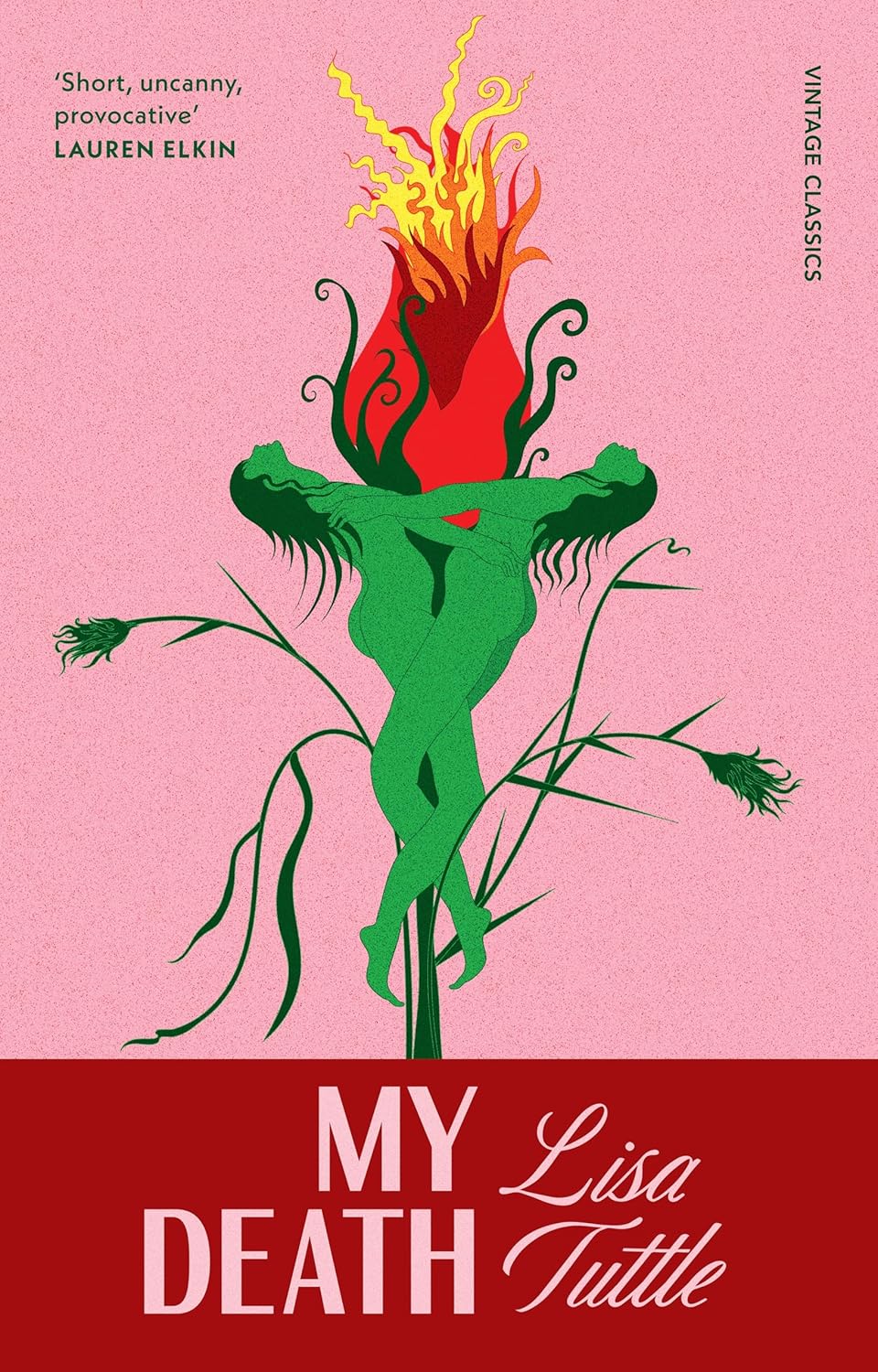
Paul March-Russell: I’m honoured to have Lisa Tuttle here to discuss her novella My Death, which was originally published by P.S. Publishing in 2004, reprinted by NYRB Classics, and is now available in a beautiful edition from Vintage. A number of Lisa’s other works are also being reprinted by Valancourt – A Nest of Nightmares and later this year Lost Futures, which was shortlisted for the Arthur C. Clarke Award in 1993. Lisa, it’s a delight to have you here. My Death is a wonderfully intricate work, so I’m going to be very careful to not give anything away. But what was it that first inspired you to write the novella?
Lisa Tuttle: It was a few things that came together. One is that I’ve always been interested in women writers, women artists, particularly women who’ve been sort of forgotten. I can’t think who it was, someone like Gail Godwin, who was recently talking about when she was at college, she always felt slightly embarrassed being particularly interested in women writers. It didn’t seem right. You were supposed to look at the great writers, and they were all men. Well, I’m from a slightly younger generation, and I think that by the time I got to college, there were women – women’s writing, women’s work, women’s history. The courses were just starting. This was back in 1970. So, I didn’t feel this wasn’t proper. It was like, no, now is the time to find out about all these forgotten women or the women who haven’t been celebrated.
I also read a lot of biographies and autobiographies by women and about women. And at one point, years ago, I thought I might write a biography, but it all seemed a bit too daunting. What suited me better was to write an imaginary biography of an imaginary writer or artist or muse. That was another subject that interested me: women playing the role of muse to a male artist or writer. I’d recently read a memoir of Robert Graves, can’t remember by whom (we’ve just moved house so my books are everywhere!). But one of the things was that the author and his wife went to live in Mallorca, and he had a letter of introduction to Graves, who was at that time living with the American poet and critic, Laura Riding, and the stories that he told about her just fascinated me. I was interested in writing about someone who’d been connected to a more famous male, but had her own talents, more than just being a muse. So, I took elements of Laura Riding’s life for my imaginary writer, and I began in a kind of semi-autobiographical fashion to write about a woman writer, who would have been around my age at the time.
The writer was widowed which I was not, and am still not, I’m very happy to say. But she had some of my own characteristics. That was a kind of a tease, in a way, because some of the things were true. I made her be from Texas, going to college in New York, and then coming over to Britain, winding up in Scotland. And the writer that she is interested in is someone she first encountered as a painted female figure, a kind of mythical person. Because that was another element. I’ve recently been going through my old notebooks, and some of the same names were in there from this story I’ve never written. It was called ‘The Fountain’, and there was a Willie Logan and a Hermione, I think, or Hermine. It was a sort of Circe story with a magical fountain and men being turned into animals. But anyway, I never wrote that, but it was something I was thinking about at the same time. And then Pete Crowther invited me to write a novella, and so suddenly I had a reason to write this, because I couldn’t really see it as a novel and it was way too complicated for a short story. And, in fact, I didn’t even know how it was going to end. When I began writing it, it was really just a character a bit like me researching someone who turns out to still be alive, so she can actually go and interview her, and then finding these rather odd connections or echoes of her life.
PMR: That’s fascinating. When I was a recently graduated PhD student in the early Noughties, around about the time that you’d have been writing My Death, Laura Riding had really come back into focus in terms of modernist studies. And there’s lots of other allusions here. You start with an epigram from the poet H.D., and again, we’ve had more recent reclamations of people like Leonora Carrington and Ithell Colquhoun. I was wondering whether you saw the novella as part of a process of reclamation? Is it contributing, not just as a kind of fictional biography, to that process of reclaiming women writers and artists from the past?
LT: For me, certainly. Leonora Carrington was very much on my radar, because when I was living in Austin, Texas, there was an exhibition of her work at the university. And I thought, whoa, she’s fantastic. And she was a writer as well, and I bought some of her books which were being reprinted by small presses back then in the 70s. So, Carrington was part of that. H.D., very much. I read two biographies of H.D, and I had her collected poems, and I was fascinated by her early life story, being picked up as a modernist writer, and her relationship with Ezra Pound, and her very much not traditional relationships and marriages and semi-marriages with both men and women. So, she was a fascinating character as well. But Ithell Colquhoun, I had not even heard of, but then I got an email from someone a couple of years ago. The strange thing is that there was something in The Guardian about her, I think, and I was reading about her, and thinking she sounds fascinating. Then I got this email from someone saying, was this one of the real women behind your idea? And I had to admit, no, I’d never heard of her until a week ago. It’s also quite exciting, I think, to find these writers and artists who have dropped out of sight, and are being constantly rediscovered. I love it. I love coming across an artist I haven’t heard of before, or a book by a writer, particularly when they’re women.
PMR: Exactly. It does seem to me that the republication of My Death is feeding into this whole process of reclaiming the work of early 20th century women writers and artists, but also more recent ones. So again, we think about people like Ann Quin and Anna Kavan and Maureen Duffy. Which brings me to my next question, because the other thing I really love are all these period details about Virago Press. So, the narrator has a copy of Helen Ralston’s novel In Troy (more echoes of H.D. I suspect) published by Virago, and there’s even a little account of how they went about reprinting their books, and the damage done to the original text. Was there also a reclaiming of the history of women’s presses and a revisiting of your own early life as a writer?
LT: I didn’t think, I’m going to reclaim women’s publishing history, I was just looking into my own recent past. In the 80s, I lived in Harrow and I joined a group called Women in Publishing, because it was a way of meeting other women since I didn’t go out to work. And I didn’t want to just meet people – I already knew people in the science fiction field – I felt like I needed some new friends of my own. And so I joined Women in Publishing and we would do things like type up things in the Virago offices or have conferences where some of the more established women publishers and editors would be. I was mainly with people working in publishing, but one year Jeanette Winterson and I were on the same committee. I even briefly provided maternity cover for Sarah Lefanu at the Women’s Press. It was just for a few months, but I was working with Tanith Lee and Carol Emshwiller, possibly Josephine Saxton. These were books that Sarah had bought and I’d be on the phone to her every couple of days. I wrote the Encyclopedia of Feminism as well, and when that was about to be published by Longmans, I was actually invited to a sales conference. There were all of these eye-opening facts about the reality of publishing, and I subsequently married someone there who had signed the contract for A Nest of Nightmares. We were both divorced and we’d run into each other at parties and things like that, and I think it was on our first or second date where I referred to A Nest of Nightmares, and I said, oh, I don’t know if you know it. He said, of course I know it, I read it. I said, well, I wouldn’t assume that you would go out and read something by me. And he said, Lisa, I published that book, I’m the one who bought it. And I said, no, no, no, no, no, that was Nann du Sautoy. She’s the one who took me out to lunch and commissioned the book, and he said, look who signed the contract. And he had. I hadn’t even realized he had been there. So, meeting other publishers and writers, who always complain about publishers of course, it’s always been a thing. But yeah, it was fun to have this character just going back to how things had been. Of course, things had changed a lot by the early 2000s, but everything I knew about publishing was from the 80s.
PMR: It’s an absolutely fascinating history. Women in Publishing has also been celebrated by the British Library with a whole bunch of links on their website, including an interview with yourself. And Rosy Mack has got a forthcoming book about the Women’s Press.
LT: Yes, I spoke with her.
PMR: So, it’s not just that this book is chiming with that reclamation of women’s writing from the early part of the 20th century, it’s also feeding into this other reclamation of the post-war enterprises of Women in Publishing, Virago, Women’s Press. It’s full of these lovely period details but a sense also of continuity over the decades that adds to the pleasure and grounding of the whole story.
You mentioned earlier that there were some biographical similarities between yourself and the narrator, and I wondered if you could say a little bit more about that, but also about the way in which there’s a doubling between the author, the narrator, and Helen Ralston. I don’t want to offer any plot spoilers, but would you say a little bit more about how that doubling emerged in the writing of the text?
LT: It’s very difficult to talk about because a lot of things that I write are sort of semi-conscious, or even unconscious, and quite often I draw on things from my own life without knowing it. I mean, I hadn’t realized that Ralston was a friend’s grandparent’s name. I don’t know if I knew it or if it was just a strange coincidence, but chances are I’d heard it, and it was connected with Scotland because that was where her grandparents were from. I often find that when critics are looking at things and talking about them, I just think, well, the way I work is I put something in because it just occurs to me when I’m writing. Only later do I think, that’s what it was about, there was a reason for that, it wasn’t just random. But at the time, it felt random – you know, where was her first job, who is this person, what name can I give them? And then it comes to seem more important or it has an echo with something. But I have to admit the doubling was not a conscious decision. It wasn’t like, oh, I’m going to do this, so that the reader will notice it or be happy about it or excited or question it. It’s just more happy accidents and coincidences, and I find that very often when I’m writing. Not just fiction writers but people doing research, I think, will probably recognize the way you stumble across so many serendipitous discoveries. You’re not even looking for it, you were looking for something else, and then you find the absolutely perfect detail. It’s just a kind of going with the flow, in a way.
PMR: And I’m assuming that the intricacy of the story must come through the drafting and redrafting as you incorporate those accidents and explore them further?
LT: Yes, I always think my first drafts are horrible. They’re very rough. Of course, the whole idea of a draft is not the same as when it used to be on a typewriter, and then you had to start retyping it. But I still do have a tendency to start over again rather than just trying to make little changes, because I feel it’s not good enough, you know? I will waste a lot of time just trying to rewrite something that I’ve just written. So, I think it’s often better, for me anyway, to just move on, and then when I go back to it, I can fix it. But I’ve just had this thought about something I’ve been working on for probably two years, which I haven’t been able to write because I’ve been busy with other things. The book opens going down a particular road that I’m describing, an imaginary road based on a real one, and I just started thinking, oh, I began in the wrong place, and I’ve just thought of a different opening for it.
PMR: Really?
LT: Yeah, completely different.
PMR: Wow, that also makes me think of something you said earlier, that you didn’t know what the ending was going to be for My Death…
LT: I know it seems unlikely, doesn’t it?
PMR: Again, no plot spoilers, but it’s not just the intricacy, it’s also about choosing whether this is going to be a short story, a novel or novella? Because the novella has a particular kind of form and structure to it, and critics will say, you need an epiphany or turning-point at the end, some kind of revelation, but if you’re working blind, the form becomes kind of interesting, doesn’t it?
LT: Well, it’s the way I usually work. Actually, though, usually about halfway I will realize what I’m aiming at, you know? But the very final ending is different than I was originally thinking it would be halfway through.
PMR: Yeah, I won’t say anything more about the ending, but it literally goes, whoa! And it throws you out, and then you go, oh, hold on a minute, I’ve got to re-read this, so it’s that classic short story or novella form, the twice-told tale. You’ve got to go back and read it all again which is so, so pleasurable. The other thing I wanted to pick up on, apart from that dramatic twist, is the way the novella seems to resolve itself – because, you know, this is a slippery tale we’re talking about – but it seems to suggest the presence of parallel universes, alternate timelines, which we see also in Lost Futures and some of your earlier short stories like ‘No Regrets’, the opening story in A Spaceship Built of Stone. What significance do you see that notion playing in your work more broadly? What is it about that theme that draws you in over and over again?
LT: It does… it does interest me. It has for a long time, I guess. Reading other people’s takes on these things like R.A. Lafferty. Not just alternate histories, but the whole idea of time travel, the idea that you could actually change the past and then what does that mean? One of the things that has had an impact on my writing of time travel stories is the very notion of alternate time streams and the actual theory behind that, not some kind of fantasy, of going back and changing the past. Although if it was real, you’d never know it, for the rest of the world would just be carrying on in its usual path. There’s some people in Hollywood who have written a script of My Death which they’re hoping to sell. And I got a phone call from them once, asking me, when does this happen and how does that happen? And I said, well, there is no explanation. Because it isn’t something that happens every day. So yeah, there probably are echoes of ideas like alternate realities, but there’s no explanation.
PMR: Exactly. Instead, that’s the mysterious effect the novella has because as an author you pause the reader and say, no, I can’t explain it. But in that moment, the story pulls me back in again, because now I’ve now got to re-read it from the start, and that reiteration is like a time-travelling effect. I’ve been here before but it’s not the same place.
LT: Yeah, it wasn’t like a conscious decision, like I’m going to play with time travel like that. It was because the story just evolved that way. And I didn’t worry too much about not explaining what happened. I didn’t have a clever magic trick or whatever, but that’s the thing about fantasy, right? It doesn’t always come with an explanation, unlike a magic trick, which can be unwound and explained.
PMR: And in that way, it’s such a wonderfully slippery tale. But that alternate timeline also seems to feed back into the reclaiming of women’s histories, an alternate way of looking at, in this case, the 20th century. So, it seems structurally connected to the whole point of the story. It’s not just a rabbit out of the hat, as it were.
LT: Oh yeah, definitely, it’s not meant to be. But you know, sometimes you read a book, and you really feel like this is my story, or it may not be your actual story, but there’s something in it that you then want to know about the writer. Like, how did you get to this, and where did this come from? And I suppose it’s why people then want to read biographies of writers or artists, because if their work speaks to you, then you sort of think the secret must be in them, and you may be horribly disappointed when they can’t explain the magic. Partly, then, My Death is a response to my feeling about certain books and certain authors, that you just feel this connection, even though the writers may have died before you were born. And you just wish you could have known them.
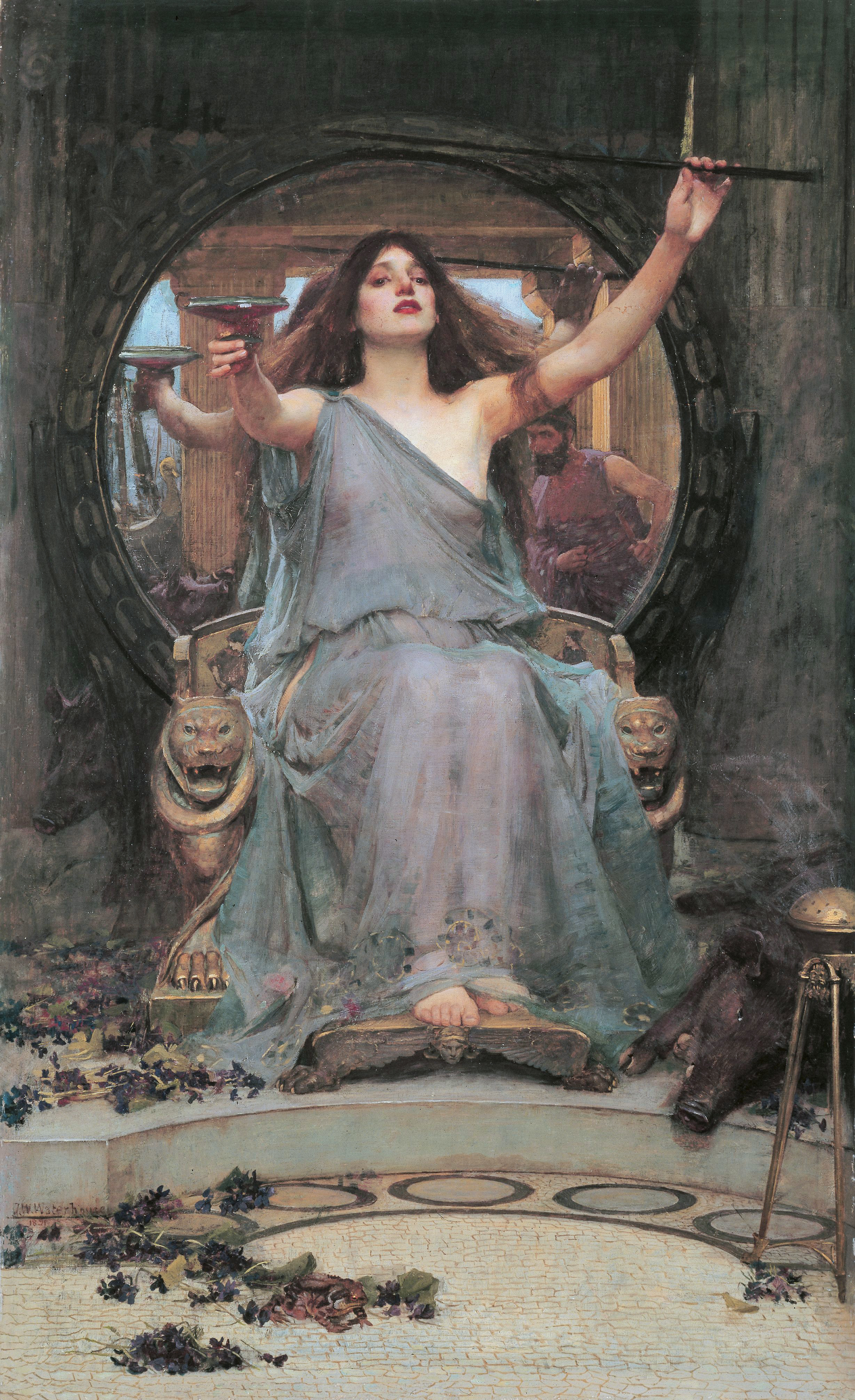
PMR: Which is very much what the narrator feels towards Helen when she encounters the Circe painting. And which also seems to evoke the mesmeric power that Circe has in The Odyssey or Helen of Troy in The Iliad. The painting also reminded me of the ‘fatal book’ in The Picture of Dorian Gray that possesses Dorian’s mind. Maybe that weird fiction, Gothic-y trope of the artwork that takes over its audience, alongside the time-travelling trope, is another way of thinking about the relationship between the reader and the novel?
John William Waterhouse, Circe offering the cup to Ulysses (1891)LT: I don’t know what I can say, really, except whether it’s a story, a visual image or a work of art, or even something that isn’t particularly a work of art, if you encounter it at an early age, it just takes over your mind or your imagination, and you think about it all the time. If you’re a lover of books, and if you’re a writer and a reader, it’s just one of those basic feelings that there’s some kind of deep magic involved.
PMR: It’s a visceral feeling, isn’t it? I think of being a 12-year-old and reading A Wizard of Earthsea for the first time, and literally being completely gripped by that story.
LT: Because you wanted to live in it.
PMR: Yeah, exactly. We’ve talked a lot about reclamation, so how does it feel for you to see your work coming back into print like this beautiful edition here?
LT: Wonderful. Particularly with My Death, because I felt how well it came out. You know, some people read it, and they loved it, and then it just kind of vanished. And of course, it was from a small press, and there were lots of other things for people to read. And then for it to be picked up… I mean, I couldn’t even believe it! But the editor at the NYRB got in touch with me via Facebook and just mentioned, well, I have a very small press but I’d be interested. And I’m thinking, well, it was published by a small press. Then I’m going, what? The New York Review of Books? NYRB? And not only that, NYRB Classics! I’m a classic! How amazing! It’s just great. I love it. And I’ve just sold the Catalan rights. It’s already out in Spanish and Italian. So, yeah, it’s wonderful, actually.
PMR: It’s definitely wonderful, and all these works need to be back in print, and we need new works as well once you’ve settled into your new home. I think that’s definitely the case. Lisa, thank you so much, it’s been a huge pleasure talking to you.
LT: Thank you.
Lisa Tuttle has written over a dozen fantasy, science-fiction and horror adult and YA novels, and hundreds of award-winning short stories collected in several volumes, including A Nest of Nightmares and The Dead Hours of the Night. She is the author of The Encyclopaedia of Feminism and currently writes a monthly science-fiction review column for The Guardian.
Paul March-Russell is the outgoing editor of Foundation and the co-commissioning editor for Gold SF (Goldsmiths Press). His Strange Horizons review of E.J. Swift’s When There are Wolves Again was shortlisted for the 2026 BSFA Awards.
Categories: Industry News
A Deeper Magic: Paul March-Russell in conversation with Lisa Tuttle
The following is an edited transcript, abridged from the original conversation that closed the BSFA/SFF AGM on 14 June 2026. The event was held online on Zoom.
Paul March-Russell: I’m honoured to have Lisa Tuttle here to discuss her novella My Death, which was originally published by P.S. Publishing in 2004, reprinted by NYRB Classics, and is now available in a beautiful edition from Vintage. A number of Lisa’s other works are also being reprinted by Valancourt – A Nest of Nightmares and later this year Lost Futures, which was shortlisted for the Arthur C. Clarke Award in 1993. Lisa, it’s a delight to have you here. My Death is a wonderfully intricate work, so I’m going to be very careful to not give anything away. But what was it that first inspired you to write the novella?
Lisa Tuttle: It was a few things that came together. One is that I’ve always been interested in women writers, women artists, particularly women who’ve been sort of forgotten. I can’t think who it was, someone like Gail Godwin, who was recently talking about when she was at college, she always felt slightly embarrassed being particularly interested in women writers. It didn’t seem right. You were supposed to look at the great writers, and they were all men. Well, I’m from a slightly younger generation, and I think that by the time I got to college, there were women – women’s writing, women’s work, women’s history. The courses were just starting. This was back in 1970. So, I didn’t feel this wasn’t proper. It was like, no, now is the time to find out about all these forgotten women or the women who haven’t been celebrated.
I also read a lot of biographies and autobiographies by women and about women. And at one point, years ago, I thought I might write a biography, but it all seemed a bit too daunting. What suited me better was to write an imaginary biography of an imaginary writer or artist or muse. That was another subject that interested me: women playing the role of muse to a male artist or writer. I’d recently read a memoir of Robert Graves, can’t remember by whom (we’ve just moved house so my books are everywhere!). But one of the things was that the author and his wife went to live in Mallorca, and he had a letter of introduction to Graves, who was at that time living with the American poet and critic, Laura Riding, and the stories that he told about her just fascinated me. I was interested in writing about someone who’d been connected to a more famous male, but had her own talents, more than just being a muse. So, I took elements of Laura Riding’s life for my imaginary writer, and I began in a kind of semi-autobiographical fashion to write about a woman writer, who would have been around my age at the time.
The writer was widowed which I was not, and am still not, I’m very happy to say. But she had some of my own characteristics. That was a kind of a tease, in a way, because some of the things were true. I made her be from Texas, going to college in New York, and then coming over to Britain, winding up in Scotland. And the writer that she is interested in is someone she first encountered as a painted female figure, a kind of mythical person. Because that was another element. I’ve recently been going through my old notebooks, and some of the same names were in there from this story I’ve never written. It was called ‘The Fountain’, and there was a Willie Logan and a Hermione, I think, or Hermine. It was a sort of Circe story with a magical fountain and men being turned into animals. But anyway, I never wrote that, but it was something I was thinking about at the same time. And then Pete Crowther invited me to write a novella, and so suddenly I had a reason to write this, because I couldn’t really see it as a novel and it was way too complicated for a short story. And, in fact, I didn’t even know how it was going to end. When I began writing it, it was really just a character a bit like me researching someone who turns out to still be alive, so she can actually go and interview her, and then finding these rather odd connections or echoes of her life.
PMR: That’s fascinating. When I was a recently graduated PhD student in the early Noughties, around about the time that you’d have been writing My Death, Laura Riding had really come back into focus in terms of modernist studies. And there’s lots of other allusions here. You start with an epigram from the poet H.D., and again, we’ve had more recent reclamations of people like Leonora Carrington and Ithell Colquhoun. I was wondering whether you saw the novella as part of a process of reclamation? Is it contributing, not just as a kind of fictional biography, to that process of reclaiming women writers and artists from the past?
LT: For me, certainly. Leonora Carrington was very much on my radar, because when I was living in Austin, Texas, there was an exhibition of her work at the university. And I thought, whoa, she’s fantastic. And she was a writer as well, and I bought some of her books which were being reprinted by small presses back then in the 70s. So, Carrington was part of that. H.D., very much. I read two biographies of H.D, and I had her collected poems, and I was fascinated by her early life story, being picked up as a modernist writer, and her relationship with Ezra Pound, and her very much not traditional relationships and marriages and semi-marriages with both men and women. So, she was a fascinating character as well. But Ithell Colquhoun, I had not even heard of, but then I got an email from someone a couple of years ago. The strange thing is that there was something in The Guardian about her, I think, and I was reading about her, and thinking she sounds fascinating. Then I got this email from someone saying, was this one of the real women behind your idea? And I had to admit, no, I’d never heard of her until a week ago. It’s also quite exciting, I think, to find these writers and artists who have dropped out of sight, and are being constantly rediscovered. I love it. I love coming across an artist I haven’t heard of before, or a book by a writer, particularly when they’re women.
PMR: Exactly. It does seem to me that the republication of My Death is feeding into this whole process of reclaiming the work of early 20th century women writers and artists, but also more recent ones. So again, we think about people like Ann Quin and Anna Kavan and Maureen Duffy. Which brings me to my next question, because the other thing I really love are all these period details about Virago Press. So, the narrator has a copy of Helen Ralston’s novel In Troy (more echoes of H.D. I suspect) published by Virago, and there’s even a little account of how they went about reprinting their books, and the damage done to the original text. Was there also a reclaiming of the history of women’s presses and a revisiting of your own early life as a writer?
LT: I didn’t think, I’m going to reclaim women’s publishing history, I was just looking into my own recent past. In the 80s, I lived in Harrow and I joined a group called Women in Publishing, because it was a way of meeting other women since I didn’t go out to work. And I didn’t want to just meet people – I already knew people in the science fiction field – I felt like I needed some new friends of my own. And so I joined Women in Publishing and we would do things like type up things in the Virago offices or have conferences where some of the more established women publishers and editors would be. I was mainly with people working in publishing, but one year Jeanette Winterson and I were on the same committee. I even briefly provided maternity cover for Sarah Lefanu at the Women’s Press. It was just for a few months, but I was working with Tanith Lee and Carol Emshwiller, possibly Josephine Saxton. These were books that Sarah had bought and I’d be on the phone to her every couple of days. I wrote the Encyclopedia of Feminism as well, and when that was about to be published by Longmans, I was actually invited to a sales conference. There were all of these eye-opening facts about the reality of publishing, and I subsequently married someone there who had signed the contract for A Nest of Nightmares. We were both divorced and we’d run into each other at parties and things like that, and I think it was on our first or second date where I referred to A Nest of Nightmares, and I said, oh, I don’t know if you know it. He said, of course I know it, I read it. I said, well, I wouldn’t assume that you would go out and read something by me. And he said, Lisa, I published that book, I’m the one who bought it. And I said, no, no, no, no, no, that was Nann du Sautoy. She’s the one who took me out to lunch and commissioned the book, and he said, look who signed the contract. And he had. I hadn’t even realized he had been there. So, meeting other publishers and writers, who always complain about publishers of course, it’s always been a thing. But yeah, it was fun to have this character just going back to how things had been. Of course, things had changed a lot by the early 2000s, but everything I knew about publishing was from the 80s.
PMR: It’s an absolutely fascinating history. Women in Publishing has also been celebrated by the British Library with a whole bunch of links on their website, including an interview with yourself. And Rosy Mack has got a forthcoming book about the Women’s Press.
LT: Yes, I spoke with her.
PMR: So, it’s not just that this book is chiming with that reclamation of women’s writing from the early part of the 20th century, it’s also feeding into this other reclamation of the post-war enterprises of Women in Publishing, Virago, Women’s Press. It’s full of these lovely period details but a sense also of continuity over the decades that adds to the pleasure and grounding of the whole story.
You mentioned earlier that there were some biographical similarities between yourself and the narrator, and I wondered if you could say a little bit more about that, but also about the way in which there’s a doubling between the author, the narrator, and Helen Ralston. I don’t want to offer any plot spoilers, but would you say a little bit more about how that doubling emerged in the writing of the text?
LT: It’s very difficult to talk about because a lot of things that I write are sort of semi-conscious, or even unconscious, and quite often I draw on things from my own life without knowing it. I mean, I hadn’t realized that Ralston was a friend’s grandparent’s name. I don’t know if I knew it or if it was just a strange coincidence, but chances are I’d heard it, and it was connected with Scotland because that was where her grandparents were from. I often find that when critics are looking at things and talking about them, I just think, well, the way I work is I put something in because it just occurs to me when I’m writing. Only later do I think, that’s what it was about, there was a reason for that, it wasn’t just random. But at the time, it felt random – you know, where was her first job, who is this person, what name can I give them? And then it comes to seem more important or it has an echo with something. But I have to admit the doubling was not a conscious decision. It wasn’t like, oh, I’m going to do this, so that the reader will notice it or be happy about it or excited or question it. It’s just more happy accidents and coincidences, and I find that very often when I’m writing. Not just fiction writers but people doing research, I think, will probably recognize the way you stumble across so many serendipitous discoveries. You’re not even looking for it, you were looking for something else, and then you find the absolutely perfect detail. It’s just a kind of going with the flow, in a way.
PMR: And I’m assuming that the intricacy of the story must come through the drafting and redrafting as you incorporate those accidents and explore them further?
LT: Yes, I always think my first drafts are horrible. They’re very rough. Of course, the whole idea of a draft is not the same as when it used to be on a typewriter, and then you had to start retyping it. But I still do have a tendency to start over again rather than just trying to make little changes, because I feel it’s not good enough, you know? I will waste a lot of time just trying to rewrite something that I’ve just written. So, I think it’s often better, for me anyway, to just move on, and then when I go back to it, I can fix it. But I’ve just had this thought about something I’ve been working on for probably two years, which I haven’t been able to write because I’ve been busy with other things. The book opens going down a particular road that I’m describing, an imaginary road based on a real one, and I just started thinking, oh, I began in the wrong place, and I’ve just thought of a different opening for it.
PMR: Really?
LT: Yeah, completely different.
PMR: Wow, that also makes me think of something you said earlier, that you didn’t know what the ending was going to be for My Death…
LT: I know it seems unlikely, doesn’t it?
PMR: Again, no plot spoilers, but it’s not just the intricacy, it’s also about choosing whether this is going to be a short story, a novel or novella? Because the novella has a particular kind of form and structure to it, and critics will say, you need an epiphany or turning-point at the end, some kind of revelation, but if you’re working blind, the form becomes kind of interesting, doesn’t it?
LT: Well, it’s the way I usually work. Actually, though, usually about halfway I will realize what I’m aiming at, you know? But the very final ending is different than I was originally thinking it would be halfway through.
PMR: Yeah, I won’t say anything more about the ending, but it literally goes, whoa! And it throws you out, and then you go, oh, hold on a minute, I’ve got to re-read this, so it’s that classic short story or novella form, the twice-told tale. You’ve got to go back and read it all again which is so, so pleasurable. The other thing I wanted to pick up on, apart from that dramatic twist, is the way the novella seems to resolve itself – because, you know, this is a slippery tale we’re talking about – but it seems to suggest the presence of parallel universes, alternate timelines, which we see also in Lost Futures and some of your earlier short stories like ‘No Regrets’, the opening story in A Spaceship Built of Stone. What significance do you see that notion playing in your work more broadly? What is it about that theme that draws you in over and over again?
LT: It does… it does interest me. It has for a long time, I guess. Reading other people’s takes on these things like R.A. Lafferty. Not just alternate histories, but the whole idea of time travel, the idea that you could actually change the past and then what does that mean? One of the things that has had an impact on my writing of time travel stories is the very notion of alternate time streams and the actual theory behind that, not some kind of fantasy, of going back and changing the past. Although if it was real, you’d never know it, for the rest of the world would just be carrying on in its usual path. There’s some people in Hollywood who have written a script of My Death which they’re hoping to sell. And I got a phone call from them once, asking me, when does this happen and how does that happen? And I said, well, there is no explanation. Because it isn’t something that happens every day. So yeah, there probably are echoes of ideas like alternate realities, but there’s no explanation.
PMR: Exactly. Instead, that’s the mysterious effect the novella has because as an author you pause the reader and say, no, I can’t explain it. But in that moment, the story pulls me back in again, because now I’ve now got to re-read it from the start, and that reiteration is like a time-travelling effect. I’ve been here before but it’s not the same place.
LT: Yeah, it wasn’t like a conscious decision, like I’m going to play with time travel like that. It was because the story just evolved that way. And I didn’t worry too much about not explaining what happened. I didn’t have a clever magic trick or whatever, but that’s the thing about fantasy, right? It doesn’t always come with an explanation, unlike a magic trick, which can be unwound and explained.
PMR: And in that way, it’s such a wonderfully slippery tale. But that alternate timeline also seems to feed back into the reclaiming of women’s histories, an alternate way of looking at, in this case, the 20th century. So, it seems structurally connected to the whole point of the story. It’s not just a rabbit out of the hat, as it were.
LT: Oh yeah, definitely, it’s not meant to be. But you know, sometimes you read a book, and you really feel like this is my story, or it may not be your actual story, but there’s something in it that you then want to know about the writer. Like, how did you get to this, and where did this come from? And I suppose it’s why people then want to read biographies of writers or artists, because if their work speaks to you, then you sort of think the secret must be in them, and you may be horribly disappointed when they can’t explain the magic. Partly, then, My Death is a response to my feeling about certain books and certain authors, that you just feel this connection, even though the writers may have died before you were born. And you just wish you could have known them.
PMR: Which is very much what the narrator feels towards Helen when she encounters the Circe painting. And which also seems to evoke the mesmeric power that Circe has in The Odyssey or Helen of Troy in The Iliad. The painting also reminded me of the ‘fatal book’ in The Picture of Dorian Gray that possesses Dorian’s mind. Maybe that weird fiction, Gothic-y trope of the artwork that takes over its audience, alongside the time-travelling trope, is another way of thinking about the relationship between the reader and the novel?
John William Waterhouse, Circe offering the cup to Ulysses (1891)LT: I don’t know what I can say, really, except whether it’s a story, a visual image or a work of art, or even something that isn’t particularly a work of art, if you encounter it at an early age, it just takes over your mind or your imagination, and you think about it all the time. If you’re a lover of books, and if you’re a writer and a reader, it’s just one of those basic feelings that there’s some kind of deep magic involved.
PMR: It’s a visceral feeling, isn’t it? I think of being a 12-year-old and reading A Wizard of Earthsea for the first time, and literally being completely gripped by that story.
LT: Because you wanted to live in it.
PMR: Yeah, exactly. We’ve talked a lot about reclamation, so how does it feel for you to see your work coming back into print like this beautiful edition here?
LT: Wonderful. Particularly with My Death, because I felt how well it came out. You know, some people read it, and they loved it, and then it just kind of vanished. And of course, it was from a small press, and there were lots of other things for people to read. And then for it to be picked up… I mean, I couldn’t even believe it! But the editor at the NYRB got in touch with me via Facebook and just mentioned, well, I have a very small press but I’d be interested. And I’m thinking, well, it was published by a small press. Then I’m going, what? The New York Review of Books? NYRB? And not only that, NYRB Classics! I’m a classic! How amazing! It’s just great. I love it. And I’ve just sold the Catalan rights. It’s already out in Spanish and Italian. So, yeah, it’s wonderful, actually.
PMR: It’s definitely wonderful, and all these works need to be back in print, and we need new works as well once you’ve settled into your new home. I think that’s definitely the case. Lisa, thank you so much, it’s been a huge pleasure talking to you.
LT: Thank you.
Lisa Tuttle has written over a dozen fantasy, science-fiction and horror adult and YA novels, and hundreds of award-winning short stories collected in several volumes, including A Nest of Nightmares and The Dead Hours of the Night. She is the author of The Encyclopaedia of Feminism and currently writes a monthly science-fiction review column for The Guardian.
Paul March-Russell is the outgoing editor of Foundation and the co-commissioning editor for Gold SF (Goldsmiths Press). His Strange Horizons review of E.J. Swift’s When There are Wolves Again was shortlisted for the 2026 BSFA Awards.
Categories: Industry News
Montréal 2027 Adds Addison and Doctorow as Guests of Honor
Montréal 2027, the 85th World Science Fiction Convention, has added Linda D. Addison and Cory Doctorow as guests of honor. Doctorow will be toastmaster for Montréal 2027.
Addison and Doctorow join previously announced guests of honor Chris Barkley, Jeph Jacques, Yves Meynard, and Jo Walton. Montréal 2027 Worldcon will be held September 2-6, 2027 at the Palais des congrès de Montréal in Québec, Canada. For more information, see the …Read More
Categories: Industry News, Industry News Home
Rushdie Receives NBF Lifetime Achievement Award
The National Book Foundation hasannounced that it will present Salman Rushdie with the 2026 Medal for Distinguished Contribution to American Letters (DCAL) at this year's National Book Awards Ceremony on November 18, 2026. Author Kiran Desai will present the award.
The DCAL Medal was created in 1988 to recognize a lifetime of literary achievement. Prior recipients of genre interest include Ursula K. Le Guin, Toni Morrison, and Walter Mosley. The …Read More
Categories: Industry News, Industry News Home
Work for Hire vs. Fiction Contracts
by Will McDermott
Read by Misha Grifka WanderIf you write narrative content for a video, role-playing, or board game—or even write fiction within a game world or for an intellectual property (IP) like Marvel or Star Wars—you will likely be asked to sign a Work for Hire (WFH) contract. These contracts have several major differences from fiction contracts you may have signed when writing your own original fiction. If you’re looking to make the leap from writing original fiction to working within a licensed game or entertainment property, this article will break down some of the differences you can expect to find between writing for yourself versus writing for someone else.
Rights OwnershipChief among these differences is that you will not own the material you create for that IP. Essentially, you are playing in someone else’s sandbox. WFH contracts almost always stipulate that any materials you deliver under that contract are owned by the license holder upon delivery.
Here is an example taken from such a clause: “Author assigns and transfers all intellectual property rights in the work, and the ownership of and sole rights to the intellectual property rights in the work shall be vested in [COMPANY] from the date of delivery of the work.”
Some WFH contracts will take this a step further by specifying that the WFH contractor freely assigns all rights to the work to the company even when other laws, contracts, or qualifications may say otherwise. Plus, a WFH contract may stipulate you give up your rights to derivative works based on the content delivered. This means later authors working in the IP can freely use any character, locales, plot points, etc. that you created. You no longer own or control their use.
Lastly, some WFH contracts state that revisions are at the sole discretion of the company. Here is an example: The company may “publish, produce, or market work in whatever form or format it deems fit in its entire discretion.”
WFH writers rarely retain any rights to their work, but I have seen one contract that included specific clauses dictating how the author could reprint their story after first use. This involved seeking permission in writing from the company and following their rules about the use of those elements of the story derived from the IP.
Confidentiality ClausesThe other major addition to most WFH contracts is a section on confidentiality. This is especially prevalent in the game industry due to the intense competition between game companies. They must guard their secrets (game titles, release dates, settings, game mechanics, etc.) for many reasons. For example, they don’t want competitors to get wind of an upcoming product and try to beat them to market. They also don’t want to undercut their marketing efforts until the time is right to begin releasing information.
These companies have a vested interest in ensuring that their contractors keep any proprietary information confidential. Here is an example confidentiality clause: “Contractor shall not provide, leak, disclose, or use Confidential Information acquired in connection with this Agreement to any third party without prior written consent.”
The rest of the confidentiality clause details what information is considered confidential (often covering a very broad swathe), when and how much information the contractor can disclose (usually nothing until after the game has been officially announced), and, most importantly, the ramifications and remediation the company may seek if the contractor leaks confidential information. Most often, the immediate result will be termination, but the company could take legal action as well.
Many WFH contracts also demand the contractor return or destroy all confidential information provided to them once the work has been completed. I have rarely seen these clauses enforced, but it is a good idea to remove this material from your physical and digital files at the end of the contract to avoid any unintentional leaks (say if your laptop gets stolen or your files hacked).
Even when you sign a contract with a section on confidentiality, you may also be required to sign a non-disclosure agreement. NDAs are common practice in the game industry and IP tie-in fiction. This topic is discussed in another article in this series, but it’s important to note that NDAs and confidentiality agreements do not prevent you from discussing the contract with your attorney, or any payments or royalties with your accountant.
Other DifferencesRights and confidentiality are the main differences between original fiction and WFH contracts, but here are a few other items to consider:
- Royalties and scope: Most WFH contracts pay a flat fee for the work, and there will be no provision for royalties. The scope of the work required (500 trivia questions, 100 quest cards, etc.) will be spelled out in the contract or an addendum, along with deadlines. You will often get paid for milestones and/or final delivery, and that will be the end of it. When writing fiction for a game world, you may or may not get royalties depending on the publisher and your status—some tie-in publishers do pay an advance and/or royalties, but not all.
- Author credit: Whether your name will appear on the game is heavily dependent on the company. Some game companies do not include any credits in their games and attribute the creation of the game to the entire design studio. Other game companies celebrate all contributors on a credits page in the rulebook. Either way, there may be no clause in the contract that ensures your name will be attached to the product.
- Author copies: Many WFH contracts don’t stipulate that you be provided a copy of the game or published product. Many companies do provide these anyway, but you may need to request that copy once it has been published. The common fiction contract practice of providing author copies (especially when the pay is low) is notably absent from WFH contracts.
The reality is that if you want to write for the game industry, you will often have to sign a WFH contract. It’s the way that business is done in this industry. The good news is that many game companies seek external writers because they don’t employ staff writers, so there is a decent amount of work out there for contract writers. Plus, the video, board, and role-playing game industries all run on reputation. You will hear about companies that don’t treat their contract writers well. Ask me. I have tales.
Explore more articles from Writing for Hire
Will McDermott turned a love of science fiction and games into a writing career. He has published nine novels, 30 short stories, and helped create numerous worlds, characters, and stories for card, board, and video games. His fiction is often set in gaming universes, including Magic: The Gathering, Warhammer 40K, Renegade Legion Universe, and Mage Wars. Will is known for bringing larger-than-life characters alive, including Warhammer’s Kal Jerico and Mad D’onne, Magic’s Balthor the Stout, and Night Stalker’s Carl Kolchak. Check out willmcdermott.com for more.
The post Work for Hire vs. Fiction Contracts appeared first on SFWA - The Science Fiction & Fantasy Writers Association.
Categories: Industry News, Industry News Home