Feed aggregator
2026 Hugo, Lodestar & Astounding Awards Winners
The winners of the Hugo Awards, the Astounding Award for Best New Writer, and the Lodestar Award for Best Young Adult Book were announced on August 30, 2026 by LAcon V, the 84th World Science Fiction Convention.
The winners are:
Best Novel
- WINNER: The Everlasting,Alix E. Harrow (Tor US; Tor UK) amazon / bookshop
- A Drop of Corruption, Robert Jackson Bennett (Del Rey; Hodderscape) amazon / bookshop
The post 2026 Hugo, Lodestar & <i>Astounding</i> Awards Winners appeared first on Locus.
Categories: Industry News, Industry News Home
Press Release August 28, 2026
SFWA Names Nancy Kress as 43rd Damon Knight Memorial Grand Master
For Immediate Release
During a Fireside Chat on Friday, August 28 at this year’s Worldcon in Los Angeles (LAcon V), the Science Fiction and Fantasy Writers Association (SFWA) was proud to announce the latest recipient of its Damon Knight Memorial Grand Master Award: Nancy Kress. SFWA President Kate Ristau and Operations Director Russell Davis were on-scene to celebrate Kress’s extensive contributions to the genre in community.
The SFWA Damon Knight Memorial Grand Master Award recognizes “lifetime achievement in science fiction and/or fantasy.” It is named after author Damon Knight, SFWA’s founder and the organization’s 13th Grand Master. Initially, the Grand Master wasn’t given out every year, but from 1975 to 2026 much has changed in our field, including the consistency with which we award this prestigious post. The Grand Master is a title usually conferred well in advance of SFWA’s next Nebula Awards Conference, and its announcement creates more opportunities to inspire excellence in the field, on the road to the Nebula Ballot and Finalist section.
SFWA’s 43rd Grand Master joins a group of powerful writers, including N.K. Jemisin, Nicola Griffith, Peter S. Beagle, Connie Willis, Nalo Hopkinson, Ursula K. Le Guin, Ray Bradbury, Anne McCaffrey, Robin McKinley, Joe Haldeman, among other legends of genre fiction.
Nancy Kress is the author of thirty novels, four story collections, and three books on
writing fiction. Her work has won six Nebulas, two Hugos, a Sturgeon, and the John W. Campbell Memorial Award. Her most recent novel, Observer, co-written with Dr. Robert Lanza, concerns the nature of consciousness, reality, and love. Her forthcoming novel set in the court of Henry VIII, The Queen’s Witch, marks a return to her roots in fantasy. Nancy’s work has been translated into nearly two dozen languages, none of which she can read. She has taught writing at various venues in the United States and abroad, including both Clarions, fifteen years co-teaching with Walter Jon Williams at the intense workshop Taos Toolbox, workshops in Beijing, and a semester as Picador Guest Lecturer at the University of Leipzig. Nancy lives in Seattle with her husband, writer Jack Skillingstead, and Pippin, the world’s most stubborn Chihuahua.
SFWA President Kate Ristau reflects on the timeliness of this selection:
When we choose a SFWA Grand Master, the discussion begins with the Past Presidents. Year after year, Nancy’s name has come up as an author who is long overdue for this award. She has made an incredible impact on our industry not only with her work, but also with her teaching at both Clarions and Taos Toolbox, as well as workshops in Beijing and Leipzig.
She has spent decades writing at the cutting edge of genetics, biotechnology, and human transformation, asking what happens when science changes not only our world, but our understanding of what it means to be human.
There could not be a more prescient time to honor Nancy’s contributions. As we confront the impact of AI on our work and on our livelihoods, Nancy reminds us what it means to be human: to question, to imagine, to connect. Not only that, but to recognize that our humanity cannot be separated from the choices we make about our future.
Former SFWA Presidents further attest to the strength of Kress’s work and contributes to her community:
I met Nancy when we were both teaching at Taos Toolbox. She was as smart, gracious, and generous as everyone in the industry says. I’m tremendously pleased to see her join the ranks of SFWA’s Grand Masters and I know she’ll continue to contribute to the new generations of writers following in her illustrious footsteps.
Jeffe Kennedy (SFWA President, 2021-2024)
Nancy Kress is a master of realistic science fiction that draws you in and keeps you there with her inventive stories and her memorable characters. Her writing is what Hugo Gernsback had in mind when he helped invent the genre.
Paul Levinson (SFWA President, 1998-2001)
“Good writing + good science = an extraordinary talent.”
Barbara Hambly (SFWA President, 1994-1996)
SFWA’s next Nebula Awards Conference will be held in Seattle, June 3-7, 2027, where the Damon Knight Memorial Grand Master Award will be formally bestowed upon Nancy Kress.
The program theme is INTO THE UNKNOWN, and preliminary programming announcements will emerge in September 2026. Conference tickets are on sale for $275 until December 31, 2026, and SFWA is looking forward to an event that will cultivate strong conversations around the state of genre. It is this organization’s privilege to start that conversation by celebrating Grand Master Nancy Kress‘s tremendous accomplishments across science fiction, fantasy, and related genres.
The post Press Release August 28, 2026 appeared first on SFWA - The Science Fiction & Fantasy Writers Association.
Categories: Industry News, Industry News Home
Fringe Festivals: Where New SFF Theater Is Born
by Monica Cross
Read by Liz J. BradleyIn 2018, I sat in a bar in Ybor City, Florida, and watched a Martian priestess draw tarot cards. Each card corresponded to a video entry from the archive that she had come to Earth to steal. The video entries were that of the first Mars colony mission. As each card was drawn, the priestess embodied one of the original crew members in her search for answers to what happened to Earth’s ecosystem. Her goal was to understand why similar things occurred on the terraformed Mars.
L. Nicol Cabe in The Sybil of Mars at Tucson Fringe 2017. Photo by JJ Snyder Photography.The Sibyl of Mars was performed by its author, L. Nicol Cabe, who stood alone on stage, wearing a flight suit. She had nothing but a chair, a tablet, and her tarot deck. At the end of the show, the sibyl used the tarot cards drawn throughout the hour-long performance to produce a reading that was a call to arms for the audience about how to save our own planet from ecological collapse. Seven years later, I still think about the simplicity of the staging, the complexity of the writing, and the immediacy of the performance. This sort of science fiction and fantasy frequently graces the stages of fringe festivals across the world.
What Is Fringe?Fringe festivals started over 70 years ago with the Edinburgh Festival Fringe and celebrate original and often experimental performances. A fringe festival does not produce shows, but it provides a framework for artists to present their own work. Writers who want their work done at fringe are either going to produce it themselves or need to find a producer to take on the project.
Most fringe festivals are open to improv, stand-up, dramatic work, musicals, puppets, you name it, and these festivals are often uncensored and unjuried. So while each fringe has its own organizer, culture, and process, there are some common things you can expect at most festivals. For instance, many use a lottery system: Artists apply and names are drawn until there are no slots left.
Jenny Aldrich Walker as Roxanne and Donald Walker as Cyrano in Cyrano on the Moon written and directed by Monica Cross at the Tampa International Fringe Festival in 2017.There are some fringe festivals that are curated. They select participants in order to maintain a specific feel across their entire event. Whether they are curated or unjuried, there is an expectation among fringe festivals that the shows will be fresh and innovative work.
World Fringe maintains a list of fringe festivals across the globe. Check out their website for more information and to find a fringe near you.
SFF at FringeIt’s not only the unjuried nature of most fringe festivals that makes them an ideal setting for new science fiction and fantasy plays; it is also the culture of experimentation. Between the relative scarcity of SFF in theater and SFF plays’ tendency toward pushing theatrical limitations, SFF is ideal for the fringe environment. There is a buzz that surrounds fringe festivals, and they attract a very loyal following among a certain type of theatergoer. Most fringe attendees are eager to see something that they can’t get in a mainstream theater. Often, the weirder a show is, the more attention it will receive.
J. Merrill Motz as Chewy in Paper Soul’s 2018 MN Fringe Production of SOFT by J. Merrill Motz.During my times at fringe festivals, I have found plays of a speculative nature to be well attended and well received. I have seen everything at fringe from an interactive space-adventure play for children (Remy Raygun of the Space Brigade: A Build-Your-Own Space Opera written by Jacob Gulliver and Kyle Dekker) to a dystopian one-man show (Soft written by J. Merrill Motz) about a “nice guy” who is willing to literally torture himself in order to match on an experimental dating app. And I saw them both the same weekend at the Minnesota Fringe Festival.
Why Fringe?Some playwrights create with the fringe as the final destination for their work. These are the audiences and this is the community that their work is made for. Some of these writers are local to a large fringe that they write and produce for regularly, while others travel around from one festival to another, touring the same show, sometimes for years. The network of festivals to which artists tour a show is often called “the fringe circuit.” Typically, touring shows are done by solo artists or small groups that write or devise their own material and then also perform it.
Alex Kingsley and J.R. Steel in Unplanned Obsolescence by Alex Kingsley at Philadelphia Fringe Festival in 2023. Photo by Isaiah White.Other playwrights create shows with the idea of fringe as a starting place for their work. The fringe production becomes “proof of concept” for other theater companies that might be interested in the script. Writers with this in mind might focus on inviting reviewers to their fringe show and getting high-quality photos.
SFF Fringe SuccessMy most successful play, Cyrano on the Moon, started as a show that I took to the Tampa International Fringe Festival in 2017.
Unplanned Obsolescence, which fellow SFWA member Alex Kingsley wrote for the Philadelphia Fringe Festival in 2023, was so popular that it was standing room only by the final performance of that run. Unplanned Obsolescence was later produced by Gender Fucked Productions as a staged reading at Trans Scribe: A New World Festival (Steppenwolf Theatre, Chicago).
Manuel Solis-Bauza, Charis Watler, and Isla Llorens in The Vast of Darkness by Bethany Dickens Assaf at Orlando Fringe 2024. Directed by Joe Llorens. Photo by Gontran Durocher.In recent years, a science fiction play won an award at one of the largest fringe festivals in North America: The Vast of Darkness by Bethany Dickens Assaf won the Critics’ Choice Award for Best Play-Drama at Orlando Fringe in 2024, and it was remounted at Orlando’s mini-fringe, FESTN4, the next year. Orlando is the longest-running fringe festival in the United States, making that a significant recognition among fringe artists.
Go Forth and Fringe!If you are writing an SFF play, I want to encourage you to consider fringe as an avenue for producing the play. I suggest starting by going to fringe yourself and checking out the work. Talk to artists whose work you like. Fringe artists frequently attend as many other shows as they can, and there are places where artists and audience members can congregate to discuss shows. If you are looking for a producer, reach out to groups that seem to work with playwrights and see if you can pitch them a show idea. If you are interested in self-producing, put a team together and start working on it.
Explore more articles from SFF of Screen and Stage
Monica Cross is a neurodivergent (ADHD/Dyslexic) playwright and dramaturg in Wisconsin. Her work has been produced at Silk Moth Stage, Whiskey Theatre Factory, MadLab, Otherworld Theatre Company, Theatre Odyssey, and the Hippodrome Theatre, as well as various fringe festivals and universities. She has been a finalist for Wisconsin Wrights, semifinalist for Shakespeare’s New Contemporaries and The O’Neill National Playwrights Conference. She was awarded the John Ringling Towers Individual Artist Award for Performing Arts, 2018, and she was a Fellow at the Hermitage Artist Retreat, 2019. She is a proud member of the Dramatists Guild and the Science Fiction and Fantasy Writers Association.
The post Fringe Festivals: Where New SFF Theater Is Born appeared first on SFWA - The Science Fiction & Fantasy Writers Association.
Categories: Industry News, Industry News Home
Robin Johnson (1937-2026)
Fan and organizer Robin Johnson, 89, died July 6, 2026 in Ballarat, Australia of underlying causes after a fall.
Johnson was born March 9, 1937 and lived variously in Melbourne, Sydney, Hobart, and Ballarat, as well as in England. He chaired the first Australian Worldcon in 1975 as well as Thylacons 1-3. He was awarded the Ditmar Awards Special Award in 1974 and in 1983, and he received the Big …Read More
The post Robin Johnson (1937-2026) appeared first on Locus.
Categories: Industry News, Industry News Home
2026 WSFA Small Press Award Finalists
Finalists for the 2026 Washington Science Fiction Association (WSFA) Small Press Award for Short Fiction have been announced:
- Not a Fish , Andrew Dykstal (Beneath Ceaseless Skies 6/12/25)
- Half Life , Stephen Harper (Skull X Bones)
- The Last Mardi Gras , Raven Jakubowski (DreamForge Anvil6/1/25)
- The Teleporting Disaster Fairy , Rati Mehrotra (Uncanny 11-12/25)
- Blackrock , R.M. Olson (Skull X Bones)
- Billionaire's Tears …Read More
The post 2026 WSFA Small Press Award Finalists appeared first on Locus.
Categories: Industry News, Industry News Home
Editorial Changes at Nightmare and Lightspeed
Wendy N. Wagner has announced that she will bestepping down as editor-in-chief of Nightmare Magazine to focus on writing, with the December 2026 issue being her last. Wagner wrote,
On the plus side,I'm simply returning the reins to our founder, John Joseph Adams. I am absolutely thrilled to see what he'll do now that he's had a bit of rest; his amazing work as a horror short fiction editor is …Read More
The post Editorial Changes at <i>Nightmare</i> and <i>Lightspeed</i> appeared first on Locus.
Categories: Industry News, Industry News Home
Using Nature to Build Speculative Worlds for Readers of Any Age
by Gabrielle Kirouac Byrne
Read by the authorThe Victorians got at least one thing right. In the wake of new technologies and Darwin’s trip on the HMS Beagle, citizen science flourished. The wealth of new discoveries (and people’s access to information about them) stirred hearts and grew in scope and ferocity. All anyone needed to make a potentially valuable contribution was curiosity, a way to take notes, and their own eyes. That spirit of citizen discovery continues today. Whether it’s through binoculars, satellites, or the naked eye, there’s always more to understand and investigate—and we can all take the case.
Victorians loved scientific exploration, but many also loved to combine scientific exploration with fantasy, as in this illustration of a “boa” or “hydra” depicted in Curious creatures in zoology by John Ashton, 1890 (p. 290). Ashton claimed these were found in Italy.Source: Biodiversity Heritage Library. Applying Familiar Patterns to Fantasy Particulars
Human brains are built for pattern recognition, and we’re a curious bunch. Throughout our lives, we examine the world and collect data to make patterns. On top of that, writers tend to be amazing observers and good at asking questions. We can use these truths to our very great advantage when we create our speculative worlds by building on patterns we know exist in nature.
A kitten eats and must find food. A bear eats and must find food. I eat and must find food. Therefore, I can imagine that a dragon must also eat and find food. Connecting a fantastical element (dragons) to an observable, obvious pattern (creatures need to eat) can enrich our stories. Multiplied across a world, these simple, familiar connections also help readers inherently connect to that fictional place, even when it’s different in all the particulars.
While the scale and amount of detail we share depends on our word count and our audience, this worldbuilding approach works for readers of any age. We are all in relationship with our world no matter how old we are. All fictional universes combine the strange with the familiar to get reader buy-in, whether it’s an epic adult saga or a middle grade stand-alone. Nature questions help integrate and explore the strange through the familiar. Younger readers may be especially receptive to these patterns of connections because they are still in the process of actively building these observations to understand their own place and power in this world.
Victorians thought the Monster of Lake Fagua lived in Chile.Via Wikimedia Commons. Basic Needs Are the Building Blocks
Start by applying questions about the basic needs of living beings to your worldbuilding. I’ve included a list of sample questions below. Begin with one creature/animal—ideally one you expect to be at least tangentially relevant to your story—but you can also consider the same questions for related creatures that come up. Most, if not all, of these questions are also relevant to humans/humanoids, and it can be elucidating to use them with your human characters. It’s deceptively simple, but you may be surprised by the trove of information you glean.
Keep in mind that, particularly when writing for kids, even small details can fuel fantastic scenes. Pick your poison (perhaps literally) and these moments of human-animal interaction can be funny, poignant, or pivotal to plot and character development. Whether it’s baby moose snot or the toxins of a colorful frog, ask yourself: What would a kid think was cool/gross/extra/sweet about this fictional creature? What would they do if they came across it? What would you have done at that age? For a young adult, ask whether the interaction could be formative to who they are—or who they’re becoming. Could it provide a deeper understanding or metaphor for something they’re going through?
Be Curious: Nature-based Questions for Your Worldbuilding● Is your animal primarily a predator, prey, working animal, or companion?
● What is this animal called? Start with its common name (e.g., squirrel, dragon, bear-cat, greater bipple-hound). For fun, try exploring a scientific name. For example, a gray squirrel is Sciurus carolinensas. Sciurus comes from the words shadow and tail (in Greek) and the Carolinas were where people documented the beasties.
● What does your animal eat? If your creature is a companion or working animal, consider what it would eat in its natural environment.
● Where is your animal’s food found, and what does it have to do to get it? Do other creatures also eat this same food? Does the food have a way to protect itself? What does your animal’s food eat?
● How has your animal adapted to where it lives? For example, if it lives in a cold place, does it have a fur coat or layer of blubber? If it lives in the dark, does it have a strong sense of smell or good night vision? If it needs to hide in trees, does it have long claws to cling to the bark?
● What can hurt or kill your animal?
● When in danger, is your animal more likely to fight or to hide? How is it adapted to do this?
● Does your animal migrate? If so, why, and when, and how, and to where/how far?
● How does your animal reproduce? Does it have lots of babies, or is it rare to have children, or is it something in-between? Is your animal born alive, or does it hatch, or clone itself, or something else? How long do babies stay with their parents (or don’t they)?
● How long does your animal live?
● Does your animal have a death ritual (e.g., elephants, who often have family graveyards)?
● What does the landscape look like where your animal lives (mountains, desert, ocean, air, jungle, savannah, urban/sub-urban, other)?
● What stories would humans share about these animals (scary, funny, irritated, loving, reverent)? Try telling one of these stories.
● Does this animal (or perhaps one of its related resources or habitats) impact a human system (think economic resources, power structures, social hierarchies, spiritual belief systems—or some/all of the above)? How?
From a single creature, you’ll be building a landscape. For each landscape, you can go on to consider additional questions about things like storms, the seasons, the weather, the light, and more.
Using questions about nature like these, writers can enhance existing fantasy worlds or reverse engineer rich, expansive landscapes from scratch—worlds that impact our characters and touch our readers no matter how old they may be. You don’t need a science degree. Just the directive of Victorian citizen scientists: have fun and be curious.
Explore more articles from The KidLit Chronicles
Gabrielle Kirouac Byrne lives in the tangled wilds of the Pacific Northwest, where she writes fantasy for both kids and grown-ups. Gabby also works as an editor and book coach for fantasy writers, has degrees in literature and in environmental studies and spent more than 15 years working in communications and non-formal science education on topics related to marine organisms and habitat, conservation, policy, and human health. She is the author of Rise of the Dragon Moon and The Edge of Strange Hollow. Learn more at www.gkbyrnebooks.com.
The post Using Nature to Build Speculative Worlds for Readers of Any Age appeared first on SFWA - The Science Fiction & Fantasy Writers Association.
Categories: Industry News, Industry News Home
Applied African SF: Volume 1
Applied African SF book is out now!
It is available to share and download at bit.ly/AppliedAfricanSF.
Produced in collaboration with Vector.
Categories: Industry News
Applied African SF: Volume 1
Applied African SF book is out now!
It is available to share and download at bit.ly/AppliedAfricanSF.
Produced in collaboration with Vector.
Categories: Industry News
Book Theft at Lloyd Currey Booksellers
The International League of Antiquarian Booksellers (ILAB) has reported a theft at the offices of antiquarian bookseller L.W. Currey, Inc. in Elizabethtown NY. The theft was the third targeting L.W. Currey, including one in February 2026. New York State Police are investigating the case.
Approximately 150 books were reported as stolen, including at least ten books by Isaac Asimov; at least 15 books by H.G. Wells; at least five each …Read More
The post Book Theft at Lloyd Currey Booksellers appeared first on Locus.
Categories: Industry News, Industry News Home
People & Publishing Roundup, August 2026
MILESTONES
KUZHALI MANICKAVEL is now represented by Michael Curry at Donald Maass Literary Agency.
KATH RICHARDS is now represented by Bethany Weaver at Weaver Literary Agency. Fangs with Benefits resold to Sam Brody at Forever via Jessica Purdue at Sphere.
The Horror Writers Association will partner with Raw Dog Screaming Press to publish HWA Poetry Showcase Volume XIII and future volumes.
KATHERINE LOCKE is president of the executive board of …Read More
The post People & Publishing Roundup, August 2026 appeared first on Locus.
Categories: Industry News, Industry News Home
Swift Wins 40th Anniversary Clarke Award
When There Are Wolves Again by E.J. Swift (Arcadia) Amazon / Bookshop has won the 2026 annual Arthur C. Clarke Award. Swift receives £2,025 and an engraved bookend. Other finalists were:
- Dungeon Crawler Carl, Matt Dinniman (Dandy House US; Michael Joseph UK) Amazon / Bookshop
- The Dream Hotel, Laila Lalami (Pantheon US; Bloomsbury Circus UK) Amazon / Bookshop
- Luminous, Silvia Park (Simon & Schuster US; Magpie UK) Amazon …Read More
The post Swift Wins 40th Anniversary Clarke Award appeared first on Locus.
Categories: Industry News, Industry News Home
2026 Premio Ernesto Vegetti Winners
TheAssociazione World SF Italia announced the winners of the 2026 Premio Ernesto Vegetti, an Italian SF award.
Novel
- WINNER: Mai verrà la notte, Mariangela Cerrino (Tabula Fati)
- La grande insurrezione, Claude Francis Dozière (Tabula Fati)
- Un compagno e tante stelle, Daniela Piegai (Delos Digital)
Nonfiction
- WINNER: I grandi scrittori di Urani, D. Arecco, R. Chiavini, L. Ortino, F. Piccinini (Profondo Rosso)
- Città invisibili, …Read More
The post 2026 Premio Ernesto Vegetti Winners appeared first on Locus.
Categories: Industry News, Industry News Home
Dave Nee (1953-2026)
SF/F fan and bookseller Dave Nee, 73, died August 6, 2026 of an apparent heart attack.
David Chin-Kuo Nee was born in 1953. He attended high school in the San Francisco Bay Area and studied at the University of California, Berkeley. In 1974, he co-founded The Portable Bookstore with Debbie Notkin and Tom Whitmore as a service running books to local organizations. It would be renamed The Other Change of …Read More
The post Dave Nee (1953-2026) appeared first on Locus.
Categories: Industry News, Industry News Home
How Patreon Can Structure Your Writing Life
by Joyce Reynolds-Ward
Read by Robert GreenbergerEditor’s note: THE INDIE FILES was first launched to provide a space for authors with distinct publishing pathways to talk about their strategies and tools. This conversation is as diverse as the indie SFF universe, and Planetside looks forward to once again elevating a range of voices from SFWA’s Independent Authors Committee. If you’d like to be part of that conversation, please review our archives and reach out to the committee to see what’s already on the roster!
I set up a Patreon recently as part of migrating my catalog from Draft2Digital distribution and discovered that, besides being an established monetization platform, it also helped to organize my writing life!
This wasn’t something I anticipated. I decided to use Patreon in the first place to have a permanent home for short stories without leaving them vulnerable to scraping by AI tools. At the same time, I wanted to work on several projects without burning myself out. Additionally, I thought that using Patreon posts as proof of non-AI-guided human creation for projects in development would be a good idea. And if I made a few dollars a month in the process, well, that’s a steady income.
What I didn’t expect was the sense of relief that washed over me once I took that Patreon live. Even without initial subscribers, I suddenly switched from struggling to work on any of those three projects to doing a little bit of work on each one regularly, without stress.
Using Patreon as an Organizing ToolOne of my most productive periods was when I was regularly serializing several projects on Kindle Vella and Substack. Unfortunately, Vella went away. Substack’s platform is newer and still in development. Plus, Vella and Substack serialization seem to require more intensive posting schedules for visibility, which Patreon doesn’t necessarily.
How does using Patreon as an organizing tool actually work?
- It allows an author to break each project into segments with identifiable deadlines. Instead of jamming them all together on one site or creating separate versions, I could give each project its own section, pricing, and schedule, with greater flexibility than Substack allows.
- Past experience with serialization on Kindle Vella and Substack taught me that trackable deadlines on a spreadsheet are crucial for maintaining multiple projects. The Patreon Library setup provides an easy view of what has been uploaded to create a workable spreadsheet.
- Most crucially, Patreon’s organization and layout allows writers to visualize how to organize these separate sections in a simple manner. My experience managing ADHD remedial structures as a former middle-school special-education teacher has shown me that a tech interface that works well with the individual user is HUGE—and what works differs with each person, whether neurotypical or neurodivergent.
I had four separate sections in mind, which eventually became six payment tiers.
- A monthly release of my previously published short stories for $2, many of which are no longer available elsewhere. I’m also selling individual stories. I didn’t want to bother with the process of listing them as separate stories through distributors, but I wanted them to be available.
- An every-other-week release of chapters from the second novel in a fantasy trilogy, in rough draft form, for $4.
- A neo-Western multiverse time-travel novel that is still in the “where is my story” phase of character development and worldbuilding. I decided to share bits and pieces from that worldbuilding every other week, for $3.
- A memoir about horses in my life that doesn’t require linear drafting, also posted every other week, also for $3.
- Free weekly updates on my writing progress with an optional $1 monetization tier.
- A final tier for $7 gives the reader EVERYTHING.
It sounds like a lot, but the twice-a-month staggered scheduling meant I had space to work on each project without courting burnout, which happened with the Vella/Substack combination. It also provided a simpler interface for people to follow me for specific interests without needing to subscribe to every tier.
I used Patreon’s tier structure to separate the different projects and determine which tier would load in which weeks. I chose Sunday as a universal release date for consistency’s sake and to make it easier on my brain. Then I created headers and determined pricing for each tier.
The Magical Spreadsheet That Keeps It All TogetherSpreadsheets. I love using spreadsheets for tracking and organizing purposes. They work well with my cognitive processes.
First, I listed the various postings as columns: weekly updates, short stories, novel, novel-in-development, and horse memoir. Then I set up separate rows for upload dates and live dates. Patreon’s post scheduling method works very well for planning purposes, so I put specific upload and live dates under each posting column, as seen below.
Excel spreadsheet by Joyce Reynolds-WardShort stories were listed by month in a separate section with title, upload yes/no, and graphics yes/no (I made a graphic for each story).
Excel spreadsheet by Joyce Reynolds-WardThis lets me see where I am at a glance, all in one place. As I work, I can upload the drafts to Patreon, then check what else needs to be prepared for the weeks ahead. Instead of floundering around wondering just where I am on each project, I can look at the spreadsheet, then check my Patreon library to see what I’ve done so far.
Doing a Lot While Staying SanePatreon’s organizational tools provide a sense of structure, especially since I have many other things going on that aren’t writing-related. I find it easy to pick up where I left off on a particular project, and I no longer feel pressured to get each project done as fast as possible because otherwise I’ll lose visibility. I’m making progress at a sane pace, I’m documenting my creative process, I’m reissuing my short stories, and…I have breathing room to go through the editing and production process with each book because they are at different stages.
I’d never thought that Patreon would be the tool where all of this comes together, but that appears to be the case for me. It’s well worth checking out to see if it could also work for you.
Explore more articles from THE INDIE FILES
Joyce Reynolds-Ward has been called “the best writer I’ve never heard of” by one reviewer. She has published over 32 books that include themes of high-stakes family, corporate, and political conflict, digital sapience, personal agency, realistic strong women, and (whenever possible) horses, frequently in Pacific Northwest settings. She is a Self-Published Fantasy Blog-Off semifinalist, a Writers of the Future semifinalist, and an Anthology Builder finalist. She is a member of the Science Fiction and Fantasy Writers Association, co-chair of SFWA’s Independent Author Committee, and a member of Soroptimists International. Her website is at https://www.joycereynolds-ward.com.
The post How Patreon Can Structure Your Writing Life appeared first on SFWA - The Science Fiction & Fantasy Writers Association.
Categories: Industry News, Industry News Home
John Crowley (1942-2026)
John Crowley, 83, died August 8, 2026.
John William Crowley was born December 1, 1942 in Presque Isle ME, where his father, a doctor and captain in the Army Air Corps, was stationed. The family moved several times until settling in Indiana in 1953. He earned an English degree from Indiana University in 1964 and moved to New York City and worked in photography and documentary film writing. Crowley …Read More
The post John Crowley (1942-2026) appeared first on Locus.
Categories: Industry News, Industry News Home
2026 Aurora Awards Winners
The winners of the 2026 Aurora Awards for works by Canadians were announced in an online awards ceremony on August 9, 2026, hosted by Elizabeth May Anderson and Mark Leslie Lefebvre.
Best Novel
- WINNER: The Downloaded 2: Ghosts in the Machine, Robert J. Sawyer (Shadowpaw) amazon / bookshop
- A Shift of Time, Julie E. Czerneda (DAW) amazon / bookshop
- Emily Wilde's Compendium of Lost Tales, Heather Fawcett …Read More
The post 2026 Aurora Awards Winners appeared first on Locus.
Categories: Industry News, Industry News Home
2026 Prix Rosny Aîné Winners
The winners for the 2026 Prix Rosny Aîné have been announced. The prize is awarded to SF novels and short stories written in French and published in print in 2025.
Best Novel
- WINNER: Sintonia, Audrey Pleynet (Belial)
- La Dernière Tentation de Judas, Phillipe Battaglia (Atalante)
- Echos Stellaires, David Bry (Flueve Eds)
- Aatea, Anouck Faure (Argyll)
- Soma, Floriane Soulas (R. Laffont)
Best Short Story
- WINNER: Les …Read More
The post 2026 Prix Rosny Aîné Winners appeared first on Locus.
Categories: Industry News, Industry News Home
Zoefuturism in creative practice: responses
Introduction by Yen Ooi and Stephen Oram
When we started thinking about the call for articles last year, we wanted to approach it in a Zoefuturistic manner – by giving space and creating opportunities for the issue(s) and articles to ‘become.’ As a new topic, we were very aware that this is a process of exploration and discovery, more than a call to enforce and curate what we think Zoefuturism is. It needed to be reflective and malleable.
In this article, we will look at three of these creative reflections of Zoefuturism through different lenses:
- Compost Futures by the London Science Fiction Research Community Co-Directorate
- Station to Station by Goblin Futures
- “Narrative Structures and Zoefuturism” by Christopher Morrison
While all three pieces explore very different topics and perspectives, they are all reflections of Zoefuturism through practitioners’ creative action, and they form a Zoefuturistic response, as reactions to the introduction of Zoefuturism, playing with the ideas of our futures through relationality and constant becomings.
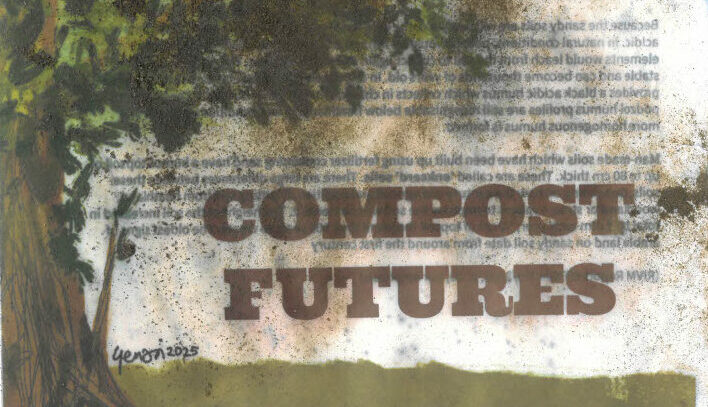
Compost Futures by the London Science Fiction Research Community (LSFRC). This creative-critical submission, in the form of a full zine, was made by the co-directorate of the LSFRC to explore questions around the relationships between humans with the other-than-human through the idea of “compost,” inspired by Zoefuturism. Follow the link to read and explore the articles and artworks, and to learn how co-authoring a zine with nature turned out.
Station to Station by Goblin Futures (https://goblin-futures.itch.io/station-to-station).
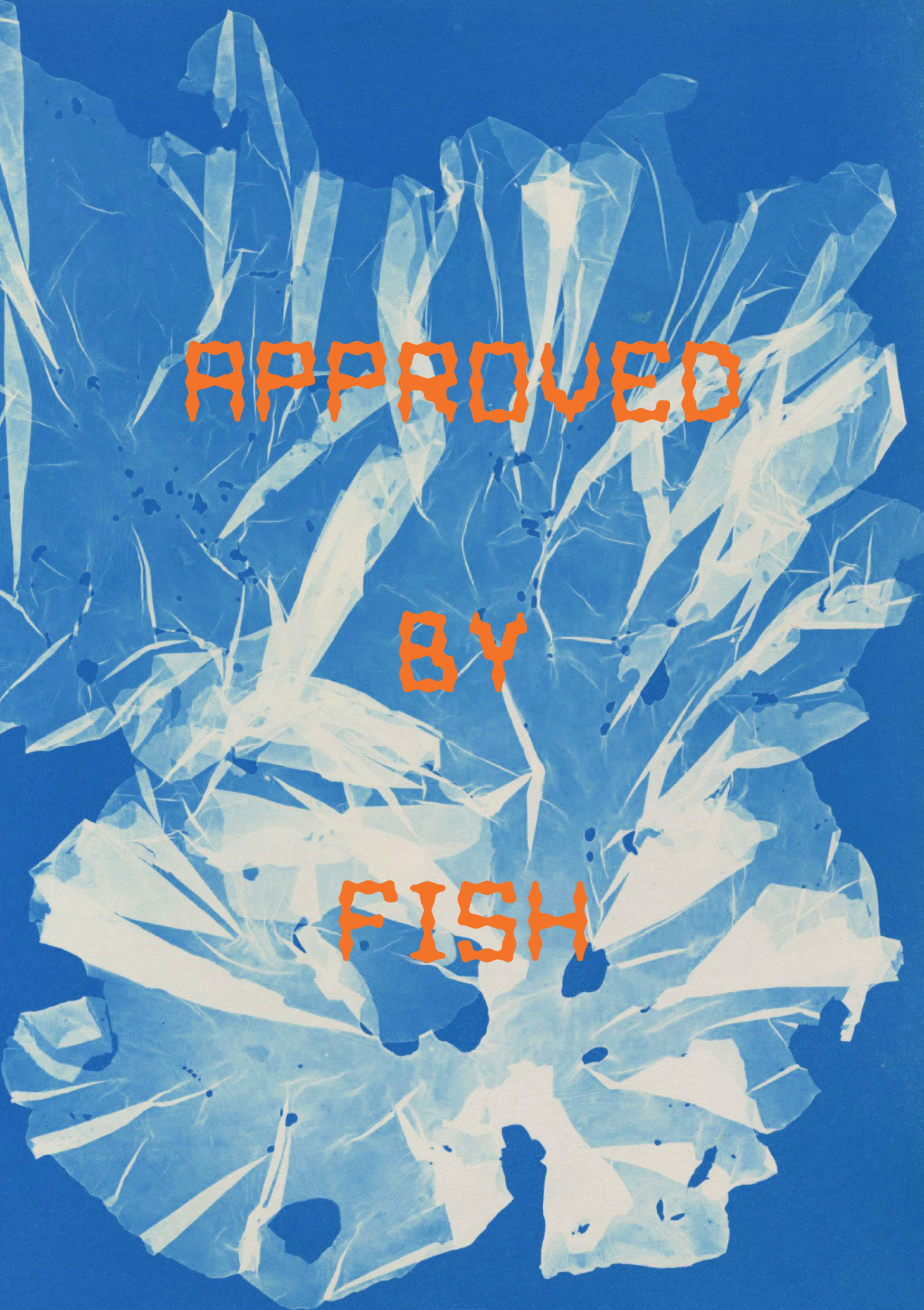
A fishpunk game: Station to Station*Fishpunk is something we made up, not a pre-existing genre. In other words, Station to Station is fishpunk, and anything else people want to consider fishpunk they can, just as long as it is Approved By Fish.
**Weirdhope is a term coined by COPY/PASTE CO-OP, which they describe as a form of eco-punk that is stylistically and thematically opposed to grimdark. For more, you can check out their game ECO MOFOS!! or the webpage for the Weird Hope Engines exhibition that ran in the Bonington Gallery in 2025.
Narrative Structures and ZoefuturismBy Christopher Morrison
In the West[1] there is one story structure primarily taught to readers and practitioners alike. The Aristotelean 3-Act Structure/The Hero’s Journey. I’m well aware that’s two structures, but they are so inter-linked now as to be extensions of one another. And, most importantly, they share a core philosophical purpose. That purpose: re-enforce Heroic Individualism. The Protagonist must be the one to solve the problem. They, and only THEY. Some assistance is rendered along the way, but in the climax, it is them and them alone (usually smashing) their way to the end. And that end as a teleological conclusion forgives (or ignores) all things that came before.
Anything else is considered a “subversion of” or “breaking the rules”. But, as Matthew Salsess asks, “Who writes those rules?” (Salesses, Matthew. Craft in the Real World: Rethinking Fiction Writing and Workshopping. New York: Catapult, 2021.) It is the dominant culture in the West. Patriarchal, white supremacist[2], heteronormative. Those values that hold up a human being… all at once illustrating the protagonist as special and the norm. The story’s purpose is to make them a static, fixed Hero.
So, if this structure serves to support the Culture of Being in the West, what structures could support a culture of Becoming from Asian Cultures not shackled to the mast of Individualism?[3] What structures could a writer creating in a Zoefuturist context rely on to illustrate Human Becoming and relieve their woes about what comes next in their story?
Taking a cue from the absolute basic root of Dr. Ames’ work and the language he is immersed in, let’s look at ShengSheng (生生) – Procreativity. This word Dr. Ames presents as a crucial part of the early Cosmology of Confucian thought[4] and gives us a perfect jumping-off point:
Repetition.
We all understand one of the crushing features of humanity is the repetition of life. Buddhism tackles this issue with the simple mantra: “Before enlightenment: chop wood, carry water. After enlightenment: chop wood, carry water.” The road to human becoming must run directly through repetition just as the word and pictogram in Chinese suggests in its very form.
However, the West abhors repetition[5] (except in cases of utter personal sacrifice to the destruction of oneself[6]) and worships at the feet of novelty.
New or perish! You are only as good as your last ____!
Yet repetition itself holds true meaning-making. True becoming. But in Western storytelling it’s relegated to a “callback” or some “comment” on one form or another and not the core engine to drive story and meaning.
Let’s explore a few structures where repetition is the heart and engine of its purpose.
Spirals: first brought to my attention through the work of Jane Alison.[7] Humans are pattern recognition machines, therefore to create a literary or dramatic spiral one repeats meaning by bringing back a panoply of artistic resources. Place, character(s), theme(s), color, etc. Most powerful in the resource kit is repeating events in your story. What one may lose in novelty one gains in grounding your audience – their pattern recognition (and their simple act of becoming themselves – living life) brings the repetition to awareness and, if done well, the question – Why? Why repeat this now? Here? Or the repetition simply becomes the Breath of the narrative. Inhaling on return – exhaling on leaving – or vice versa. It is a structure that is close to life itself.
While not a Zoefuturist film, let’s look at Wong Kar-Wai’s In the Mood for Love (Wong Kar-wai, dir. In the Mood for Love. Block 2 Pictures, 2000). A love story where its lovers are not allowed to consummate their love… or even say the word to each other. They are married to others while falling in love with each other. It is primarily a Spiral of place. Hallway, stairway, alleyway. All intermediate places – not defined. Not of themselves, but conduits to other locations. Perfect locations for a relationship that isn’t formed – isn’t one or the other. The characters are also suspended; neither really married nor free; not in love, but in love. Repetitions of their own conditions. The continuous use of smoke as a repeated image in the film is powerful. Sure, it looks damn cool, but it’s neither solid nor liquid. Neither here nor there… just slowly looping around itself and evaporating. Repeating. Spiraling.
Next, we’ll look at ‘nested’ structure.
Mainly known from the 1001 Arabian Nights and the film Rashomon. Nested stories are stories-within-stories without being anthology or connected episodic in nature. Story layers. Characters may re-appear, settings may re-appear[8] but what certainly repeats is theme and/or a central question or as Henry Lien likes to point out: culture[9].
Again, here’s a structure that reflects life’s journey. We are stories-within-stories. We hold our story, our family’s story, we are minor or major characters in everyone’s stories that surround us. And other’s stories can affect us directly or indirectly if we appear in them or not. As Dr. Ames points out through Zoetological philosophy we are “…interdependent human ‘becomings’ rather than discreet human beings… [through a relational understanding].[10]”
Nested structure allows writers to sift through the depth of our humanity all in one frame. The flow of this structure is the essence of interconnected ‘becoming’. Again, like life, the more we lift the lid and interact with the depths and layers underneath the more meaning and interconnectedness we experience.
In conclusion, ‘spiral’ and ‘nested’ narrative structures are available to writers of every form and genre, but are especially powerful in a Zoetological and/or Zoefuturist context. They allow for a direct reflection into the bones of the work and to elevate stories from a single individualist journey into the wider world-view of human becomings. By leaving behind the strictures of Western storytelling obsessions we can imagine and enact a more interconnected future.
[1] Excluding Indigenous cultures.
[2] Colonial, at best.
[3] This is where I’ll ask you to forgive me. I’m a practitioner and not a scholar, perhaps others have done this work – I look forward to hearing about them if so… Henry Lien’s work comes to mind.
[4] Ames, R. T. (2025). Living Chinese Philosophy: Zoetology as First Philosophy (p. 8). State University of New York Press.
[5] To the point: In an early screenwriting class the “wisdom” of never repeating a location was handed down to me. (This was the working philosophy of a high-powered producer and their thoughts on scriptwriting.)
[6] Puritan work ethic for example. Or (especially for women) the carer role taken to its extreme… it is lauded and pitied and ridiculed all at once.
[7] Alison, J. (2019). Meander, Spiral, Explode: Design and Pattern in Narrative (p. 143). Catapult.
[8] Or remain the same as with Rashomon.
[9] Lien, H. (2025). Spring, summer, asteroid, bird: The art of Eastern storytelling (1st ed.). W. W. Norton & Company.
[10] Ames, R. T. (2025). Living Chinese Philosophy: Zoetology as First Philosophy (p. 8). State University of New York Press.
Categories: Industry News
Zoefuturism in creative practice: responses
Introduction by Yen Ooi and Stephen Oram
When we started thinking about the call for articles last year, we wanted to approach it in a Zoefuturistic manner – by giving space and creating opportunities for the issue(s) and articles to ‘become.’ As a new topic, we were very aware that this is a process of exploration and discovery, more than a call to enforce and curate what we think Zoefuturism is. It needed to be reflective and malleable.
In this article, we will look at three of these creative reflections of Zoefuturism through different lenses:
- Compost Futures by the London Science Fiction Research Community Co-Directorate
- Station to Station by Goblin Futures
- “Narrative Structures and Zoefuturism” by Christopher Morrison
While all three pieces explore very different topics and perspectives, they are all reflections of Zoefuturism through practitioners’ creative action, and they form a Zoefuturistic response, as reactions to the introduction of Zoefuturism, playing with the ideas of our futures through relationality and constant becomings.
Compost Futures by the London Science Fiction Research Community (LSFRC). This creative-critical submission, in the form of a full zine, was made by the co-directorate of the LSFRC to explore questions around the relationships between humans with the other-than-human through the idea of “compost,” inspired by Zoefuturism. Follow the link to read and explore the articles and artworks, and to learn how co-authoring a zine with nature turned out.
Station to Station by Goblin Futures (https://goblin-futures.itch.io/station-to-station).
A fishpunk game: Station to Station*Fishpunk is something we made up, not a pre-existing genre. In other words, Station to Station is fishpunk, and anything else people want to consider fishpunk they can, just as long as it is Approved By Fish.
**Weirdhope is a term coined by COPY/PASTE CO-OP, which they describe as a form of eco-punk that is stylistically and thematically opposed to grimdark. For more, you can check out their game ECO MOFOS!! or the webpage for the Weird Hope Engines exhibition that ran in the Bonington Gallery in 2025.
Narrative Structures and ZoefuturismBy Christopher Morrison
In the West[1] there is one story structure primarily taught to readers and practitioners alike. The Aristotelean 3-Act Structure/The Hero’s Journey. I’m well aware that’s two structures, but they are so inter-linked now as to be extensions of one another. And, most importantly, they share a core philosophical purpose. That purpose: re-enforce Heroic Individualism. The Protagonist must be the one to solve the problem. They, and only THEY. Some assistance is rendered along the way, but in the climax, it is them and them alone (usually smashing) their way to the end. And that end as a teleological conclusion forgives (or ignores) all things that came before.
Anything else is considered a “subversion of” or “breaking the rules”. But, as Matthew Salsess asks, “Who writes those rules?” (Salesses, Matthew. Craft in the Real World: Rethinking Fiction Writing and Workshopping. New York: Catapult, 2021.) It is the dominant culture in the West. Patriarchal, white supremacist[2], heteronormative. Those values that hold up a human being… all at once illustrating the protagonist as special and the norm. The story’s purpose is to make them a static, fixed Hero.
So, if this structure serves to support the Culture of Being in the West, what structures could support a culture of Becoming from Asian Cultures not shackled to the mast of Individualism?[3] What structures could a writer creating in a Zoefuturist context rely on to illustrate Human Becoming and relieve their woes about what comes next in their story?
Taking a cue from the absolute basic root of Dr. Ames’ work and the language he is immersed in, let’s look at ShengSheng (生生) – Procreativity. This word Dr. Ames presents as a crucial part of the early Cosmology of Confucian thought[4] and gives us a perfect jumping-off point:
Repetition.
We all understand one of the crushing features of humanity is the repetition of life. Buddhism tackles this issue with the simple mantra: “Before enlightenment: chop wood, carry water. After enlightenment: chop wood, carry water.” The road to human becoming must run directly through repetition just as the word and pictogram in Chinese suggests in its very form.
However, the West abhors repetition[5] (except in cases of utter personal sacrifice to the destruction of oneself[6]) and worships at the feet of novelty.
New or perish! You are only as good as your last ____!
Yet repetition itself holds true meaning-making. True becoming. But in Western storytelling it’s relegated to a “callback” or some “comment” on one form or another and not the core engine to drive story and meaning.
Let’s explore a few structures where repetition is the heart and engine of its purpose.
Spirals: first brought to my attention through the work of Jane Alison.[7] Humans are pattern recognition machines, therefore to create a literary or dramatic spiral one repeats meaning by bringing back a panoply of artistic resources. Place, character(s), theme(s), color, etc. Most powerful in the resource kit is repeating events in your story. What one may lose in novelty one gains in grounding your audience – their pattern recognition (and their simple act of becoming themselves – living life) brings the repetition to awareness and, if done well, the question – Why? Why repeat this now? Here? Or the repetition simply becomes the Breath of the narrative. Inhaling on return – exhaling on leaving – or vice versa. It is a structure that is close to life itself.
While not a Zoefuturist film, let’s look at Wong Kar-Wai’s In the Mood for Love (Wong Kar-wai, dir. In the Mood for Love. Block 2 Pictures, 2000). A love story where its lovers are not allowed to consummate their love… or even say the word to each other. They are married to others while falling in love with each other. It is primarily a Spiral of place. Hallway, stairway, alleyway. All intermediate places – not defined. Not of themselves, but conduits to other locations. Perfect locations for a relationship that isn’t formed – isn’t one or the other. The characters are also suspended; neither really married nor free; not in love, but in love. Repetitions of their own conditions. The continuous use of smoke as a repeated image in the film is powerful. Sure, it looks damn cool, but it’s neither solid nor liquid. Neither here nor there… just slowly looping around itself and evaporating. Repeating. Spiraling.
Next, we’ll look at ‘nested’ structure.
Mainly known from the 1001 Arabian Nights and the film Rashomon. Nested stories are stories-within-stories without being anthology or connected episodic in nature. Story layers. Characters may re-appear, settings may re-appear[8] but what certainly repeats is theme and/or a central question or as Henry Lien likes to point out: culture[9].
Again, here’s a structure that reflects life’s journey. We are stories-within-stories. We hold our story, our family’s story, we are minor or major characters in everyone’s stories that surround us. And other’s stories can affect us directly or indirectly if we appear in them or not. As Dr. Ames points out through Zoetological philosophy we are “…interdependent human ‘becomings’ rather than discreet human beings… [through a relational understanding].[10]”
Nested structure allows writers to sift through the depth of our humanity all in one frame. The flow of this structure is the essence of interconnected ‘becoming’. Again, like life, the more we lift the lid and interact with the depths and layers underneath the more meaning and interconnectedness we experience.
In conclusion, ‘spiral’ and ‘nested’ narrative structures are available to writers of every form and genre, but are especially powerful in a Zoetological and/or Zoefuturist context. They allow for a direct reflection into the bones of the work and to elevate stories from a single individualist journey into the wider world-view of human becomings. By leaving behind the strictures of Western storytelling obsessions we can imagine and enact a more interconnected future.
[1] Excluding Indigenous cultures.
[2] Colonial, at best.
[3] This is where I’ll ask you to forgive me. I’m a practitioner and not a scholar, perhaps others have done this work – I look forward to hearing about them if so… Henry Lien’s work comes to mind.
[4] Ames, R. T. (2025). Living Chinese Philosophy: Zoetology as First Philosophy (p. 8). State University of New York Press.
[5] To the point: In an early screenwriting class the “wisdom” of never repeating a location was handed down to me. (This was the working philosophy of a high-powered producer and their thoughts on scriptwriting.)
[6] Puritan work ethic for example. Or (especially for women) the carer role taken to its extreme… it is lauded and pitied and ridiculed all at once.
[7] Alison, J. (2019). Meander, Spiral, Explode: Design and Pattern in Narrative (p. 143). Catapult.
[8] Or remain the same as with Rashomon.
[9] Lien, H. (2025). Spring, summer, asteroid, bird: The art of Eastern storytelling (1st ed.). W. W. Norton & Company.
[10] Ames, R. T. (2025). Living Chinese Philosophy: Zoetology as First Philosophy (p. 8). State University of New York Press.
Categories: Industry News