Industry News
2026 Aurora Awards Ballot
The 2026 Aurora Awards ballot for works by Canadians has been announced. The Aurora Awards are nominated by members of the Canadian Science Fiction and Fantasy Association. The top five nominated works were selected, with additional works included when there was a tie for fifth place.
Best Novel
- A Shift of Time, Julie E. Czerneda (DAW) amazon / bookshop
- Emily Wilde's Compendium of Lost Tales, Heather Fawcett (Del Rey) …Read More
The post 2026 Aurora Awards Ballot appeared first on Locus Online.
Categories: Industry News, Industry News Home
2026 Prometheus Novel Award Finalists
The Libertarian Futurist Society (LFS) has announced the five finalists for the Best Novel category of the Prometheus Awards, honoring thematically pro-liberty works published in 2025.
- Storm-Dragon, Dave Freer (Raconteur) amazon / bookshop
- War By Other Means, Karl K. Gallagher (Kelt Haven) amazon
- No Man's Land Volumes 1-3, Sarah A. Hoyt (Goldport) amazon / bookshop
- A Kiss for Damocles, J. Kenton Pierce (Raconteur) amazon / bookshop
- Powerless, Harry Turtledove …Read More
The post 2026 Prometheus Novel Award Finalists appeared first on Locus Online.
Categories: Industry News, Industry News Home
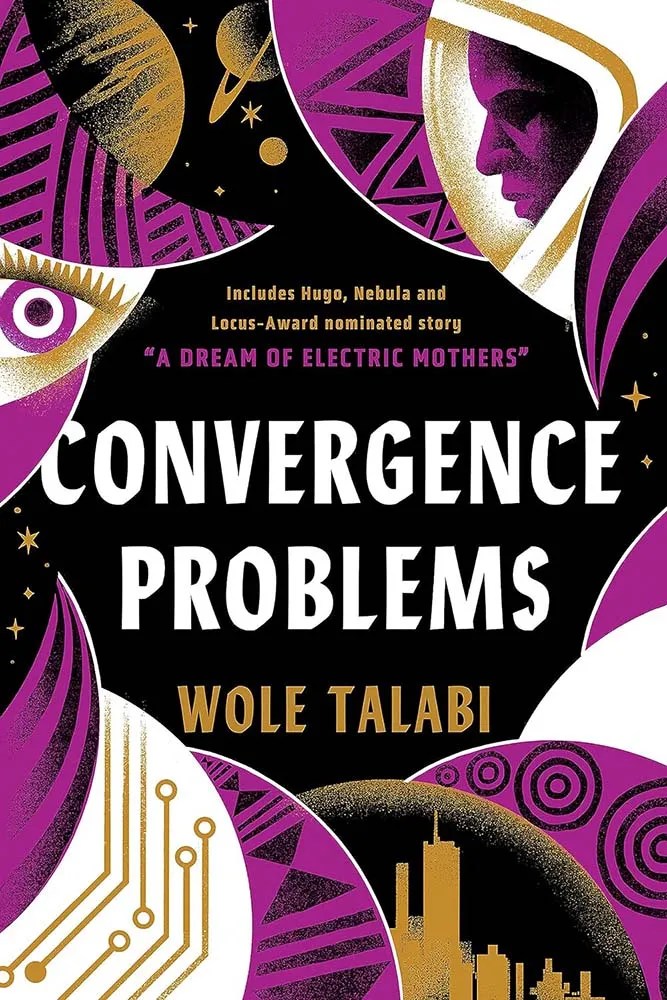
Kathleen Hughes reviews Convergence Problems by Wole Talabi
Reviewed by Kathleen Hughes
It came as no surprise to me to learn that Wole Talabi is an engineer by profession. Convergence Problems (2024), Talabi’s anthology of short stories, is filled with vivid tales of industrial failure, mechanical faults, and systemic entropy. In the future worlds depicted by Talabi – often set in Nigeria, where he is from – prosperity and investment have come and gone (‘Embers’), citizen dissidents are sentenced to death (‘An Arc of Electric Skin’), and dangerous interplanetary mining landscapes become the setting for just-in-time rescue missions (‘Blowout’). What struck me most about the collection as a whole is its recurring focus on the human side of systems and states: the legacy of industrial injury across generations, the bitterness of unfulfilled potential, and the pressure to succeed, conform, or escape. Talabi’s strength lies in his ability to highlight the profound human impact within hard-science themes such as environmental collapse, mining, or the oil industry.
The longer stories stood out for me, such as ‘Saturday’s Song’ and ‘Ganger,’ both beautifully crafted, though in very different styles. ‘Saturday’s Song’ is the haunting sequel to an earlier short piece (‘Wednesday’s Story’) and tells the tale of Saura and Mobola, who fall in love at a financial management conference in Abuja, whose relationship ends in tragedy after Saura’s mother seeks the intervention of Shigidi, the Yoruba deity (Orisha) of nightmares. This Orisha also appears in Talabi’s 2023 novel Shigidi and the Brass Head of Obalufon, and Talabi’s use of Yoruba figures, here, is typical of his ability to weave traditional beliefs between harder science themes found through the collection. Told through the accounts of personified days of the week, the story is multi-layered, spanning the lives of humans and deities and the strange interactions among them and the anthropomorphised calendar. ‘Ganger’ is particularly striking and timely, portraying a segregated society overseen by a megalomaniac tech CEO who, after whisking the wealthy to safety in the wake of a climate catastrophe, creates an indentured class out of pity or necessity, whose lives are micromanaged and whose every action is pre-empted. As Adelaide, the central character, becomes trapped inside a robot built to manage her subservient class after a calamitous attempt to rebel, the reader is left wondering whether she has actually attained a peculiar type of freedom.
I also very much enjoyed ‘Performance Review,’ as a researcher of the future of work, in its portrayal of a meeting between an employee and her boss. As the story unfolds, he proposes she maximise her efficacy by taking an experimental performance-enhancing drug, Optimiline – no obligation, of course, but with the coercive persuasion of a threat of termination. The take brilliantly portrays the dehumanising and flattening effect of corporate performance metrics, shaping employee conduct to fit data points, as well as the creeping effect of encouraging behaviour modifications to achieve what a company perceives as value. I was then surprised to find out that ‘Performance Review’ was written as part of a workshop testing out an AI tool in development – Google’s Wordcraft – as a writing assistant. This makes the story even more fascinating, as an experimental product of emerging technology, the debates about which touch on some of the same themes of the story itself (standardisation, depersonalisation, corporate overreach). Talabi does not shy away from these points in the ‘Authors’ notes’ at the end of the collection, reflecting carefully on how he weighs his optimism for technology and its potential against serious concerns about AI’s impact on the creative industries. These reflections form part of a very informative set of authors’ notes overall, which chart the development of stories, their connections, and the cross-fertilisation of ideas, which provide insight into the writer’s craft.
Talabi has also written on his writing process and source material elsewhere, for example, in the essay ‘Human and Energy Transitions’ (2026), included in this volume. That piece is an extremely valuable accompaniment to ‘Embers’, a short story in the collection that depicts the downfall of its protagonist, Uduak. Uduak is a once hopeful scholarship recipient in the Nigerian oil industry whose dreams – and life – unravel in the face of new renewable energy technologies (Kawashida cells) that render his career redundant. In the companion essay, Talabi explores the human cost of an industry that refuses to take responsibility for the impact of the dependence it fosters, providing a lifeline to communities through their resources and skills which risk becoming stranded assets. Talabi’s short story captures the nuances of the ‘just transition’ debate through the complexities of a personal story, embracing the fact that people make poor choices and react badly when faced with loss and wounded pride. As Talabi highlights, how can just transitions be truly just when the foundations they are built on are exploitative, extractive, and ‘take a page from the standard colonial playbook’?
As a collection, broad themes emerge across stories. In no particular order, they are technological advances and industry at a large scale, and the impact of technology on societies or states; the human impact of both work and technology, especially as it echoes across generations; and family ties, including legacies, disappointments, and grief. These themes connect together, recurring and repeating like echoes across stories. In ‘Blowout,’ for example, Folake Adeyemi strives to rescue her brother Femi, part of the N-12 surface exploration crew, battling through both Martian conditions and the emotional turmoil of the circumstances that bear resemblance to their mother’s catastrophic injury decades before, at work on an offshore gas production site near Angola. Talabi portrays the depth and contradictions of traumatic response, as it is not only the impact of the risk her brother is in that is so disturbing to Folake, but also her own actions, as she contemplates how far she is blindly repeating her mother’s devastating heroism.
The familial impact of workplace injury is further portrayed in ‘Abeokuta52,’ partly written in the form of an opinion piece in The Guardian, by the child (Bidemi Akindele) of a researcher studying an alien impact site, after the researcher’s death from the subsequent illness. The opinion piece wraps the details of the events in Nigeria that led to Stella Akindele’s death, alongside Bidemi’s lament at the injustice of her death and concern that she does not suffer a ‘second death’ through her name passing outside of living memory. Thus, ontological questions of time and memory are woven eloquently with the personal and political circumstances described. Like several of the stories in the collection, the piece takes on an experimental form, including the somewhat mysterious online comments below the opinion piece, adding complexity to the portrayal of Government corruption and cover-up.
The theme of inter-generational and familial trauma tied to industry, exploitation, and sacrifice is once again returned to in ‘A Dream of Electric Mothers,’ which also featured in Africa Risen, the 2022 anthology edited by Oghenechovwe Donald Ekpeki, Sherée Renee Thomas, and Zelda Knight. In this story, it is the great-aunt of the protagonist who has given herself to the National Memory Data Server (NMDS), a national computational consciousness based on the recorded thoughts of every previous citizen. This is a profound re-imagining of AI that again brings in ontological dimensions through collectivism that I have also seen in academic work on Ubuntu and AI. Here, in literary form, the lived reality of grief, of having not properly said goodbye to one’s mother, is juxtaposed with ethical considerations of AI decision-making. AI adopts a maternal wisdom that could be fruitfully critically juxtaposed against, for example, the personification of contemporary AI chatbots (Siri, Alexa) as subservient females who aim to please (Sindoni, 2024; West, Kraut and Chew, 2019). It is here that the value of the speculative literary form in relation to knotty and abstract topics is particularly apparent, as through the building of a complete alternative world where a computer system is built on the idea of an ‘electric mother,’ with the wisdom to speak what we need to hear, the contours and limitations of our own technologies and imaginations become more apparent and stark.
Collectively, the deep intertwining of parental grief, sibling rivalry, and the impacts of technology at an industrial and state scale leave the reader with a deep sense of missed opportunity and injustice. Together, they create a collection that would be valuable to anyone interested in the intersection between humans and technology.
References:
Sindoni, M.G. (2024). The femininization of AI-powered voice assistants: Personification, anthropomorphism and discourse ideologies. Discourse Context & Media, 62, pp.100833–100833. doi:https://doi.org/10.1016/j.dcm.2024.100833.
Talabi, W. (2026). ‘Human and Energy Transitions’ in Applied African SF (Ping Press, 2026).
West, M., Kraut, R. and Chew, H.E. (2019). I’d Blush If I could: Closing Gender Divides in Digital Skills through Education. [online] Unesco.org. Available at: https://unesdoc.unesco.org/ark:/48223/pf0000367416.
Categories: Industry News
Kathleen Hughes reviews Convergence Problems by Wole Talabi
Reviewed by Kathleen Hughes
It came as no surprise to me to learn that Wole Talabi is an engineer by profession. Convergence Problems (2024), Talabi’s anthology of short stories, is filled with vivid tales of industrial failure, mechanical faults, and systemic entropy. In the future worlds depicted by Talabi – often set in Nigeria, where he is from – prosperity and investment have come and gone (‘Embers’), citizen dissidents are sentenced to death (‘An Arc of Electric Skin’), and dangerous interplanetary mining landscapes become the setting for just-in-time rescue missions (‘Blowout’). What struck me most about the collection as a whole is its recurring focus on the human side of systems and states: the legacy of industrial injury across generations, the bitterness of unfulfilled potential, and the pressure to succeed, conform, or escape. Talabi’s strength lies in his ability to highlight the profound human impact within hard-science themes such as environmental collapse, mining, or the oil industry.
The longer stories stood out for me, such as ‘Saturday’s Song’ and ‘Ganger,’ both beautifully crafted, though in very different styles. ‘Saturday’s Song’ is the haunting sequel to an earlier short piece (‘Wednesday’s Story’) and tells the tale of Saura and Mobola, who fall in love at a financial management conference in Abuja, whose relationship ends in tragedy after Saura’s mother seeks the intervention of Shigidi, the Yoruba deity (Orisha) of nightmares. This Orisha also appears in Talabi’s 2023 novel Shigidi and the Brass Head of Obalufon, and Talabi’s use of Yoruba figures, here, is typical of his ability to weave traditional beliefs between harder science themes found through the collection. Told through the accounts of personified days of the week, the story is multi-layered, spanning the lives of humans and deities and the strange interactions among them and the anthropomorphised calendar. ‘Ganger’ is particularly striking and timely, portraying a segregated society overseen by a megalomaniac tech CEO who, after whisking the wealthy to safety in the wake of a climate catastrophe, creates an indentured class out of pity or necessity, whose lives are micromanaged and whose every action is pre-empted. As Adelaide, the central character, becomes trapped inside a robot built to manage her subservient class after a calamitous attempt to rebel, the reader is left wondering whether she has actually attained a peculiar type of freedom.
I also very much enjoyed ‘Performance Review,’ as a researcher of the future of work, in its portrayal of a meeting between an employee and her boss. As the story unfolds, he proposes she maximise her efficacy by taking an experimental performance-enhancing drug, Optimiline – no obligation, of course, but with the coercive persuasion of a threat of termination. The take brilliantly portrays the dehumanising and flattening effect of corporate performance metrics, shaping employee conduct to fit data points, as well as the creeping effect of encouraging behaviour modifications to achieve what a company perceives as value. I was then surprised to find out that ‘Performance Review’ was written as part of a workshop testing out an AI tool in development – Google’s Wordcraft – as a writing assistant. This makes the story even more fascinating, as an experimental product of emerging technology, the debates about which touch on some of the same themes of the story itself (standardisation, depersonalisation, corporate overreach). Talabi does not shy away from these points in the ‘Authors’ notes’ at the end of the collection, reflecting carefully on how he weighs his optimism for technology and its potential against serious concerns about AI’s impact on the creative industries. These reflections form part of a very informative set of authors’ notes overall, which chart the development of stories, their connections, and the cross-fertilisation of ideas, which provide insight into the writer’s craft.
Talabi has also written on his writing process and source material elsewhere, for example, in the essay ‘Human and Energy Transitions’ (2026), included in this volume. That piece is an extremely valuable accompaniment to ‘Embers’, a short story in the collection that depicts the downfall of its protagonist, Uduak. Uduak is a once hopeful scholarship recipient in the Nigerian oil industry whose dreams – and life – unravel in the face of new renewable energy technologies (Kawashida cells) that render his career redundant. In the companion essay, Talabi explores the human cost of an industry that refuses to take responsibility for the impact of the dependence it fosters, providing a lifeline to communities through their resources and skills which risk becoming stranded assets. Talabi’s short story captures the nuances of the ‘just transition’ debate through the complexities of a personal story, embracing the fact that people make poor choices and react badly when faced with loss and wounded pride. As Talabi highlights, how can just transitions be truly just when the foundations they are built on are exploitative, extractive, and ‘take a page from the standard colonial playbook’?
As a collection, broad themes emerge across stories. In no particular order, they are technological advances and industry at a large scale, and the impact of technology on societies or states; the human impact of both work and technology, especially as it echoes across generations; and family ties, including legacies, disappointments, and grief. These themes connect together, recurring and repeating like echoes across stories. In ‘Blowout,’ for example, Folake Adeyemi strives to rescue her brother Femi, part of the N-12 surface exploration crew, battling through both Martian conditions and the emotional turmoil of the circumstances that bear resemblance to their mother’s catastrophic injury decades before, at work on an offshore gas production site near Angola. Talabi portrays the depth and contradictions of traumatic response, as it is not only the impact of the risk her brother is in that is so disturbing to Folake, but also her own actions, as she contemplates how far she is blindly repeating her mother’s devastating heroism.
The familial impact of workplace injury is further portrayed in ‘Abeokuta52,’ partly written in the form of an opinion piece in The Guardian, by the child (Bidemi Akindele) of a researcher studying an alien impact site, after the researcher’s death from the subsequent illness. The opinion piece wraps the details of the events in Nigeria that led to Stella Akindele’s death, alongside Bidemi’s lament at the injustice of her death and concern that she does not suffer a ‘second death’ through her name passing outside of living memory. Thus, ontological questions of time and memory are woven eloquently with the personal and political circumstances described. Like several of the stories in the collection, the piece takes on an experimental form, including the somewhat mysterious online comments below the opinion piece, adding complexity to the portrayal of Government corruption and cover-up.
The theme of inter-generational and familial trauma tied to industry, exploitation, and sacrifice is once again returned to in ‘A Dream of Electric Mothers,’ which also featured in Africa Risen, the 2022 anthology edited by Oghenechovwe Donald Ekpeki, Sherée Renee Thomas, and Zelda Knight. In this story, it is the great-aunt of the protagonist who has given herself to the National Memory Data Server (NMDS), a national computational consciousness based on the recorded thoughts of every previous citizen. This is a profound re-imagining of AI that again brings in ontological dimensions through collectivism that I have also seen in academic work on Ubuntu and AI. Here, in literary form, the lived reality of grief, of having not properly said goodbye to one’s mother, is juxtaposed with ethical considerations of AI decision-making. AI adopts a maternal wisdom that could be fruitfully critically juxtaposed against, for example, the personification of contemporary AI chatbots (Siri, Alexa) as subservient females who aim to please (Sindoni, 2024; West, Kraut and Chew, 2019). It is here that the value of the speculative literary form in relation to knotty and abstract topics is particularly apparent, as through the building of a complete alternative world where a computer system is built on the idea of an ‘electric mother,’ with the wisdom to speak what we need to hear, the contours and limitations of our own technologies and imaginations become more apparent and stark.
Collectively, the deep intertwining of parental grief, sibling rivalry, and the impacts of technology at an industrial and state scale leave the reader with a deep sense of missed opportunity and injustice. Together, they create a collection that would be valuable to anyone interested in the intersection between humans and technology.
References:
Sindoni, M.G. (2024). The femininization of AI-powered voice assistants: Personification, anthropomorphism and discourse ideologies. Discourse Context & Media, 62, pp.100833–100833. doi:https://doi.org/10.1016/j.dcm.2024.100833.
Talabi, W. (2026). ‘Human and Energy Transitions’ in Applied African SF (Ping Press, 2026).
West, M., Kraut, R. and Chew, H.E. (2019). I’d Blush If I could: Closing Gender Divides in Digital Skills through Education. [online] Unesco.org. Available at: https://unesdoc.unesco.org/ark:/48223/pf0000367416.
Categories: Industry News
Bloomsbury Layoffs
UK-based publisher Bloomsbury has announced plans to streamline its structure for future growth, after doubling its sales in four years, more than doubling its profits in 2023-2024, and increasing headcount from 738 to 1,238 in five years. The plans include cutting about 55 roles in the US and UK.
The company will restructure its three major editorial divisions to Bloomsbury Global Academic & Professional, Bloomsbury USA, and Bloomsbury Consumer UK. …Read More
The post Bloomsbury Layoffs appeared first on Locus Online.
Categories: Industry News, Industry News Home
Watkins Publishing Sold
Mind, body, and spirit-focused publishing company Red Wheel/Weiser has announced that it has acquired the majority of the titles of Watkins Media's flagship imprint, Watkins Publishing. Other Watkins Media imprints, such as Angry Robot, Datura, and Repeater, are not currently affected by the acquisition. Distribution will continue through PRH Publisher Services in the US and Wiley in the UK until July 1, 2026, when Red Wheel/Weiser will begin to …Read More
The post Watkins Publishing Sold appeared first on Locus Online.
Categories: Industry News, Industry News Home
2026 Hugo, Lodestar & Astounding Awards Finalists
Finalists for the Hugo Awards, the Lodestar Award for Best Young Adult Book, and the Astounding Award for Best New Writer have been announced by LAcon V, the 84th World Science Fiction Convention. There were 1,488 valid nominating ballots received and counted from members of the 2025 and 2026 World Science Fiction Conventions for the 2026 Hugo Awards. Voting on the final ballot will open during May 2026. Members of …Read More
The post 2026 Hugo, Lodestar & <i>Astounding</i> Awards Finalists appeared first on Locus Online.
Categories: Industry News, Industry News Home
Talk to Write: Advance to a Completed Draft Using Dictation
by Melynda Hill-Teter
Read by Liz J. BradleyEvery first draft begins with words on a page and a plan. As a writer, I tracked story ideas, outlined plots, sketched scenes, developed characters, and logged worldbuilding details. But I reached a point where ideas and notes needed structure.
I wanted uninterrupted blocks of two to three hours a day at my laptop to make writing progress, but this mindset backfired, leading to procrastination. Writing ideas clicked into place, but I couldn’t find the time to write for a few hours a day.
Between work and long train commutes, I set out to build a consistent writing routine. That’s when I realized voice typing—or dictation—could help me start an outline or first draft. Basically, it’s talking into an app on a mobile device or computer and letting speech-to-text create your draft.
How Dictation Programs WorkAlthough language models have been around since the 1980s, the adoption of deep learning algorithms for speech recognition has dramatically improved performance over the past 15 years. Speech-to-text programs use deep learning models, training datasets, and artificial intelligence to convert spoken language to text. Over time, they adapt to each speaker’s voice, including accent, tone, pace, and preferred vocabulary.
Google Docs Voice Typing uses Google’s speech recognition AI, which is integrated with Google Workspace applications. Microsoft Dictate is built on Azure’s AI-powered speech engine and allows for dictation across Microsoft applications. Other options include Otter.ai, which converts speech into transcription, and Dragon Dictate, the first consumer speech-recognition software that allows users to dictate documents and emails and create individual voice profiles.
When choosing dictation tools, consider if the language model can adapt to your speaking style over time to improve accuracy, support regional accents, correct misheard words by voice or keyboard, and handle noisy environments or crosstalk.
Dictation apps use editing phrases: predefined voice commands that the app recognizes as instructions for modifying text. Editing phrases include: “add comment” to add a blank comment; “delete” to remove the last word; “new line”; “start list”; “em dash”; “new paragraph”; “comma”; “period”; “question mark”; “apostrophe”; and more.
These apps pause to capture audio before transcribing several words at once. The resulting draft often requires cleanup and formatting.
My Dictation ProcessI use Word Dictation and Google Docs on my iPhone, but there are many note-taking options, such as Evernote, Notion, Microsoft OneNote, Google Keep, Obsidian, and Apple Notes.
Working in a quiet location minimizes the background noise picked up by a microphone. When commuting, I sit in a quiet section of the train, away from energized voices, which helps me feel less self-conscious when dictating in public. I speak directly into my iPhone to ensure clear audio capture. There are good options, such as Apple AirPods or wireless earbuds, if you don’t want to hold your device in your hand while dictating. And some people like to walk while dictating, since sitting may feel static.
On my iPhone, I turn on Do Not Disturb to silence notifications and calls before I begin. Dictating an outline is the first step to capturing my ideas. I then auto-save the draft to the cloud and fix a few misheard words by using the on-screen keyboard. I make sure to email the outline to myself as a backup. After the dictation session, I edit the cloud copy on my laptop to develop the next version.
I block off time on my calendar for writing while commuting and on weekend afternoons. Using Google Calendar, I schedule writing tasks for specific dates and times, such as outlining, to-do items, and next steps. At the end of the week, I revisit the calendar items to verify that I accomplished each task.
Workflow for Word Mobile DictationEstimated setup time: 15 minutes.
Purchase a Microsoft 365 personal license, then install and sign into the Word Mobile and OneDrive apps on your phone. This feature converts speech to text, requiring a microphone and a reliable internet connection.
To get started, open Word and tap the Create button, then tap the blue plus button to open a blank document. Tap the microphone icon at the bottom-right corner to start dictating.
To apply a heading style, place your cursor at the end of the heading, tap the three dots on the bottom toolbar, tap Styles, tap the heading you want to apply, such as Heading 1.
To clear formatting, place the cursor at the end of the line where you want to remove the formatting (such as a Heading style) and say “select that” and “clear formatting.”
To save time punctuating while in a live document with the microphone enabled, tap the gear button (bottom-left corner) and enable Auto Punctuation.
To auto-save your draft in OneDrive, tap More Options and enable AutoSave or Save.
If you accidentally close Word during a dictation session, you can find your draft by tapping Browse at the bottom-right corner of the Home screen, then Recovered Drafts.
Workflow for Google Docs Voice TypingEstimated setup time: 15 minutes. Note: Google Docs uses the term voice typing instead of dictation.
Install the Google Docs Mobile and Google Drive apps on your phone. Your draft will be automatically saved in Google Drive once you sign into both apps.
To get started, open Google Docs and tap the bottom-right plus button to open a blank document. Tap New Document and name your document, and tap Create. To begin voice typing, tap the microphone icon on the on-screen keyboard.
To bold a word, touch and hold the word, tap Select > Bold on the formatting toolbar. To apply heading styles, touch and hold the heading, tap Select > Font (top-right corner). Under the Text group, tap the right arrow next to Styles, and select your heading.
To clear document formatting, touch and hold the word, tap Select > Font > Text > Clear Formatting.
To restore previous versions, go to Google Drive on a computer and open the document, then go to File > Version History > See Version History and select a version to restore.
Experiment with Your ProcessThis process might not work for everyone. Some people feel uncomfortable dictating, especially in public. Still, I found that dictating and editing helped move ideas out of my head and into an outline, a draft, and then a story. The key is to stay curious and keep experimenting until you discover what works best for your writing process.
Explore more articles from Back to Basics
Melynda Hill-Teter holds a Bachelor of Science in Information Technology and a Certificate in Technical Writing. She is a freelance writer with 20+ years of experience as an IT analyst, specializing in user support and Microsoft applications. Melynda is currently writing her debut novel, inspired by her grandfather’s intriguing claim that he invented FM radio and built a 1923 alpha radio set—one said to receive transmissions from the future.
The post Talk to Write: Advance to a Completed Draft Using Dictation appeared first on SFWA - The Science Fiction & Fantasy Writers Association.
Categories: Industry News, Industry News Home
MCD Closes
President and publisher of Farrar, Straus & Giroux Mitzi Angel announced in a memo that the MCD imprint is set to close, with MCD publisher Sean McDonald leaving FSG April 15. Angel cited financial realities for their decision to focus on FSG's core programming, including AUWA Books, FSG Originals, North Point Press, Picador, and Quanta Books.
MCD opened in 2016 at the behest of FSG then-president Jonathan Galassi, naming McDonald …Read More
The post MCD Closes appeared first on Locus Online.
Categories: Industry News, Industry News Home
2026 Writers & Illustrators of the Future Awards Winners
The 42nd annual L. Ron Hubbard's Writers and Illustrators of the Future awards ceremony was held April 16, 2026 at the Taglyan Complex in Los Angeles, concluding a weeklong intensive of workshops, lectures, and classes for the winners. This year's Golden Brush Award went to Bohuslav Argalas Bafu from Slovakia for his illustration of Saffron and Marigolds by Kathleen Powell, and the Golden Pen Award went to Michael Kuester …Read More
The post 2026 Writers & Illustrators of the Future Awards Winners appeared first on Locus Online.
Categories: Industry News, Industry News Home
Ian Watson (1943–2026)
SF author Ian Watson, 82, died April 13, 2026 in Gijón, Spain.
Watson was born in England on April 20, 1943. He graduated from Balliol College, Oxford with a degree in English literature, later obtained a research degree in English and French 19th-century literature, and went on to teach across the world. After his first novel The Embedding (1973) won a John W. Campbell Award, and The Jonah Kit (1975) …Read More
The post Ian Watson (1943–2026) appeared first on Locus Online.
Categories: Industry News, Industry News Home
2026 Dublin Literary Award Shortlist
The six-title shortlist has been announced for the 2026 Dublin Literary Award, now in its 31st year. Authors and titles of genre interest include Gliff by Ali Smith (Hamish Hamilton; Pantheon) [amazon / bookshop] and Perspective(s) by Laurent Binet, tr. Sam Taylor (Farrar, Straus) [amazon / bookshop].
The initial 69 nominated titles were nominated by 80 libraries from countries around the world. Titles eligible for the 2026 award were published …Read More
The post 2026 Dublin Literary Award Shortlist appeared first on Locus Online.
Categories: Industry News, Industry News Home
PEN America Launches Author Safety Program
PEN America has announced plans to launch a US Author Safety Program meant to protect against harassment and threats. Supporters include Hachette Book Group, Macmillan Publishers, Penguin Random House, David Baldacci, and the New York Community Trust, which have contributed nearly $1 million to the program thus far. PEN America is seeking further support and will hold an auction in spring 2026 to benefit the program.
The safety program follows …Read More
The post PEN America Launches Author Safety Program appeared first on Locus Online.
Categories: Industry News, Industry News Home
Zelazny Wins Infinity Award
Roger Zelazny (1937-1995) has been named the recipient of the fourth Infinity Award.
The award was created by the Science Fiction and Fantasy Writers Association (SFWA) to posthumously highlight the life and work of creators who achieved a distinct and tremendous legacy in science fiction and fantasy. Although they are no longer with us to celebrate this honor, these writers helped to lay the foundation for today's science fiction, fantasy, …Read More
The post Zelazny Wins Infinity Award appeared first on Locus Online.
Categories: Industry News, Industry News Home
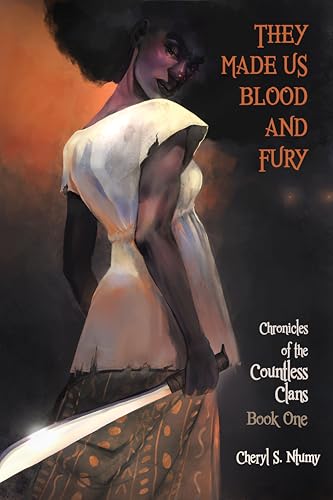
First of the Countless: A Review of Cheryl S. Ntumy’s They Made Us Blood and Fury
Reviewed by Nkereuwem Albert
They Made Us Blood and Fury is a nightmare brought to life, dripping with characters that will drive a dagger into your very being. An epic fantasy novel that does not shirk from its gritty bits and moral ambiguity, Ntumy’s world is relentless and well put together, with layers within layers to consider.
One of the things I enjoy most in fantasy is worldbuilding that never feels like too much information; it is a difficult thing to execute, but in this novel, we’re given all we need to engage with the world without it ever feeling superfluous or inadequate, a line walked beautifully. Anyi is a beacon of glory to the Countless Clans, led by a council of elders and queens that provide lifeblood, a magical substance that can be moulded into anything, from medicine to weapons. Anyi has so much lifeblood that they give it away to the neighbouring kingdoms and cities, from Ka to Bediaku, Gbota and Xose. From believable history, to enthralling magic, to commerce and social structure, the world presented feels full and ready for a great story to be told within.
As the novel opens, we are thrown into an Anyi on the edge. The queen is dying and none of her heirs, the Divewe, can produce it. Reservoirs run dry and gods stay silent, leaving the Anyi with too little of the substance they once gave away in excess. Across the continent, in the empire of Ka, we meet Aseye, an Anyi native working with lifeblood in the imperial armoury. Setting her sights on starting her own practice, her life is complicated by the death of the Anyi queen and the secrets it unearths. There’s also the issue of Kwame–beautiful Kwame–an imperial courtier with a hidden heritage and conflicting loyalties.
Ntumy’s magic system is especially cool and inventive, with seers and blood-as-power done in ways that I’ve never seen. A culture where magic is embedded in the history, geography and economics of the world, we see the impact of lifeblood excesses and shortages play out both in the present and contextually. Spirit possessions and gods’ whisperings come at a terrible price. The creatures that manifest across the novel are beautiful, visceral and terrifying!
For all its detailed worldbuilding, They Made Us Blood and Fury is also an education in heart-rending character development. Aseye and Kwame are very compelling protagonists. Aseye’s past is shrouded in mystery that unravels with massive implications for the countless clans, and with Kwame, a character with conflicting loyalties and motivations that are unclear, we have an intriguing pair, written with raw intensity and unyielding prose that is very compelling to read.
The supporting cast—spread out across the Countless Clans—deliver, filling out the necessary points in this story beautifully and disturbingly as the novel progresses. In They Made Us Blood and Fury, you sense the threads that link the cast, but Ntumy still delivers excellent character arcs, in both positive and antagonistic directions. Fafa, Fia Kofi, and Mamiga are an excellent investigation into the choices we make to sustain life as we know it, even when we know better. The Divewe’s choices are driven by their need to survive and their thirst for the power they were destined for, now a destiny denied. The Kahene and the politics of his empire ask the necessary questions about imperialism and its swallowing of cultures and people alike. In the sandlands and the spaces between, the nomads offer Aseye philosophy that is antithetical to what is the norm in the countless clans, and the entirety of the supporting cast feel real and fleshed out, to the betterment of the novel.
All these elements come together to make a world in which the truth is always lurking, and this novel captures that eerie feeling perfectly. With a story told in journeys through the Countless Clans, there were many moments that shocked me and broke my heart, and pivots that grabbed my attention and made me perk up and hope, all ending with a flawless landing that leaves me wanting more of the Countless. Cheryl S. Ntumy delivers a very inventive fantasy novel on so many fronts, and I know this is not the end, so I will wait impatiently for the next book.
Categories: Industry News
First of the Countless: A Review of Cheryl S. Ntumy’s They Made Us Blood and Fury
Reviewed by Nkereuwem Albert
They Made Us Blood and Fury is a nightmare brought to life, dripping with characters that will drive a dagger into your very being. An epic fantasy novel that does not shirk from its gritty bits and moral ambiguity, Ntumy’s world is relentless and well put together, with layers within layers to consider.
One of the things I enjoy most in fantasy is worldbuilding that never feels like too much information; it is a difficult thing to execute, but in this novel, we’re given all we need to engage with the world without it ever feeling superfluous or inadequate, a line walked beautifully. Anyi is a beacon of glory to the Countless Clans, led by a council of elders and queens that provide lifeblood, a magical substance that can be moulded into anything, from medicine to weapons. Anyi has so much lifeblood that they give it away to the neighbouring kingdoms and cities, from Ka to Bediaku, Gbota and Xose. From believable history, to enthralling magic, to commerce and social structure, the world presented feels full and ready for a great story to be told within.
As the novel opens, we are thrown into an Anyi on the edge. The queen is dying and none of her heirs, the Divewe, can produce it. Reservoirs run dry and gods stay silent, leaving the Anyi with too little of the substance they once gave away in excess. Across the continent, in the empire of Ka, we meet Aseye, an Anyi native working with lifeblood in the imperial armoury. Setting her sights on starting her own practice, her life is complicated by the death of the Anyi queen and the secrets it unearths. There’s also the issue of Kwame–beautiful Kwame–an imperial courtier with a hidden heritage and conflicting loyalties.
Ntumy’s magic system is especially cool and inventive, with seers and blood-as-power done in ways that I’ve never seen. A culture where magic is embedded in the history, geography and economics of the world, we see the impact of lifeblood excesses and shortages play out both in the present and contextually. Spirit possessions and gods’ whisperings come at a terrible price. The creatures that manifest across the novel are beautiful, visceral and terrifying!
For all its detailed worldbuilding, They Made Us Blood and Fury is also an education in heart-rending character development. Aseye and Kwame are very compelling protagonists. Aseye’s past is shrouded in mystery that unravels with massive implications for the countless clans, and with Kwame, a character with conflicting loyalties and motivations that are unclear, we have an intriguing pair, written with raw intensity and unyielding prose that is very compelling to read.
The supporting cast—spread out across the Countless Clans—deliver, filling out the necessary points in this story beautifully and disturbingly as the novel progresses. In They Made Us Blood and Fury, you sense the threads that link the cast, but Ntumy still delivers excellent character arcs, in both positive and antagonistic directions. Fafa, Fia Kofi, and Mamiga are an excellent investigation into the choices we make to sustain life as we know it, even when we know better. The Divewe’s choices are driven by their need to survive and their thirst for the power they were destined for, now a destiny denied. The Kahene and the politics of his empire ask the necessary questions about imperialism and its swallowing of cultures and people alike. In the sandlands and the spaces between, the nomads offer Aseye philosophy that is antithetical to what is the norm in the countless clans, and the entirety of the supporting cast feel real and fleshed out, to the betterment of the novel.
All these elements come together to make a world in which the truth is always lurking, and this novel captures that eerie feeling perfectly. With a story told in journeys through the Countless Clans, there were many moments that shocked me and broke my heart, and pivots that grabbed my attention and made me perk up and hope, all ending with a flawless landing that leaves me wanting more of the Countless. Cheryl S. Ntumy delivers a very inventive fantasy novel on so many fronts, and I know this is not the end, so I will wait impatiently for the next book.
Categories: Industry News
2026 Infinity Award
FOR IMMEDIATE RELEASE:
Celebrating Roger Zelazny, SFWA’s Infinity Award Recipient for the 61st Annual Nebula Awards
Celebrating Roger Zelazny, SFWA’s Infinity Award Recipient for the 61st Annual Nebula Awards
FOR IMMEDIATE RELEASE
San Francisco, CA – April 15, 2026
The Science Fiction and Fantasy Writers Association (SFWA) is pleased to announce that the SFWA Infinity Award will be presented this year to Roger Zelazny at the 61st Annual SFWA Nebula Awards® ceremony on June 6, 2026.
The SFWA Infinity Award was created to highlight the life and work of creators who achieved a distinct and tremendous legacy in science fiction and fantasy. Although they are no longer with us to celebrate this honor, these writers helped to lay the foundation for today’s science fiction, fantasy, and related genres. Their memory abides not only in the works they published, but also in the worlds they inspired fellow and future writers to dream up in their wake.
SFWA President Kate Ristau reflects fondly on the power of Zelazny’s worlds:
“One of my first deep dives into science fiction was the Chronicles of Amber. Zelazny drew me right into the story with his world-building and world-breaking. Characters could manipulate their reality, walking between worlds, and they didn’t always make the decisions you wanted. There were heartbreaking moments and series-wide challenges that were epic and unforgettable; they lingered with you. Zelazny’s impact lingers on with us, shaping how we think about multiverses and how we create characters that are complicated, nuanced, and sometimes deeply flawed. I am honored to present him with this year’s Infinity Award.”
Challenges of a MultiverseRoger Zelazny entered our genre’s publishing record in 1962, the same year as Samuel R. Delany and Ursula K. Le Guin, and the era of his ascension as a writer was marked by heated debates about the nature of science fiction and fantasy. Some called the work that he and his peers published “New Wave”, a term bound up in contemporaneous social criticism about the uptick in experimental and more “worldly” art, film, literature, and music.
This catch-all term was used in a positive light by some, to suggest a transformation in the genre: a coming-of-age for SFF as a thoroughly “literary” form, featuring more comfortable and slipstream uses of science-fictional and fantastical tropes to tell more nuanced human stories. It was also used in a negative light by some critics, to cast aspersions on SFF writers who played too poetically with language, “wrote back” against ancient myths and story structures, and wrestled with recent insights from psychology and sociology in their prose.
As for the writers themselves, including Zelazny?
Most were less interested in the labels used by critics to describe their work, and more in how to keep growing their craft – often in publishing contexts we can also learn a great deal from today.
Zelazny developed as a writer in an era when magazines were common incubators for novel-length masters of the craft. Widely read by paying customers, the major magazines of Zelazny’s day had different opportunities to curate budding and distinct voices like his.
That’s why, after publishing in magazines like Amazing and Fantastic, Zelazny was able to win a Hugo for Best Novel with what was first a serial production, delighting readers over two issues of F&SF in 1965. Zelazny’s This Immortal (first printed as “…And Call Me Conrad”) would tie for that Hugo with another patchwork publication by another SFWA Infinity Award recipient: Frank Herbert’s famed fix-up novel, Dune.
Zelazny’s Lord of Light (1967), nominated for a 1968 Nebula and winning the Hugo, would then entrench his distinct voice and approach to mythic world-building as a key component of mid-century SFF canon. That year, he would also support SFWA’s internal curation of canon, by editing our third-ever Nebula Award Stories anthology and providing thoughtful remarks on each tale.
Zelazny also won two Nebulas, for novelette and novella, at the very first Nebula Awards: “The Doors of His Face, the Lamps of His Mouth” (F&SF) and “He Who Shapes” (Amazing Stories). “Home is the Hangman” (Analog) won for Best Novella in 1975, and he earned many other nominations over the decades of his career.
Writers new to Zelazny’s work might be pleasantly surprised to pick up a volume today; most of his stories boast lush language and a fantastical interweaving of science-fictional conceits with allegorical and/or psychologically rich characters.
George R.R. Martin describes Zelazny as follows:
“He was a poet, first, last, always. His words sang. He was a storyteller without peer. He created worlds as colorful and exotic and memorable as any our genre has ever seen.”
Perhaps just as importantly, Zelazny operated in a community of dreamers, experimenters, and literary incubators. He was loved by many of his peers, and flourished within a network of fellow creators. To read Zelazny’s work today, and to reflect on the context in which it was written, is to remember how much the writers of SFF today share with generations of innovators come before.
The Legacy ContinuesFrom June 3-7, SFWA is celebrating living and posthumous lights in our genre community at our 61st Annual Nebula Awards Conference in Chicago, Illinois. Conference prices for in-person tickets rise May 1, and Banquet tickets for the acclaimed Nebula Awards Ceremony on June 6 are in limited supply.
There, in a special presentation with our latest Grand Master, N. K. Jemisin, we’ll be learning how to build and break down worlds in our prose. With fellow Grand Master Joe Haldeman, we’ll also be exploring how the world of SFF industry has transformed over the last few decades. We will mark Kate Wilhelm Solstice Award recipient David Langford’s contribution to genre history, and the power of our Nebula Finalist fiction to keep light alive even in an author’s absence.
And with the support of Roger Zelazny’s family, friends, and still-avid readers, we will mark this year’s worthy recipient of the SFWA Infinity Award: a writer whose worldbuilding shattered and reformed notions of SFF. Zelazny’s work forged a path for future writers to “write back” on shared mythologies, and to reimagine science-fiction and fantasy conventions with greater confidence — knowing that the gift of creating a well-told and inventive tale, irrespective of the labels outsiders assign to it, is always its own reward.
Join us for the memories, and to revel in the history and future of SFF together!
Get your tickets for the Nebula Awards Conference todayThe post 2026 Infinity Award appeared first on SFWA - The Science Fiction & Fantasy Writers Association.
Categories: Industry News, Industry News Home
Gelfuso Wins Compton Crook Award
TheBaltimore Science Fiction Society (BSFS) has announced that The Book of Lost Hours by Hayley Gelfuso (Atria) [amazon / bookshop] is the 44th winner of the Compton Crook Award.
The other finalists were:
- A Song of Legends Lost, M.H. Ayinde (Saga) amazon / bookshop
- Sleeping Worlds Have No Memory, Yaroslav Barsukov (Caezik SF & Fantasy) amazon / bookshop
- All the Water in the World, Eiren Caffall (St. Martin's) amazon …Read More
The post Gelfuso Wins Compton Crook Award appeared first on Locus Online.
Categories: Industry News, Industry News Home
People & Publishing Roundup, April 2026
MILESTONES
SARA HASHEM is now represented by Chloe Seager at Madeleine Milburn Literary Agency. Hashem's Merciful Carnage, first in a dark fantasy romance duology, and another book went to Alyea Canada at Orbit via Jennifer Azantian of Azantian Literary Agency. UK rights sold to Jenni Hill at Orbit UK.
HANNAH WASTYK is now represented by Arley Sorg at kt literary.
OGHENECHOVWE DONALD EKPEKI has been hospitalized for a spinal fracture …Read More
The post People & Publishing Roundup, April 2026 appeared first on Locus Online.
Categories: Industry News, Industry News Home
Using a Newsletter Platform for Serial Fiction
by Angelique Fawns
Read by the authorOne of the most daunting questions every author faces is: How do we get our words out into the world?
If you’re like me, you look at the careers of Margaret Atwood, Stephen King, or Kelley Armstrong and wish for that kind of success. A rabid fan base, movie and TV deals, and that most elusive of all goals: a full-time, profitable fiction writing career. But the truth is, those careers are the product of decades of hard work, timing, and luck. Most of us can’t bank on a bestseller falling from our fingers tomorrow.
So the real question becomes: What can we do right now to grow our platforms and share our writing?
I’ve been exploring different options since 2018, and after years of trial and error, I finally found the tool that works best for me: Substack. It might not be the tool for everyone, but it has provided me with an easy way to finally showcase my short stories and serial fiction. Other writers swear by Medium and Wattpad, and I’m hoping to learn more about them as I continue my writing journey.
Escaping the GatekeepersLike many indie authors, I wanted to find a way to share my stories without handing all my power—and my earnings—to gatekeepers. That’s not to say I don’t believe in traditional publishing (I have my first novel on sub with an agent right now, hoping to sell it to the Big Five). But if there is one refrain I’ve heard from all the successful authors I’ve interviewed, it’s that you must have multiple streams of income.
Self-publishing on Amazon seemed like a solution at first, but (for me at least) that quickly turned into a way to lose money fast. You don’t just upload your book and wait for readers to appear. It’s a screaming crowd of millions, and unless you pay the “algorithm gods” for ads, your work could sink into oblivion.
I needed something different: a platform where I could control my own content, connect directly with readers, and not go broke while doing it.
The Serial Fiction RouteThere are other platforms that are free to distribute your work. I tried Patreon at first, and I know it works very well for others, but I was not able to get any traction on it. Like, literally, I had fewer than 20 followers. My issue was discoverability. At its heart, Substack is a newsletter provider. But it’s grown into something much bigger—a haven for writers, journalists, and creators of every kind. What I found intriguing (though it was off-putting at the start) was how writers can monetize their work right away. When I first joined, I turned on paid subscriptions almost as an afterthought. I wasn’t sure anyone would actually click that button. To my shock, people did—some simply because they liked my work and wanted to support it. That kind of generosity floored me.
Taking the LeapI moved from Mailerlite to Substack for my newsletter when my follower base crested 1,000. (That’s when Mailerlite began charging users; they’ve recently lowered that number to 500.) There are other free platforms, such as Medium, but their email/newsletter system is tied to their ecosystem. My email list was full of names of people who weren’t Medium members.
I joined Substack in March 2024 with my thousand names. As of today, I have over 2,600 subscribers. My current content focuses on researching the short story markets and posting no-fee, paying short story calls, but I recently expanded my content into posting serial fiction. My followers aren’t as enthusiastic about my fiction as they are about my short story research, but I am hoping to find more readers who do.
Researching the markets is fun, and I feel like I’m providing a service for the community, but my goal is to be a WRITER. So, every Wednesday, I now publish a new 1,000-word chapter of my ongoing space opera, The Chronicles of Roxie Vega.
An author will never be “discovered” if their work isn’t out in the world. The best novel ever created will molder sitting on your hard drive. So far, I’ve been very happy with the response. Followers comment on the content, and the instant feedback is fabulous. I might not have tons of readers yet, but this experiment has just begun. At least I’m seeing some traction, whereas my free fiction was read by maybe one person on Patreon. My open rates on my short stories are closer to 1,500 or 2,000 on Substack.
Making It WorkPart of what gave me the courage to try serialization was seeing other writers succeed with it. I remember watching a TED Talk by Elle Griffin, who talked about how she serialized her novel Obscurity. Though I listened to that talk almost a year before I tried my own serial fiction, I kept thinking about it. I started looking at Wattpad and Medium, but wasn’t sure how I could find an audience.
The setup phase of Substack isn’t entirely intuitive, so it took longer to get it going than I had anticipated, and the “tags” that you assign to content are nothing like hashtags on other social media. Instead, a “tag” is a way to organize content on your landing page.
As a Canadian writer, I’ve had no issues using Substack’s Stripe-based payment system, but I’ve heard from other creators who aren’t as fortunate. Stripe isn’t supported in many countries, which means international writers outside its network can’t get paid or monetize their newsletters directly.
Substack’s openness to nearly all viewpoints has also drawn criticism, especially after reports that extremist newsletters were operating on the platform. Some writers left in protest, while others see it as the price of creative freedom online. The majority of the content and interactions I’ve had on Substack have been positive and supportive, but I do respect that others may have a different opinion.
Even if I never find huge monetization with my serial experiment, the worst-case scenario is having a complete novel at the end of this process. Beyond getting our words into the world, just creating them consistently is a challenge. Committing to posting 1,000 words a week means I must (at a minimum) write those thousand words. Motivation!
Could Serial Fiction Work for You?For me, Substack has answered many of the questions I used to struggle with. I was spending so much money trying to create a platform for myself, but making nothing. Paying for newsletter hosting, paying for podcast hosting… Now I have a platform that is free and even pays me a little.
Another issue was visibility. How do you find followers in an oversaturated world of talented authors all hoping to capture reading eyes? Substack’s community talks freely in the “Notes” area, and I have found new writing and reading friends by commenting on the posts of others. I’ve had followers tell me that I should try Medium, and I might branch out as I get more established. I still often feel like I’m screaming into a void, but at least I know a few people can hear me now. If you are sitting on the fence about putting your words into the world, there is no time like the present. Why not try serial fiction?
Explore more articles from Writing by Other Means
Angelique Fawns is a journalist and speculative fiction writer. She began her career writing articles about naked cave dwellers in Tenerife, Canary Islands. After selling her first story to EQMM, she fell in love with weird fiction, which is ACTUALLY stranger than non-fiction. You can find her lurking at @angeliquefawns on X, blogging about upcoming calls at https://angeliquemfawns.substack.com, or gazing into the abyss, hoping it stares back at her. Over 100 stories published. Find some in Mystery Tribune, Amazing Stories, and Space & Time.
The post Using a Newsletter Platform for Serial Fiction appeared first on SFWA - The Science Fiction & Fantasy Writers Association.
Categories: Industry News, Industry News Home